
- ECB backs tokenization gains but wants settlement anchored to central bank money.
- The bank warned that fragmented platforms could weaken efficiency and raise market risks.
- Tokenized bonds and stablecoins show potential, but the ECB says risks remain.
The European Central Bank has outlined clear conditions for tokenization in Europe’s capital markets. In its latest Macroprudential Bulletin, the ECB said the technology could improve efficiency.
The bulletin, published on Monday, said distributed ledger technology could help strengthen the European Union’s savings and investments union. However, the ECB warned that these benefits would depend on how well the infrastructure connects across the region.
ECB Sets Tokenization Terms
The ECB said tokenization and DLT are no longer limited to theory. It described the market as moving from concept to early-scale deployment. Even so, it stressed that safe progress would require European policy action to keep pace.
One article in the bulletin examined how tokenized assets could reshape the process from issuance to settlement. It said placing securities and cash on compatible ledgers could reduce operational friction. It also said automation may simplify corporate actions and reduce reliance on multiple intermediaries and legacy systems.
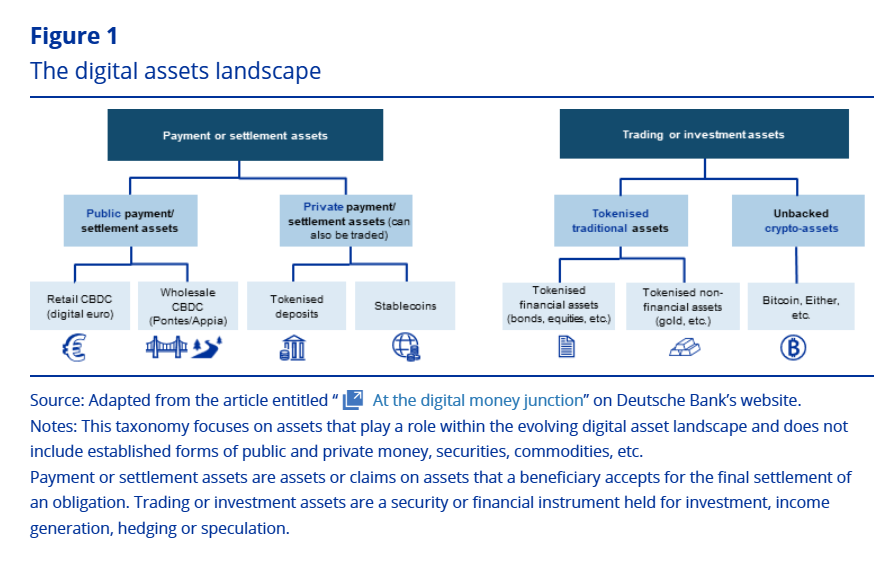
Source: ECB
The ECB noted that these changes could improve market structure. It said tokenization may also support stronger secondary market liquidity. Still, it presented those gains as possible outcomes, not guaranteed results.
A major concern in the bulletin was fragmentation. The ECB warned that a patchwork of incompatible platforms would weaken the benefits of tokenization. It said efficiency gains would depend on infrastructure that could work across different systems rather than operate in isolation.
The bulletin also placed strong emphasis on the settlement layer. The ECB said tokenized markets should not rely only on commercial bank money or privately issued tokens. Instead, it argued that central bank money must remain available for settlement if market trust and financial stability are to be preserved.
ECB Reviews Early Bond Gains and Stablecoin Risks
Another article reviewed the early tokenized bond market. It found initial evidence that tokenized bonds may reduce borrowing costs. It also pointed to tighter bid-ask spreads compared with traditional bond formats.
The bulletin linked those early results to operational efficiencies. It also cited improved transparency and programmability in settlement and collateral management. However, the ECB said those benefits are still tentative and conditional.
It also said policymakers would need to monitor whether current benefits continue once tokenization expands beyond flagship deals and carefully selected issuers. In that sense, the ECB treated the early signs as useful but not conclusive.
The bulletin also reviewed tokenized money market funds and euro-denominated stablecoins. It described them as parallel experiments in on-chain cash-like instruments. On tokenized money market funds, the ECB said they largely reproduce familiar liquidity and run risks while also adding new operational vulnerabilities.
On euro stablecoins, the bulletin said MiCA-compliant products could reshape demand for sovereign bonds. It added that they could either serve as a liquidity buffer in turbulent markets or become a new channel of bank contagion. That outcome, the ECB said, would depend on how issuers manage deposit and reserve requirements.
Related: Larry Fink Says Tokenization Is the Next Phase of Financial Infrastructure
Disclaimer: The information presented in this article is for informational and educational purposes only. The article does not constitute financial advice or advice of any kind. Coin Edition is not responsible for any losses incurred as a result of the utilization of content, products, or services mentioned. Readers are advised to exercise caution before taking any action related to the company.