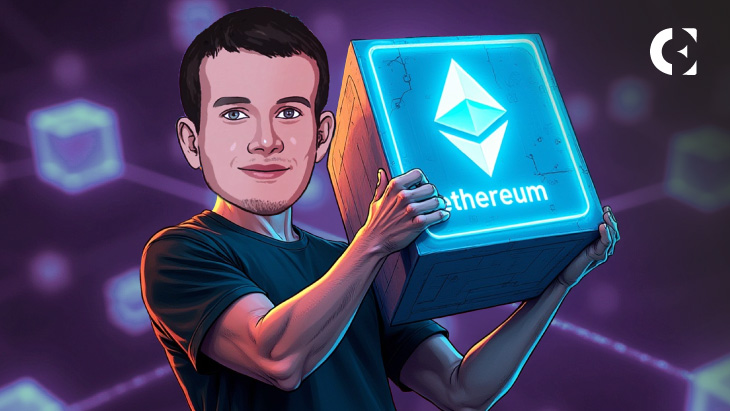
- Vitalik Buterin says early Ethereum L2s focused only on cheaper transactions.
- Old L2 designs forced a tradeoff between speed and deep Ethereum composability for users.
- Buterin proposes hybrid rollups combining fast sequencing with direct Ethereum integration for scaling.
Ethereum co-founder Vitalik Buterin has said that the original vision for Ethereum Layer 2 networks is no longer sufficient, as the ecosystem enters a more mature phase of scaling and application growth.
In a recent detailed post, Buterin argued that early L2 designs were built around a simple idea: replicate Ethereum at lower cost. That approach, he said, no longer matches the demands of today’s users, developers, or the base layer itself.
“This vision no longer makes sense. L1 does not need L2s to be “branded shards”, because L1 is itself scaling,” he said.
Why Early Rollup Models No Longer Fit
Buterin explained that most early rollups fell into two categories.
Sequenced rollups rely on off-chain systems, such as centralized sequencers, to order transactions. This model delivers fast confirmations and low latency, making it attractive for consumer-facing applications.
Based rollups, by contrast, place transaction ordering directly on Ethereum Layer 1. While this enables strong composability with Ethereum, it comes at the cost of slower performance.
According to Buterin, the assumption that L2s must choose one of these paths is outdated.
A Hybrid Model for the Next Phase
Buterin outlined a design that blends both approaches, allowing rollups to remain fast while periodically anchoring directly to Ethereum for deeper composability.
Under this model, L2s would produce rapid sequenced blocks most of the time, but introduce special slot-ending blocks that allow Ethereum builders to include L2 activity directly on Layer 1. This structure will try to preserve low latency while enabling transactions that interact across both layers in a single operation.
The message, Buterin said, is clear: L2s must evolve beyond being cheaper copies of Ethereum and instead develop architectures that are purpose-built for specific use cases.
Trade-offs Remain
Buterin acknowledged that the hybrid approach comes with limitations. It requires rollups to accept reorg risk from Ethereum and depends on advanced proving technology to avoid delays. Full permissionless block building is also not automatic and would require additional mechanisms on Layer 1.
Even so, he argued that these challenges are preferable to clinging to a scaling model designed for an earlier stage of Ethereum’s growth.
Industry Alignment Grows
The comments have resonated across the ecosystem, particularly among teams building on Ethereum who argue that the future of L2s lies in differentiation, not duplication.
Jesse Pollak, an Ethereum builder, said, “going forward, L2s can’t just be “ethereum but cheaper.” that’s why from the beginning of base we’ve shown up everyday to onboard new users, developers, and apps, push the technology forward, and do it all in a symbiotic way that grows the entire ecosystem.”
Builders also credit the Ethereum Foundation for supporting this evolution, as Ethereum moves toward a multi-layer future where L2s play distinct and complementary roles.
Related: Vitalik Buterin Details Ethereum Foundation Austerity
Disclaimer: The information presented in this article is for informational and educational purposes only. The article does not constitute financial advice or advice of any kind. Coin Edition is not responsible for any losses incurred as a result of the utilization of content, products, or services mentioned. Readers are advised to exercise caution before taking any action related to the company.