
- Arthur Hayes says crypto direction depends on central bank liquidity, not short-term market sentiment.
- Japan’s weak yen and rising bond yields are emerging as a major global financial risk.
- Hayes expects the U.S. and Federal Reserve to intervene if Japan’s instability spreads.
Former BitMEX CEO Arthur Hayes says the direction of the crypto market over the next six months will be shaped less by hype and more by how global central banks respond to growing stress in traditional finance.
In a recent analysis, Hayes compared today’s financial system to a fragile mountain snowpack, calm on the surface, but unstable underneath. His message was clear: when markets send warning signals, investors should take note.
Japan Emerges as the Pressure Point
Hayes pointed to Japan as a key source of global risk. The Japanese yen has weakened sharply while long-term Japanese government bond (JGB) yields have risen, a combination that signals falling confidence in the country’s financial stability.
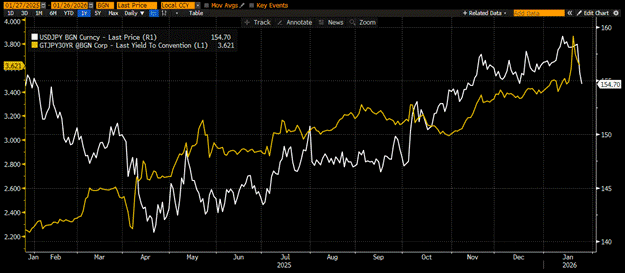
Japan relies heavily on imported energy, meaning a weaker currency increases inflation pressures. At the same time, rising bond yields make government borrowing more expensive and create losses for the Bank of Japan, which holds a large share of the bond market.
According to Hayes, this loss of control in Japan could ripple across global markets.
Why the U.S. Cannot Ignore Japan
Hayes argued that instability in Japan directly threatens the United States. Japanese investors are among the largest foreign holders of U.S. Treasuries. If yields at home become attractive, Japan could sell U.S. debt and repatriate capital, pushing U.S. borrowing costs higher.
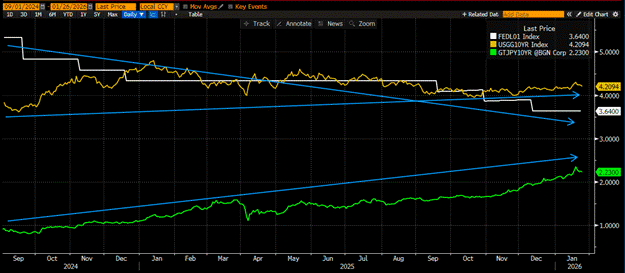
With the U.S. running large deficits, higher Treasury yields would raise financing costs and pressure the economy. That, Hayes said, increases the likelihood of intervention by U.S. authorities.
A Path Toward Quiet Money Printing
Hayes outlined how the Federal Reserve could step in without formally announcing a new round of quantitative easing. By supporting currency and bond markets through balance-sheet expansion, the Fed could stabilize Japan while increasing global dollar liquidity.
Such actions, he said, would amount to money creation in practice, even if not labeled as stimulus.
Why This Matters for Bitcoin
Hayes believes Bitcoin’s prolonged sideways trading will only end when liquidity returns to the system. Historically, Bitcoin has benefited when central banks expand their balance sheets and increase the supply of fiat money.
“If money printing resumes,” Hayes said, “Bitcoin doesn’t need a narrative, it rises mechanically.”
However, he warned that a fast-moving yen could initially trigger risk-off behavior, leading to short-term pressure on Bitcoin before liquidity-driven gains appear.
The Next Six Months: Watch Central Banks, Not Headlines
Hayes said investors should focus less on price predictions and more on central bank balance sheets, particularly signs that authorities are stepping in to manage currency and bond stress.
Hayes said he is not adding risk yet and will wait for clear signs that the Fed is printing money. He plans to buy more Bitcoin only if the Fed’s balance sheet starts growing. For now, his firm is adding to Zcash, keeping other DeFi positions steady.
Related: Bank of Japan Holds Rates at 30-Year High as Debt and Yen Risks Loom for Crypto
Disclaimer: The information presented in this article is for informational and educational purposes only. The article does not constitute financial advice or advice of any kind. Coin Edition is not responsible for any losses incurred as a result of the utilization of content, products, or services mentioned. Readers are advised to exercise caution before taking any action related to the company.