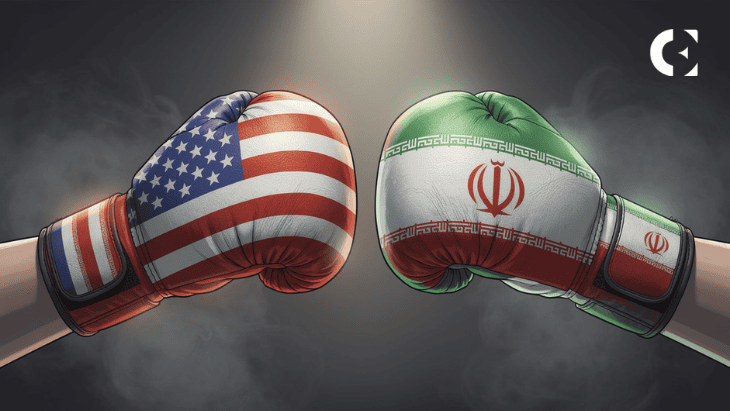
- Iran–US war is at a fragile ceasefire, with no clear winner as tensions and risks remain.
- Oil shocks and inflation concerns drive market volatility across global assets.
- Crypto emerges as both a risk asset and a potential hedge amid geopolitical conflict.
The 2026 Iran–US war has become one of the most important global events of the year. What started as coordinated strikes has now shifted into a fragile ceasefire, with the world watching closely to see what happens next.
Across major AI models, Grok, Claude, Gemini, and ChatGPT, the war is unlikely to end with a decisive victory. Instead, it is moving toward negotiation, uncertainty, and long-term geopolitical tension.
War Already Moving Toward a Pause
The conflict began on February 28, 2026, when the United States and Israel launched airstrikes on Iranian military, nuclear, and leadership targets. The strikes killed Iran’s Supreme Leader, Ali Khamenei, along with other top officials.
Iran responded with missile and drone attacks on Israel, U.S. bases, and regional allies. One of its most powerful moves was disrupting the Strait of Hormuz, a narrow waterway that handles about 20% of global oil and LNG shipments.
By April 8, a two-week ceasefire was reached, mediated by Pakistan with involvement from China. However, tensions remain high, with both sides accusing each other of violations.
The Most Likely Ending
All four AI models point to one outcome as the most likely in the near term: a negotiated settlement.
This would involve Iran agreeing to limits on its nuclear and missile programs, while the U.S. offers partial sanctions relief and economic support. The Strait of Hormuz would reopen fully under some form of international oversight.
Grok and ChatGPT both highlight that this process is already underway, with talks expected to continue in Islamabad. Claude and Gemini add that any lasting deal will likely include strict monitoring of Iran’s nuclear activity.
In sum, neither side has achieved total victory, and both have incentives to stop the conflict from escalating further.
Fragile Peace That Could Break Quickly
Despite the ceasefire, the risk of renewed fighting remains high.
Grok describes a scenario where the truce collapses within weeks due to disagreements over sanctions, oil routes, or regional conflicts. In that case, the war could continue as a series of limited strikes rather than full-scale battles.
Gemini and ChatGPT both suggest a “frozen conflict” is also possible. This means ongoing tensions, proxy attacks, and cyber warfare without a formal peace agreement.
Claude goes further, warning that the war could even trigger a nuclear arms race if Iran decides that nuclear weapons are the only way to prevent future attacks.
Less Likely Outcomes
Some scenarios are possible but less likely.
One is regime change in either the U.S. or Iran. The war has weakened Iran’s economy, and internal unrest could grow. However, history shows that Iranian governments tend to survive external pressure.
Another is a wider war involving more countries or even a ground invasion. All models agree that this would have severe global consequences, making it unlikely unless the situation spirals out of control.
Oil Shock Drives Global Market Reactions
The biggest impact of the war has been on energy markets.
Disruptions in the Strait of Hormuz triggered one of the largest supply shocks in modern history. Brent crude surged from about $72 to above $112–$120 per barrel at peak levels.
This had a ripple effect across the global economy. Inflation increased by an estimated 0.5–1%, while global growth forecasts were cut by up to 0.4 percentage points.
After the ceasefire, oil prices dropped sharply, showing just how sensitive markets are to developments in the conflict.
Stocks, Trade, and Inflation Under Pressure
Global stock markets reacted negatively at first, with declines of around 5–6%, especially in Asia and energy-dependent regions.
Industries like shipping, aviation, and manufacturing were hit hardest due to rising fuel costs and disrupted supply chains. Food prices also increased, partly due to higher fertilizer and transport costs.
At the same time, inflation pressures forced central banks to reconsider interest rate cuts. This raises the risk of stagflation, a mix of slow growth and high inflation, if the conflict drags on.
Crypto Emerges as a Surprising Player
The war has also acted as a real-world test for cryptocurrencies, especially Bitcoin.
At first, Bitcoin dropped along with other risk assets as panic spread across markets. But it quickly recovered and, in some cases, outperformed traditional assets.
Claude notes that Bitcoin went through multiple phases, moving with oil at first, then decoupling, and eventually acting more like a store of value. Grok describes it as a “shining light” during uncertainty.
One of the most notable developments is Iran’s exploration of trade. Reports suggest it is considering collecting transit fees in Bitcoin for ships passing through the Strait of Hormuz, highlighting crypto’s role in bypassing sanctions.
Ceasefire Sparks Crypto Volatility and Opportunity
The ceasefire itself triggered a major reaction in crypto markets.
Over $657 million in liquidations occurred within 24 hours, including about $282 million in Bitcoin positions. This shows how quickly sentiment can shift when geopolitical risks ease.
At the same time, institutional demand appears to be growing. Even during the conflict, Bitcoin ETFs saw strong inflows, suggesting that large investors are increasingly treating crypto as a long-term asset.
What Happens Next
Across Grok, Claude, Gemini, and ChatGPT, the message is consistent: the next one to two weeks are critical.
If the ceasefire holds and evolves into an agreement, markets could stabilize. Oil prices would likely fall, inflation pressures would ease, and risk assets, including crypto, could move higher.
If the ceasefire breaks, the opposite happens. Oil could spike toward $130–$170, markets would turn volatile again, and the global economy could face a deeper slowdown.
Essentially, the Iran–US war is no longer just a military conflict; it is now a global economic event.
The most likely outcome is a negotiated settlement with no clear winner, but the path to that outcome remains uncertain. The world is in a waiting phase, where every headline can move markets.
Oil, inflation, and geopolitics are driving traditional finance, while crypto is emerging as both a risk asset and a potential hedge. How the war ends will shape not just the Middle East, but the direction of the global economy in 2026.
Related: Iran War Explained: Strategic Motives, Economic Winners, and Crypto Market Risks
Disclaimer: The information presented in this article is for informational and educational purposes only. The article does not constitute financial advice or advice of any kind. Coin Edition is not responsible for any losses incurred as a result of the utilization of content, products, or services mentioned. Readers are advised to exercise caution before taking any action related to the company.