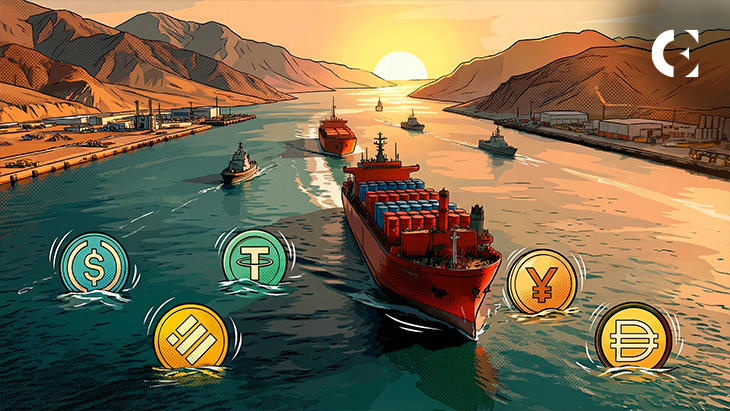
- Iran now demands crypto tolls from ships in the Strait of Hormuz, marking a first in global trade policy.
- Stablecoins like USDT may dominate payments due to lower volatility and easier sanction evasion.
- Shipping firms face legal risks as crypto payments to Iran could violate strict U.S. sanctions.
Iran is now requiring cryptocurrency payments from tankers passing through the Strait of Hormuz, a key shipping route for global trade. According to Chainalysis, the Iranian government is demanding digital currency payments in exchange for allowing ships to pass safely through the waterway.
Hamid Hosseini, a spokesperson for Iran’s Oil, Gas, and Petrochemical Products Exporters’ Union, confirmed that Bitcoin is one of the digital currencies accepted for the tolls.
The process for collecting these tolls is detailed. Ship operators must provide information about their vessel, including ownership, cargo, and crew. They also need to go through an intermediary linked to the Islamic Revolutionary Guard Corps (IRGC).
The tolls start at about $1 per barrel of oil, with payments made in yuan or stablecoins. Hosseini explained that Bitcoin payments would be completed quickly to avoid being traced, which helps bypass sanctions. This marks the first known instance of a country demanding cryptocurrency for maritime transit.
Why Iran Might Prefer Stablecoins Over Bitcoin
While Hosseini referred to Bitcoin, Chainalysis predicts that Iran would most probably use stablecoins such as USDT to pay tolls. Stablecoins are relatively safe compared to Bitcoin, which is volatile and has many fluctuations.
Iran had relied on stablecoins during earlier dealings, specifically when it sold oil and weapons. Considering that the Iranian rial has depreciated, it is only fitting for Iran to adopt stablecoins in large amounts.
IRGC has been influential in cryptocurrency due to its fast transactions. IRGC was awarded over $3 billion worth of cryptocurrency in 2025 alone. Considering that the Strait of Hormuz is a vital oil passage, it would be financially beneficial for Iran to charge tolls from ships passing through it.
Sanctions Risks for Shipping Companies
The shift to cryptocurrency toll payments puts shipping companies at serious risk. Iran is under strict U.S. sanctions, so any transactions involving Iranian-linked entities could lead to heavy penalties.
Using middlemen linked to Iran can expose companies to legal risks and financial penalties. Additionally, blockchain’s transparency makes it easier for authorities to track these transactions, adding more compliance challenges for businesses.
Related: Trump Says US is Clearing Strait of Hormuz Mines After Crushing Iran
Disclaimer: The information presented in this article is for informational and educational purposes only. The article does not constitute financial advice or advice of any kind. Coin Edition is not responsible for any losses incurred as a result of the utilization of content, products, or services mentioned. Readers are advised to exercise caution before taking any action related to the company.