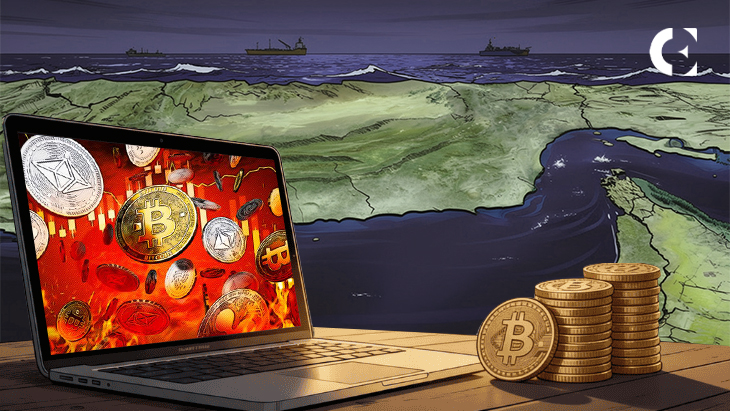
- Bitcoin miners face bigger risk from price volatility than rising oil costs.
- Most global hashrate runs on power markets with little correlation to oil prices.
- Oil shock may hurt miners mainly by pressuring Bitcoin price and hashprice levels.
Geopolitical tensions surrounding Iran and the global oil market could affect Bitcoin mining. However, analysts argue that the biggest impact may come through Bitcoin’s price rather than electricity costs.
Recent research from Luxor Technology and its Hashrate Index suggests that most mining operations remain insulated from crude oil shocks. Consequently, the key risk for miners lies in market volatility that could push Bitcoin prices lower.
Oil Market Shock Raises Macro Concerns
The conflict intensified after coordinated strikes by the United States and Israel on Iranian targets. The attacks disrupted tanker activity through the Strait of Hormuz, a vital shipping route for global oil. Significantly, about 20% of the world’s daily oil supply normally passes through the waterway.
Energy markets reacted quickly. Brent crude surged from roughly $60 per barrel to above $100. Prices later eased near $90 as tensions appeared to stabilize. Additionally, traders increasingly used decentralized platforms such as Hyperliquid to trade oil derivatives during volatile periods.
Despite the oil spike, analysts see limited direct consequences for mining costs. Data from the Cambridge Centre for Alternative Finance and the Bitcoin Mining Council shows that more than half of the Bitcoin network uses non-fossil energy sources.
Moreover, crude oil barely powers mining operations. Instead, electricity generation in major mining regions relies on natural gas, coal, hydroelectric, or geothermal energy.
Most Mining Power Remains Insulated
Geographic distribution further reduces oil exposure. The largest shares of global hashrate operate in the United States, Russia, and China. Additionally, countries such as Canada, Kazakhstan, and Paraguay host major mining clusters powered by hydroelectric or fossil fuels unrelated to oil.
Consequently, roughly 90% of global hashrate operates in electricity markets that show weak correlation with crude prices. Analysts estimate that only 8% to 10% of the network runs in grids closely tied to oil pricing.
The most exposed regions include the United Arab Emirates and Oman. These countries rely on energy systems linked to oil production. Smaller exposure also appears in markets such as Iran, Kuwait, and Qatar.
Related: Coinbase CEO Denies Claims of Lobbying Against Bitcoin De Minimis Tax Exemption
Bitcoin Price Drives Mining Economics
Nevertheless, analysts stress that revenue conditions matter far more than energy costs. Bitcoin mining profitability depends heavily on the metric known as hashprice. This indicator measures daily earnings for each unit of computing power.
Significantly, hashprice already fell sharply earlier this year. The metric dropped to a record low after Bitcoin declined from around $78,000 to nearly $65,000.
Macroeconomic reactions to oil shocks could influence miners through financial markets. Rising energy costs may push inflation higher and delay interest rate cuts. Consequently, investors may rotate away from riskier assets like Bitcoin.
Related: A $50M AAVE Swap Goes Wrong as Trader Receives Only 324 Token
Disclaimer: The information presented in this article is for informational and educational purposes only. The article does not constitute financial advice or advice of any kind. Coin Edition is not responsible for any losses incurred as a result of the utilization of content, products, or services mentioned. Readers are advised to exercise caution before taking any action related to the company.