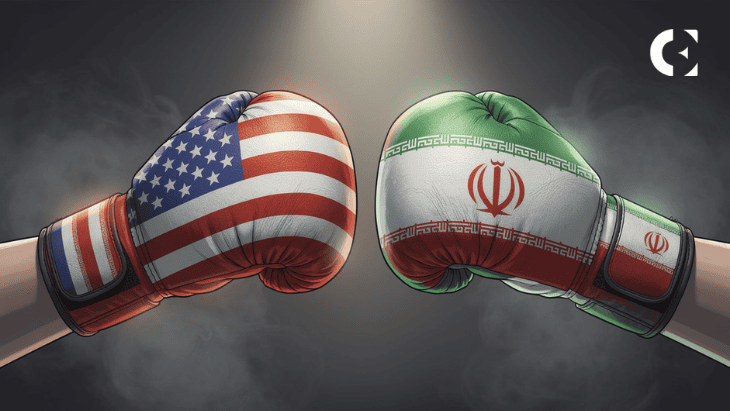
- Iran conflict drives oil above $100, raising inflation risks and global market uncertainty.
- Ceasefire talks weaken as Iran rejects a truce, increasing chances of escalation.
- Bitcoin shows mixed behavior, acting as both a risk asset and a crisis hedge.
The war involving Iran, the United States, and Israel has since gone beyond regional conflict. It is shaping global markets, pushing oil prices higher, and testing how assets like Bitcoin behave during a crisis.
Talks to end the war are now struggling as threats of escalation grow. The situation remains uncertain with each passing day, and markets are reacting in real time.
Ceasefire Talks Falter as War Risks Rise
Efforts to pause the fighting are weakening. Mediators from countries like Pakistan, Egypt, and Turkey are pushing for a temporary ceasefire and the reopening of the Strait of Hormuz.
However, Iran has rejected a short-term truce. Instead, it is calling for a permanent end to the war and has submitted its own peace proposal.
Trump acknowledged the offer but said it was “not good enough”. At the same time, he stressed that failure to comply with U.S. demands could lead to strikes on key infrastructure such as power plants and bridges.
This mix of threats and diplomacy has left markets unsure about what comes next.
What’s Behind the US–Israel Attack on Iran
The campaign by the U.S. and Israel is driven by long-standing concerns over Iran’s nuclear program, missile capabilities, and regional influence.
Initial strikes focused on decapitation, weakening Iran’s military and infrastructure. For Iran, the strategy is different. It is trying to survive the pressure while raising the cost of war for its opponents.
One of its most powerful tools is control over the Strait of Hormuz, a key global oil route. By limiting access, Iran disrupts energy supplies and forces global attention.
This is why the conflict matters far beyond the Middle East. It directly affects oil flows, inflation, and global trade.
Oil Shock and Inflation Fears Spread Globally
Oil is the main channel through which this war impacts the world economy.
Disruptions linked to the Strait of Hormuz have already pushed prices higher to $109–$114 per barrel, from a pre-conflict price of around $60.
Higher oil prices are now feeding into inflation expectations. Saudi Arabia’s state oil giant, Saudi Aramco, has even raised prices for Asian buyers, adding to pressure.
This creates a risk of stagflation, a mix of slow growth and rising prices, which is one of the most difficult environments for markets.
Economic Winners: Who Benefits From the War
Wars rarely create wealth evenly. In this conflict, the biggest winners are tied to energy, defense, and strategic assets.
Oil and gas companies are seeing massive gains as prices surge. Firms like ExxonMobil, Chevron, and Shell are benefiting from crude prices rising above $110, with profits expected to increase significantly.
Defense contractors are another major winner. Companies such as Lockheed Martin and RTX Corporation are gaining from increased military spending and demand for weapons systems.
Countries and producers outside the conflict zone are also benefiting. Non-Gulf oil exporters and refining hubs are gaining market share as supply shifts away from disrupted regions.
Even some investors are benefiting. Assets tied to energy and alternative stores of value, like commodities and, at times, Bitcoin, have seen increased demand during periods of prolonged uncertainty.
The Other Side of the Trade
At the same time, broader risks are building. Food prices are rising due to fertilizer disruptions, debt levels are worsening, and financial stress is spreading across credit markets. Firms like BlackRock and Apollo Global Management have limited withdrawals in private credit funds.
Industrial markets are also feeling the impact. Strikes affecting aluminum production in the Gulf region are pushing prices higher, with ripple effects across industries.
This creates a fragile backdrop where multiple crises could combine into a larger global slowdown.
Bitcoin and Crypto: Risk Asset or Safe Haven?
Bitcoin’s reaction to the war has been mixed. At first, it behaved like a risk asset, later like a safe haven.
Notably, rising oil prices pushed inflation expectations higher, which reduces the chances of interest rate cuts. This tends to hurt crypto and stocks.
But over time, Bitcoin has also shown signs of acting as a hedge. During extended periods of uncertainty, it has outperformed some traditional assets.
This dual behavior makes Bitcoin harder to predict. It can fall during sudden shocks, but recover if the crisis continues and confidence in traditional systems weakens.
The key driver remains oil. If oil stays high, inflation remains elevated, and liquidity stays tight, this is a challenge for crypto. If tensions ease and oil falls, Bitcoin could benefit from a more supportive macro environment.
How Long Could the War Last?
There is no clear answer. Some officials initially expected a short conflict. But with Iran demanding a permanent resolution and the U.S. pushing for temporary measures, both sides remain far apart.
There are three possible paths. A quick deal could end the war in weeks. A longer stalemate could drag on for months. Or escalation could widen the conflict further across the region.
Right now, markets are pricing in uncertainty rather than a clear outcome.
This Conflict Matters for Global Markets
This war is not just about geopolitics. It is a direct test of how the global economy handles shocks.
Oil is at the center of everything. It drives inflation, affects central bank decisions, and shapes risk appetite.
For investors, this creates a complex environment. Energy assets may benefit, while growth sectors struggle. Bitcoin sits in between, part risk asset, part hedge.
The next moves, from Iran, the U.S., and Israel, will determine whether markets stabilize or face deeper volatility.
Related: Iran Rejects Temporary Ceasefire as Trump Deadline Nears, How Bitcoin Will React?
Disclaimer: The information presented in this article is for informational and educational purposes only. The article does not constitute financial advice or advice of any kind. Coin Edition is not responsible for any losses incurred as a result of the utilization of content, products, or services mentioned. Readers are advised to exercise caution before taking any action related to the company.