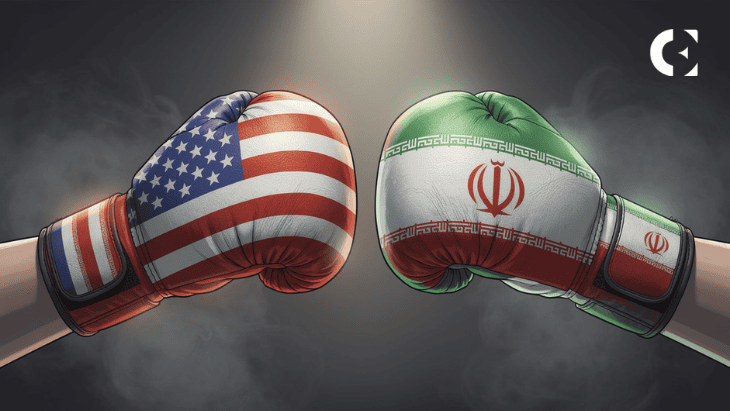
- The negotiations are expected to last two to three days, taking place in Islamabad.
- Pakistani media says the talks will center on reopening the Strait of Hormuz.
- US officials say there is a backup plan in place if the Strait of Hormuz is disrupted.
Negotiations between the United States and Iran are expected to take place in Islamabad, with talks potentially lasting two to three days, according to statements from Iranian officials.
Reports indicate that an Iranian delegation has already arrived in Pakistan, though the presence of senior political figures, including the foreign minister, remains unconfirmed. Pakistani media says the talks will center on reopening the Strait of Hormuz and extending the truce.
Adding to this, the US Vice President JD Vance struck a cautiously hopeful note, saying Washington expects “positive progress” from the talks, which could be a sign they’re open to diplomacy even after recent clashes.
He did, however, warn Iran not to play games with the US, saying President Trump has laid out “quite clear guidelines” for the talks.
On that note, Vance is heading to Islamabad on Air Force Two, joined by Middle East envoy Steve Witkoff and Trump’s son‑in‑law Jared Kushner.
The US Has a Backup Plan
At the same time, the US officials are preparing for worst-case scenarios.
White House National Economic Council Director Kevin Hassett said the US has a backup plan in place if the Strait of Hormuz is disrupted. He also expects the strait to reopen in two months, meaning any current issues may be short-lived.
Hassett noted that ship traffic through the Strait of Hormuz is down 10% from normal. He also thinks the Fed still has room to lower rates, and he’s sticking by that view.
A Shaky Ceasefire
A two‑week ceasefire, brokered with Pakistan’s help, was designed to get shipping lanes moving again and open the door for talks.
The Strait of Hormuz handles roughly 20% of global oil shipments, making it a hugely important pressure point in the conflict. If it stays closed or restricted for long, global energy prices could shoot up, and financial markets could get rocky (which they already did during the escalation of the conflict).
Nonetheless, the ceasefire remains on shaky ground due to several unresolved issues. For instance, disagreements over nuclear policy and regional influence are still present, and Israel’s continued attacks against Lebanon could interfere with progress.
Related: Trump Warns Failed US-Iran Deal Would Be “Very Painful”
Disclaimer: The information presented in this article is for informational and educational purposes only. The article does not constitute financial advice or advice of any kind. Coin Edition is not responsible for any losses incurred as a result of the utilization of content, products, or services mentioned. Readers are advised to exercise caution before taking any action related to the company.