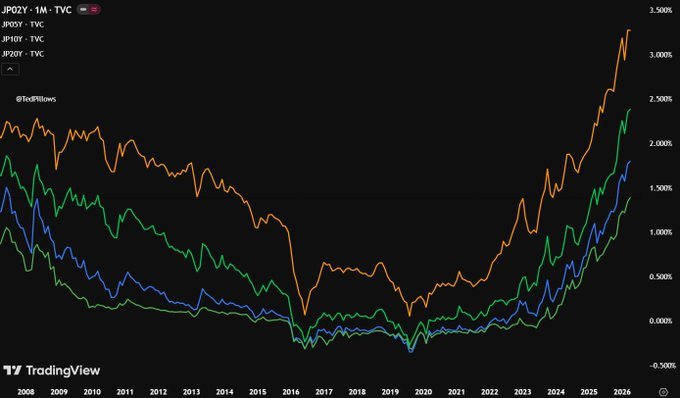
- Japanese 10Y JGB yields hit multi-decade highs near 2.40% amid inflation pressures from oil price spikes.
- Rising inflation and expectations of faster Bank of Japan rate hikes are driving a sharp surge in Japanese bond yields.
- Bitcoin and altcoins face pressure as leveraged positions unwind and global liquidity tightens.
The 10-year Benchmark Japanese government bond (JGB) yields have surged to multi-decade highs near 2.40% as of April 3, 2026, due to inflation and strong wage growth, fueling bets on Bank of Japan (BOJ) rate hikes. The surge of the 10-year JGB accelerates the yen carry trade unwind, pressuring Bitcoin and altcoins as leveraged positions exit.
Japan 10Y Bond Yield Hits 1997 Levels
As of April 3, 2026, the yield on Japan’s benchmark 10-year government bond (JGB) stands at approximately 2.39%, having eased slightly from recent highs while still trading near 2.40%. This marks a near three-decade high with levels not seen since July 1997.
Source: X
After the Bank of Japan (BOJ) maintained ultra-low or negative yields for more than two decades under its aggressive easing policies, the 10-year JGB has climbed steadily since 2024 and has accelerated sharply in early 2026.
This surge stems from the BOJ raising its short-term policy rate multiple times, with the most recent increase to 0.75%, and from ending its yield curve control (YCC) framework while scaling back bond purchases.
Inflation and BOJ Rate Hike Expectations Drive the Surge
Persistent inflation and strong wage growth continue to drive expectations for additional tightening. Preliminary results from Japan’s 2026 Shunto wage negotiations show an average pay increase of 5.26%, the highest in 35 years and the third straight year above 5%.
Meanwhile, traders are pricing in further rate hikes, with overnight index swaps suggesting the policy rate could rise toward 1.0% to 1.25% by year-end. Rising borrowing costs are now reshaping global risk positioning.
The Tokyo core CPI, excluding fresh food, slowed to 1.7% year-on-year in March 2026, slightly below the Bank of Japan’s 2% target, but underlying price pressures remain firmly entrenched. Inflation excluding both food and energy sectors is above 2%.
Meanwhile, yen carry trading, which involves borrowing cheap yen to invest in higher-yielding assets globally, including crypto, has long acted as hidden liquidity for risk markets. Traders are pricing in a high chance of a policy rate increase at the April 27–28 meeting, with the short-term rate at 0.75%, while overnight index swap rates and JGB futures suggest the policy rate could reach 1.0 to 1.25% by year-end.
Bitcoin and Altcoins Face Pressure as Leveraged Positions Exit
Higher Japanese yields increase the cost of borrowing yen, a key funding source for leveraged positions across global markets. As the carry trade unwinds, investors are closing leveraged bets in Bitcoin, Ethereum, and altcoins.
This deleveraging removes a major liquidity source that supported risk assets through 2024 and 2025. Derivatives markets are already showing signs of stress, with declining open interest in BTC and ETH futures.
Smaller altcoins, which rely more heavily on leveraged flows, are seeing sharper volatility as traders exit positions. If Japanese yields continue rising, further liquidity tightening could extend pressure across the crypto market.
Related: Bank of Japan Holds Rates at 30-Year High as Debt and Yen Risks Loom for Crypto
Disclaimer: The information presented in this article is for informational and educational purposes only. The article does not constitute financial advice or advice of any kind. Coin Edition is not responsible for any losses incurred as a result of the utilization of content, products, or services mentioned. Readers are advised to exercise caution before taking any action related to the company.