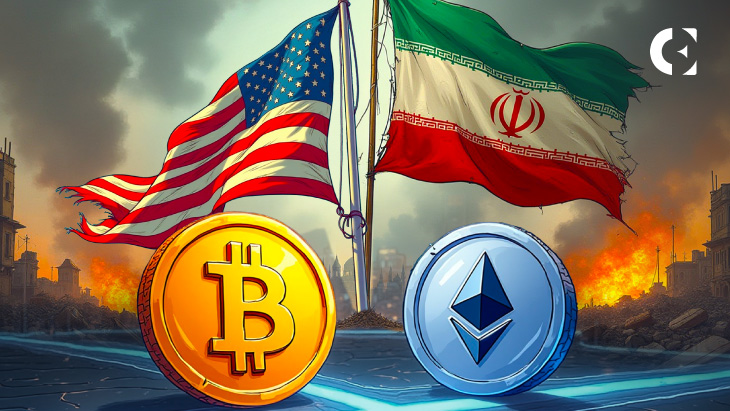
- JD Vance has announced that the U.S. expects Iran to respond by 8 PM ET, which is President Trump’s deadline.
- Strait of Hormuz blockade and proxy funding trigger Trump’s ultimatum as oil prices rise past $115.
- The U.S. feels confident of getting a positive or negative response from Iran by 8 PM ET tonight.
On April 7, 2026, Vice President James David Vance (JD Vance) announced at a joint press event that the U.S. expects a response from Iran by President Trump’s 8 PM ET deadline. The U.S. expects either a positive or a negative response, but it urged Iran to make the right response.
The US demands that Iran reopen the Strait of Hormuz, end funding for proxy groups, and stop long-range missile development, with Trump threatening strikes on power plants, bridges, and other infrastructure if unmet. This has caused oil prices to rise above 115 dollars per barrel amid rising geopolitical tensions.
JD Vance Says the U.S. Expects Iran Response Tonight
JD Vance has announced that the U.S. is confident that it will receive a response from Iran, whether positive or negative, by Trump’s 8 p.m. ET deadline. The announcement came during remarks in Budapest, Hungary, alongside Hungarian Prime Minister Viktor Orbán.
Vance framed the moment as a decisive turning point, emphasizing that the nature and timing of the war’s conclusion now rest with the Iranian government’s decision. He added that the U.S. has additional tools available if Iran does not change course, while stressing that military strikes on targets like Kharg Island do not signal a shift away from diplomacy.
Strait of Hormuz Blockade and Proxy Funding Spark Trump Ultimatum
The Strait of Hormuz blockade triggered Trump’s ultimatum. Iran has disrupted this key shipping route, which carries roughly 20% of the global oil and liquefied natural gas, after the U.S.-Israeli strikes began on February 28, 2026.
This closure directly inflicts economic pain worldwide. For instance, oil prices have surged, recently trading above $115 per barrel amid fears of prolonged shortages. The blockade has contributed to higher U.S. gasoline prices and broader inflation risks, prompting Trump to demand immediate reopening as a core condition by the 8 p.m. ET deadline on April 7, 2026.
Furthermore, Iran’s continued funding and arming of regional proxies, combined with long-range missile activities and nuclear ambitions, worsen the crisis. Washington views it as the main source of regional instability.
What’s Next Amid Rising Oil Prices
The hours ahead of (and following) Trump’s April 7 deadline are pivotal. A diplomatic breakthrough could ease the immediate oil shock, and failure to comply could prompt rapid U.S. strikes on Iranian power plants, bridges, and other infrastructure, as Trump has repeatedly warned.
JD Vance expressed confidence in the back-channel talks; he said, “We feel confident we can get a response – positive or negative by 8 PM.” He also urged Iran to make the right response.
Therefore, a prolonged closure could further tighten supplies, pushing prices to $120-$150 in extreme scenarios. US gasoline prices, which are already rising, could climb further. The Organization for Economic Co-operation and Development (OECD) has flagged the risk that US headline inflation could reach 4.2% this year, partly due to energy prices.
Related: Iran Is Now Charging $2M Per Ship in Crypto — 18 Tankers Just Paid Up
Disclaimer: The information presented in this article is for informational and educational purposes only. The article does not constitute financial advice or advice of any kind. Coin Edition is not responsible for any losses incurred as a result of the utilization of content, products, or services mentioned. Readers are advised to exercise caution before taking any action related to the company.