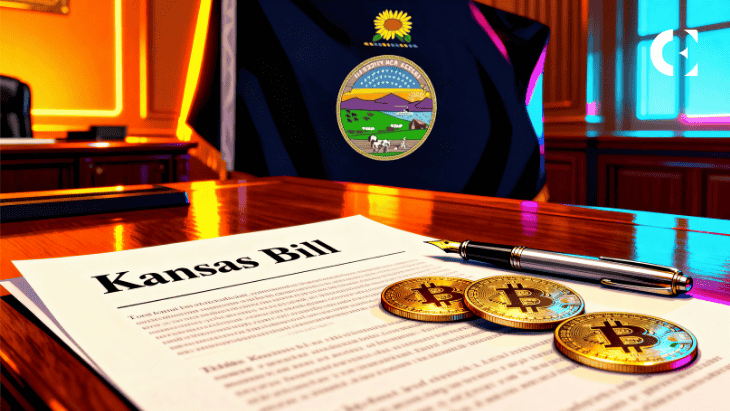
- Kansas Senate Bill 352 proposes a Bitcoin and digital assets reserve managed by the state treasurer.
- The fund would hold abandoned crypto assets, including staking rewards and airdrops.
- Bitcoin itself cannot be moved to the general fund, but 10% of other deposits can.
Kansas lawmakers have introduced legislation that would create a Bitcoin and digital assets reserve fund, marking a new step by a US state to formally manage cryptocurrencies under public finance rules.
The proposal, Senate Bill 352, was introduced on January 21 by state Senator Craig Bowser and focuses on updating Kansas unclaimed property laws to cover digital assets such as cryptocurrencies.
How the Reserve Would Work
Under the bill, a new Bitcoin and digital assets reserve fund would be established within the state treasury and administered by the Kansas State Treasurer. The fund would collect digital assets that are considered abandoned under state law, including cryptocurrencies.
The legislation allows the treasurer to manage these assets, including receiving rewards from staking and airdrops once the assets have remained unclaimed for a defined period.
Importantly, the bill specifies that Bitcoin itself would not be transferred to the state’s general fund.
Airdrops, Staking, and Revenue Rules
While Bitcoin would remain in the reserve, the bill requires that 10% of each digital asset deposit be credited to Kansas’s general fund, subject to legislative appropriations. The remaining assets would stay in the reserve fund.
The bill also formally defines crypto-related terms such as “digital assets,” “airdrop,” and “staking,” providing legal clarity on how these mechanisms are treated under state law.
Staking rewards or airdrops earned from abandoned digital assets would be held by the state once ownership claims expire.
Updating Unclaimed Property Laws
Senate Bill 352 amends several sections of Kansas unclaimed property statutes to include digital assets alongside traditional financial instruments. Digital assets would generally be considered abandoned after three years without owner activity or communication.
If assets remain unclaimed after transfer to a state-approved custodian, any staking rewards or airdrops generated after three years would be moved into the reserve fund.
Broader Context
Kansas joins a growing number of US states examining how to manage cryptocurrencies held by government agencies or received through legal processes. While the bill does not authorize the state to purchase Bitcoin directly, it creates a framework for holding, managing, and benefiting from digital assets already under state control.
Other states, including New Hampshire and Arizona, have enacted laws allowing their treasurers to manage or hold digital assets.
The legislation is currently under review in the Kansas legislature and has not yet been voted into law.
Related: Trump Says Major Crypto Market Structure Bill Could Be Signed Soon
Disclaimer: The information presented in this article is for informational and educational purposes only. The article does not constitute financial advice or advice of any kind. Coin Edition is not responsible for any losses incurred as a result of the utilization of content, products, or services mentioned. Readers are advised to exercise caution before taking any action related to the company.