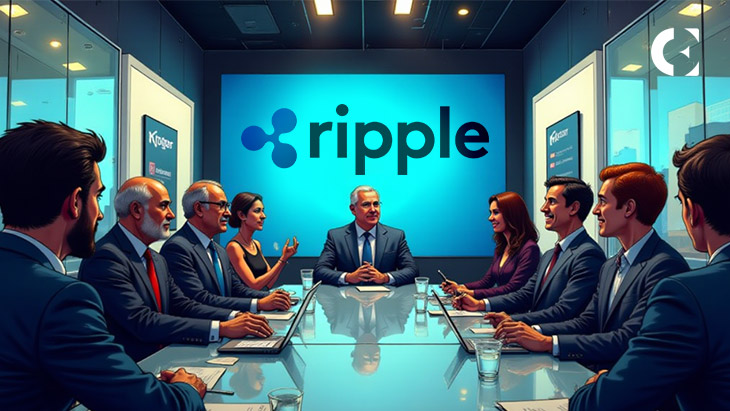
- Ripple Custody integrated Figment to offer institutional staking for Ethereum and Solana.
- The setup targets regulated banks and custodians that need staking with security and compliance.
- Figment handles validator operations while Ripple Custody controls asset security.
Ripple Custody confirmed a new partnership with Figment to bring staking access directly into its institutional custody platform. The focus is on regulated entities such as banks, custodians, and large enterprises that want exposure to Proof‑of‑Stake rewards without running validators or building internal systems.
According to a press release, the initial supported networks include Ethereum and Solana. While Ripple provides the custody layer and secure access, Figment supplies the staking infrastructure.
Institutions can now offer staking to end clients within existing custody workflows. Key management, validator operations, and uptime are handled by Figment, while Ripple Custody maintains security, governance, and compliance controls.
Why Figment Was Selected
Figment currently supports more than 1,000 institutional clients and operates validators across major Proof‑of‑Stake networks. Its system is non‑custodial, which allows institutions to keep control of assets while delegating staking operations.
Ripple chose Figment for operational reliability, validator performance, and reporting depth. The setup gives institutions full visibility into rewards, uptime, and risks, which is a core requirement for regulated balance sheets.
Meanwhile, Figment expanded work with Coinbase Custody and Prime last year, adding support for Solana, Sui, Aptos, and Avalanche.
Custody Upgrades Around the Staking Rollout
The Figment deal sits inside a broader upgrade cycle for Ripple Custody. Ripple has added hardware security module support through Securosys, offering both on‑premise and cloud‑based HSM options. This allows institutions to deploy HSM custody faster while keeping direct control of cryptographic keys.
Ripple Custody also integrated Chainalysis tools into transaction execution, allowing real‑time compliance checks before assets move. These updates followed Ripple’s acquisition of Palisade, a regulated European custody and wallet provider, which expands wallet scale and speeds up deployment for fintechs and banks.
Together, these changes reduce setup time and remove the need for multiple vendors. Institutions can custody assets, enforce compliance rules, and now add staking yield inside one system.
Ripple said these custody upgrades support its expansion beyond payments into custody, treasury, and post‑trade services.
Related: “Not Just a Science Experiment”: Ripple CEO Says Tokenization Has Grown Up
Disclaimer: The information presented in this article is for informational and educational purposes only. The article does not constitute financial advice or advice of any kind. Coin Edition is not responsible for any losses incurred as a result of the utilization of content, products, or services mentioned. Readers are advised to exercise caution before taking any action related to the company.