- Russia may begin blocking foreign crypto exchanges as early as this summer.
- Moscow Exchange aims to capture billions now paid in offshore trading fees.
- Experts say enforcement may mirror the Belarus model, but full bans remain hard to police.
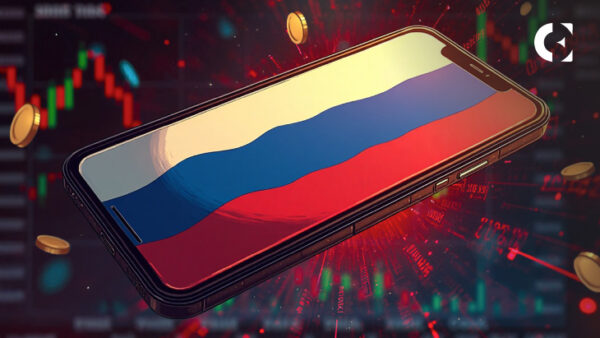
Russia may move to restrict access to foreign cryptocurrency exchanges as lawmakers prepare to formalize digital asset regulations within the country’s existing financial infrastructure. Industry analysts and legal experts stated that blocking measures could begin as early as this summer, particularly if domestic trading platforms launch and seek to capture flows currently routed offshore.
The discussion comes as the Ministry of Finance estimates that cryptocurrency turnover in Russia reaches roughly 50 billion rubles per day, with much of that activity occurring outside regulated channels. Sergey Shvetsov, chairman of the supervisory board of the Moscow Exchange, recently said Russians pay about $15 billion in fees to global crypto exchanges. He indicated that the Moscow Exchange intends to compete for that volume once regulatory conditions allow.
Russia’s Potential Timeline and Enforcement Models
Nikita Zuborev, senior analyst at Bestchange.ru, described mass website blocking of unregistered foreign exchanges as a “likely scenario.” He said Roskomnadzor could follow a model similar to past internet restrictions, including deleting DNS records in the Russian internet segment and targeting tools used to bypass blocks.
Zuborev noted that foreign exchanges may continue operating without disruption while domestic legislative and technical preparations are underway. However, once Russian platforms are fully operational, he expects enforcement efforts to intensify against overseas competitors.
He also warned that stricter measures could shift activity into informal channels if existing services are not given a pathway to licensing or agency arrangements with domestic exchanges. According to Zuborev, market participants would adapt quickly to new restrictions.
Comparisons to Belarus and Legal Constraints
Dmitry Machikhin, founder of the BitOK service, said Russia could adopt an approach similar to Belarus, where cryptocurrency transactions are restricted to companies operating under the High-Tech Park regime. Since 2024, individuals and sole proprietors in Belarus have been barred from trading digital assets outside approved local exchanges and exchangers.
Machikhin added that completely preventing Russian users from accessing foreign exchanges would be difficult, as onboarding decisions ultimately rest with the platforms themselves. He noted that at least one million Russians remain clients of Binance despite its official exit from the Russian market.
In addition, Ignat Likhunov, founder of the Cartesius legal agency, said blocking measures appear to be developing alongside the creation of a regulated “white zone.” He argued that foreign exchanges are unlikely to comply with Russian legal requirements and may instead face domestic restrictions.
Related: Russia Rules Out Bitcoin Payments ‘Under Any Circumstances’
Disclaimer: The information presented in this article is for informational and educational purposes only. The article does not constitute financial advice or advice of any kind. Coin Edition is not responsible for any losses incurred as a result of the utilization of content, products, or services mentioned. Readers are advised to exercise caution before taking any action related to the company.