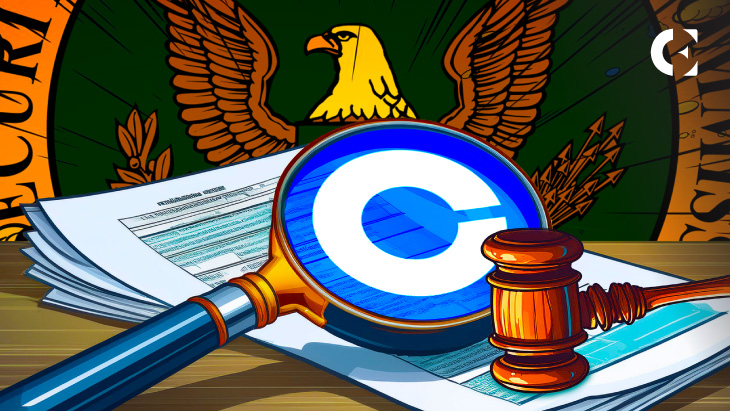
- The Charge: Shareholders filed a derivative suit in Delaware, accusing Coinbase execs of selling $4.2B in stock while hiding regulatory risks.
- The Trigger: Plaintiffs allege insiders knew of a looming $100M NYDFS penalty and security breaches but sold before the news broke.
- The Mechanism: The suit claims the 2021 “Direct Listing” was strategically chosen to bypass IPO lock-ups and maximize insider liquidity.
A group of shareholders in Delaware accused crypto exchange Coinbase’s top executives of orchestrating a multi-year plan to unload stock at valuations that did not reflect the exchange’s true internal risks.
The claim targets CEO Brian Armstrong, board member Marc Andreessen and other senior insiders, and alleged that they benefited from a concealed picture of regulatory strain, security vulnerabilities and compliance gaps.
The lawsuit represents a derivative action, a move through which shareholders act on behalf of the company when they believe leadership harmed corporate interests.
Plaintiffs argue that Coinbase insiders reduced the company’s value by selling $4.2 billion worth of shares while keeping crucial information out of public view.
Allegations of Concealed Internal Failures
According to the complaint, Coinbase’s leadership had awareness of weaknesses that were not disclosed to investors.
These included shortcomings in Know Your Customer and anti-money-laundering procedures, regulatory scrutiny that stretched across several agencies, and vulnerabilities across its data-security infrastructure.
Plaintiffs point to examples that surfaced only after the alleged insider sell-off. In early 2023, the company paid a $100 million penalty to New York’s Department of Financial Services for failures across anti-fraud and anti-money-laundering systems.
Related: Ark Invest Goes on a Buying Spree with Coinbase, Bullish, and Circle Stocks
The lawsuit claims senior figures inside Coinbase knew such investigations were active long before they became public.
The filing also mentioned an incident involving the theft of customer information through breaches at third-party service providers. Although insiders had knowledge of the exposure months earlier, the issue reached the market only after a lengthy delay.
Plaintiffs argue that the lag reflected a larger pattern of withholding material information.
A Second Legal Challenge to the Direct Listing
This is not the first time Coinbase insiders have faced accusations of cashing out under questionable circumstances. A separate case from 2023 accused Armstrong, Andreessen and others of preventing roughly $1 billion in losses by offloading $2.9 billion in stock shortly after Coinbase’s 2021 direct listing.
Rather than pursue a traditional initial public offering, the company opted for a direct listing, a structure that lets existing shareholders sell immediately on open markets.
Plaintiffs argue that this decision favored insider liquidity at the expense of long-term corporate interests.
Coinbase’s board counters that the company maintained strong financial footing during the direct listing and that insiders were required to move shares into the market under the structure’s mechanics.
They claimed that the sales were routine moves by long-term holders rather than opportunistic attempts to exploit inflated valuations.
Related: Coinbase Ventures Flags RWA Perpetuals and ‘Prop-AMMs’ as Key 2026 Crypto Growth Drivers
Disclaimer: The information presented in this article is for informational and educational purposes only. The article does not constitute financial advice or advice of any kind. Coin Edition is not responsible for any losses incurred as a result of the utilization of content, products, or services mentioned. Readers are advised to exercise caution before taking any action related to the company.