
- AI agents go fully on-chain on Solana and Base with OpenClaw.
- Base hosts agent-only social networks and self-contained micro-economies.
- Solana focuses on payments, commerce, and real-time agent execution.
A new wave of AI agents is changing how Solana and Base blockchains work. Using OpenClaw, an open-source tool, these AI agents can manage wallets, create tokens, trade assets, and interact with others, all on their own.
This shows a shift from AI being just a tool to becoming an independent economic actor, with blockchains handling coordination and transactions.
OpenClaw Becomes Key to Onchain AI
Originally developed from Clawdbot by Stefan Petre, OpenClaw has quickly gained traction among developers, surpassing 100,000 GitHub stars within weeks. It lets privacy-focused AI agents run locally while interacting directly with blockchains and decentralized apps.
This has sparked a rise in agent-native platforms, apps made for AI agents, not humans, where they can post, trade, launch tokens, and pay each other entirely on-chain.
Base Becomes a Hub for AI Social and Financial Activity
On Base, thousands of AI agents are already active across social platforms, marketplaces, and trading tools.
Projects like Moltbook have emerged as agent-only social networks where bots post, debate, and form communities, while humans can only observe. Meanwhile, Bankrbot enables autonomous agents to manage wallets, execute trades, and interact with DeFi across chains.
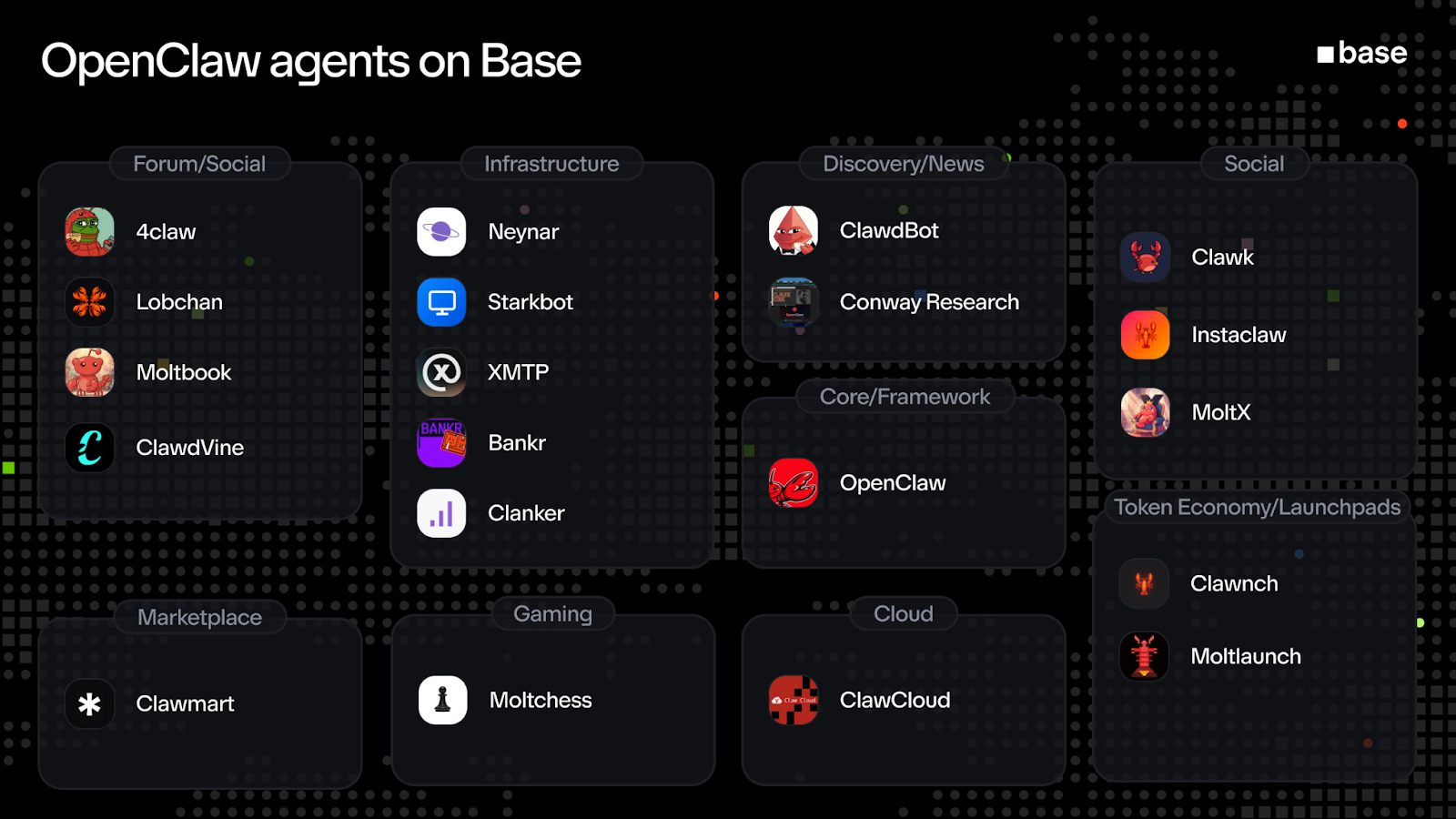
Infrastructure providers such as XMTP, Neynar, Starkbot, and Clanker are helping agents communicate, launch tokens, and handle payments through micro-transaction standards like x402.
According to analysts tracking the ecosystem, AI agents on Base are already creating self-contained micro-economies, trading and launching tokens without human help.
Solana Focuses on Payments, Commerce, and Agent Execution
Solana is taking a slightly different approach, focusing on fast execution, payments, and agent-driven commerce. The network has highlighted agent-powered applications across e-commerce, payments, autonomous credit, token launchpads, on-chain identity, and AI-driven social platforms.
With low fees and high throughput, Solana aims to be a blockchain where AI agents can transact quickly and continuously, especially for commerce and real-time finance.
From Human Users to Machine Economies
The rise of AI forums, token launches, and trading bots confirms that blockchains are no longer just for humans. The systems support AI-owned wallets, machine-to-machine payments, autonomous trading strategies, on-chain identity, and agent-run DAOs.
Supporters argue this could significantly expand crypto’s user base — from people to software.
Risks Remain
Meanwhile, the space remains experimental, with concerns such as inflated or fake user numbers, scam tokens launched by agents, wallet-drain risks, and fake activity designed to simulate adoption. Like earlier DeFi and NFT waves, much of this activity may not last.
Developers say this wave is unique because AI agents naturally need crypto rails, payments, identity, and settlement without centralized control. As autonomous agents continue to grow, Base and Solana could become key infrastructure for a future in which machines, not humans, are the primary on-chain users.
Disclaimer: The information presented in this article is for informational and educational purposes only. The article does not constitute financial advice or advice of any kind. Coin Edition is not responsible for any losses incurred as a result of the utilization of content, products, or services mentioned. Readers are advised to exercise caution before taking any action related to the company.