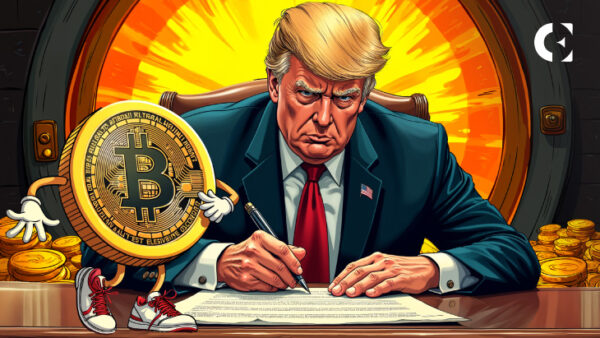
- Trump calls for a 10% cap on credit card interest, raising debates on consumer finance and policy.
- Banks warn that limits could tighten credit and reduce rewards.
- Bitcoin may benefit as a hedge against financial uncertainty if trust in traditional finance weakens.
U.S. President Donald Trump has stirred debate over consumer finance by suggesting a one-year limit on credit card interest rates of 10%. He says the move would combat unfair lending by big banks.
Even though the plan may face legal and political challenges, it could still affect Bitcoin and the broader crypto market.
Political Signal More Than Policy
Notably, Trump’s announcement, made via social media, did not include details on enforcement or legislative backing. Experts say a credit card interest cap would require Congress’s approval. Moreover, banks have said it could limit access to credit and reduce perks such as rewards.
Because of this, markets see it more as political messaging than a concrete policy. Still, the discussion alone can influence perceptions of the traditional financial system — and that’s where crypto comes in.
Why Bitcoin Cares About Credit Cards
Bitcoin doesn’t compete directly with credit cards. It doesn’t provide credit, consumer protections, or rewards. But it often gains attention when trust in traditional finance weakens or becomes politicized. A government cap on credit card interest rates highlights key Bitcoin principles:
- The financial system is closely tied to politics.
- Rules around money and credit can change suddenly.
- Banks are deeply connected to government decisions.
For Bitcoin supporters, these points strengthen the argument for a decentralized system that isn’t controlled by any government.
Credit Tightening Could Push Users to Stablecoins and DeFi
If a 10% interest cap were implemented, banks say they might:
- Lower credit limits
- Deny higher-risk borrowers
- Cut or remove rewards programs
This could drive some consumers toward alternatives like stablecoins and DeFi peer-to-peer platforms. While Bitcoin probably won’t replace credit cards for everyday borrowing, stablecoins and crypto payment systems could see increased interest for cross-border or non-bank transactions.
Meanwhile, crypto lending isn’t automatically cheaper or safer. Many DeFi platforms have variable rates that can be higher than credit cards, and regulators may crack down if crypto starts functioning like “shadow banking.”
Ultimately, if discussions around credit caps gain traction, they could add to Bitcoin’s appeal as a hedge against systemic uncertainty. But if the proposal fades, crypto markets are unlikely to react.
While Trump’s proposal for a 10% credit card interest cap isn’t a crypto policy, it highlights how politicized and fragile traditional finance can be. Bitcoin trades around $90,500, down 0.15% over the past day.
US Jobs Report Shows 4.4% Unemployment: Implications for Bitcoin
Amid Trump’s latest statement, investors are also digesting recently released U.S. labor data and its impact on crypto. December added 50,000 jobs, slightly below expectations, while unemployment fell to 4.4% from 4.5%.
The lower unemployment rate dampens near-term hopes for a Fed rate cut, with CME FedWatch now pricing only a 5% chance at the next meeting. Steady rates could limit Bitcoin’s short-term upside, as safer assets become more attractive.
Meanwhile, inflation, tariffs, and Fed policy remain key factors: higher inflation could boost crypto interest, while a strong job market may reduce it.
Overall market sentiment is cautious. CryptoQuant CEO Ki Young Ju expects Bitcoin to trade sideways in early 2026, with limited growth and funds shifting toward stocks and metals.
Related: Four Reasons Bitcoin Could Be Back on Track for Six-Digit Once Again
Disclaimer: The information presented in this article is for informational and educational purposes only. The article does not constitute financial advice or advice of any kind. Coin Edition is not responsible for any losses incurred as a result of the utilization of content, products, or services mentioned. Readers are advised to exercise caution before taking any action related to the company.