
- US CPI March 2026 rose 0.9% MoM to 3.3% YoY as energy surged 10.9% MoM, including a 21.2% spike in gasoline.
- Iran’s tensions in the Strait of Hormuz closed the strait and triggered the largest monthly energy surge since 2005.
- Rising inflation delays Fed rate cuts, prolonging higher-for-longer rates.
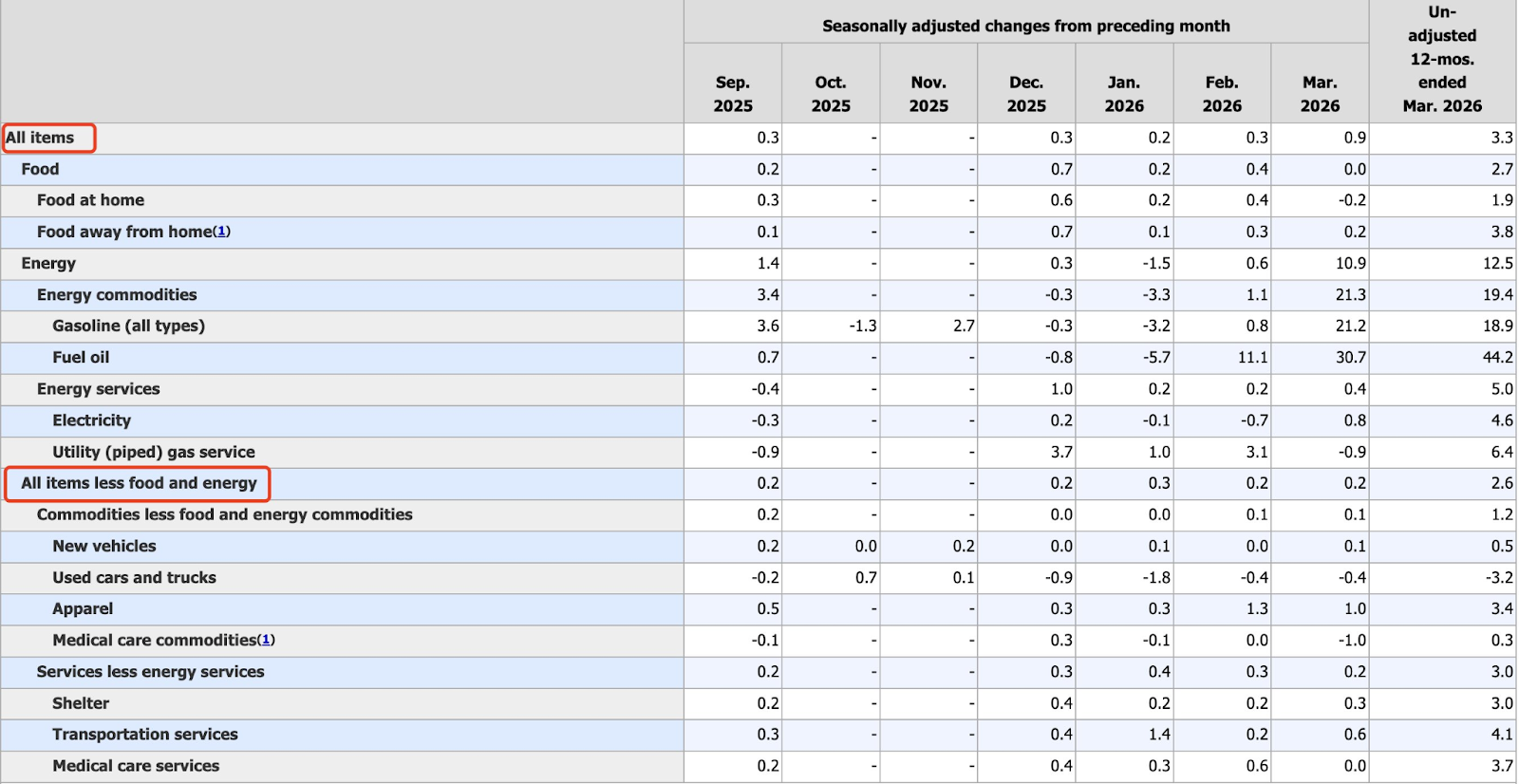
The US Consumer Price Index (US CPI) data for March 2026 shows inflation reaccelerating to 3.3% year over year (YoY) after a 0.9% month-over-month (MoM) rise, with energy prices surging 10.9% MoM and gasoline jumping 21.2%.
Core CPI excluding food and energy remained steady at 0.2% MoM and 2.6% YoY, highlighting underlying inflation pressures. The energy-driven spike is caused by the recent Middle East geopolitical tensions, especially the closure of the Strait of Hormuz.
US CPI Reaccelerates to 3.3% Amid Energy Spike
According to sources, US CPI data released for March 2026 shows inflation rose 0.9% MoM, pushing the annual rate higher to 3.3% YoY. The increase reflects broad shifts in consumer prices during the reporting period and signals renewed upward pressure on headline inflation.
Meanwhile, energy prices surged sharply in the March 2026 CPI report, rising 10.9% MoM. Gasoline prices climbed even faster, jumping 21.2% over the same period and driving most of the headline inflation acceleration.
Source: X
In contrast, core CPI excluding food and energy remained stable in March 2026, increasing only 0.2% MoM while holding at 2.6% YoY. This indicates that underlying inflation pressures remain contained despite volatility in energy.
Energy Spike Triggered by Strait of Hormuz Closure
Iran closed the Strait of Hormuz in early March 2026 in retaliation for US and Israeli strikes on its territory. The move blocked a critical waterway that carries about 20% of the global daily oil supply.
The sudden closure stranded millions of barrels of oil and LNG at Persian Gulf ports. Global energy markets experienced immediate disruptions from the blocked supply routes. Crude oil prices began to surge as a direct consequence of the closure of the Strait of Hormuz.
The Strait of Hormuz blockade pushed Brent crude above $110 per barrel within days and transmitted higher costs directly into US energy markets. This surge drove the 10.9% monthly increase in energy prices, and the 21.2% jump in gasoline was reflected in the CPI data.
What’s The Impact on Fed Policy and Crypto Markets?
The March 2026 CPI report has shifted Federal Reserve expectations. The CME FedWatch Tool now reflects sharply lower odds of near-term rate cuts. Crypto, long viewed as a risk asset, could face renewed pressure as tighter monetary policy and elevated energy costs weigh on liquidity and mining profitability.
Economists at Goldman Sachs now predict 30% recession odds over the next 12 months, while EY-Parthenon puts the probability at 40%. As of April 10, 2026, Bitcoin (BTC) and Ethereum (ETH) rose modestly, with BTC trading at $72,470.57 and ETH at $2,222.57, as both cryptocurrencies experienced softer growth amid the macro uncertainty.
Therefore, this outlook signals extended volatility for investors in the coming weeks. Market watchers warn of continued volatility until the Iran situation stabilizes and the Fed signals its next move. Higher-for-longer rates may continue to pressure risk assets until the May FOMC meeting.
Related: U.S. Import Prices Surge 1.3% in February, Exports Up 1.5% – How Crypto Will React
Disclaimer: The information presented in this article is for informational and educational purposes only. The article does not constitute financial advice or advice of any kind. Coin Edition is not responsible for any losses incurred as a result of the utilization of content, products, or services mentioned. Readers are advised to exercise caution before taking any action related to the company.