
- USDT briefly fell to $0.9980, its weakest level in over five years, reigniting liquidity concerns.
- Bitcoin fell as USDT weakened, showing prices remain sensitive to even minor stablecoin stress.
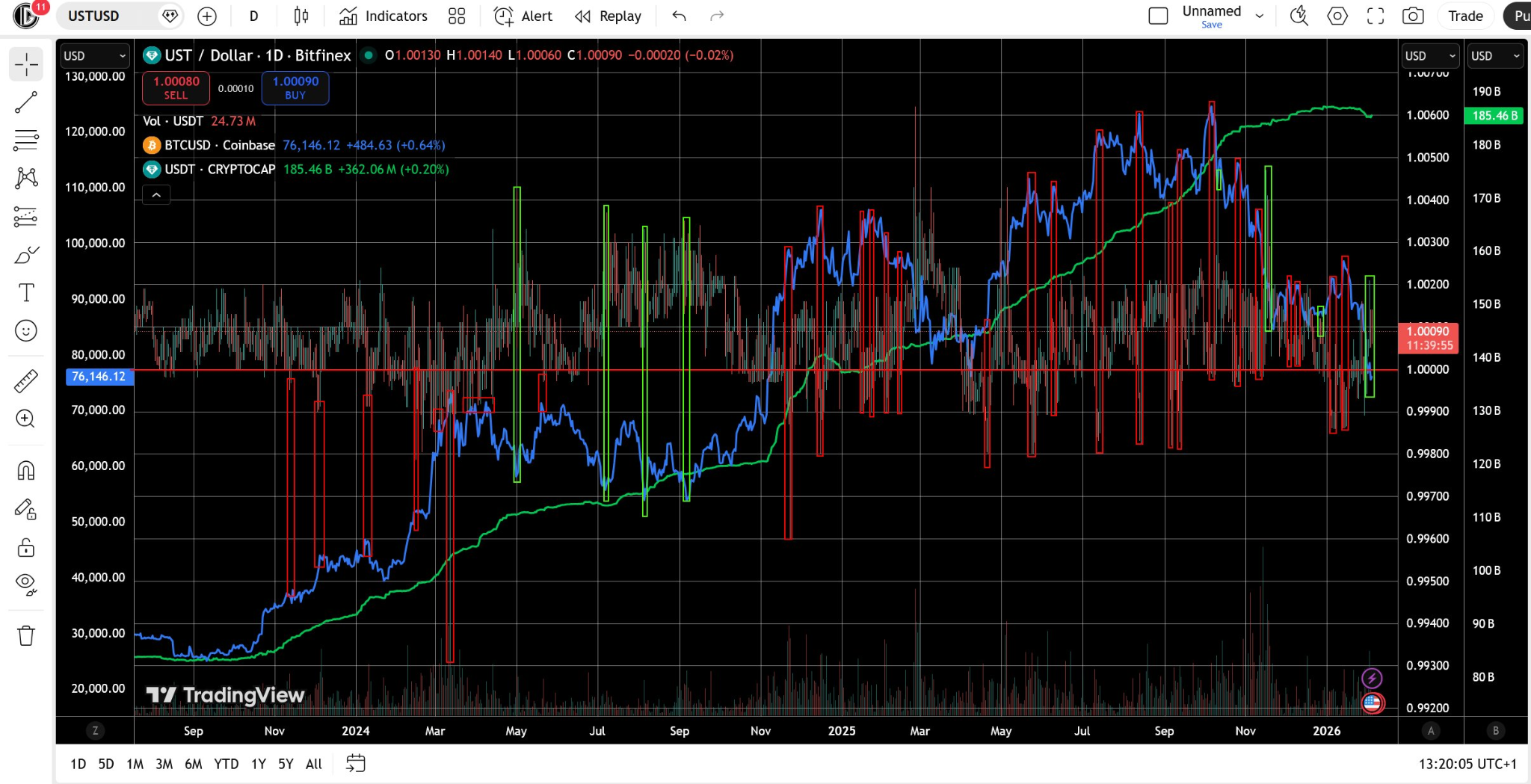
- Researcher Deso says BTC tops and bottoms align with pressure on the USDT peg.
Tether’s dollar-linked stablecoin USDT briefly slipped to around $0.9980, its weakest level in more than five years, reviving long-standing concerns about the crypto market’s reliance on a single source of liquidity.
Although USDT later recovered modestly, analysts said the move once again highlighted how sensitive digital asset prices remain to even small disruptions in the stablecoin market.
Why USDT Matters So Much
USDT is the widely used stablecoin globally, accounting for 68.4% of all stablecoin monthly active users, according to Q4 2025 market data. As a result, even minor deviations from its dollar peg can ripple quickly through markets.
A Controversial Thesis Arrives
The depeg coincided with discussion around a controversial analysis circulating on social media, which argues that Bitcoin’s long-term price behaviour is closely tied to USDT liquidity rather than organic supply-and-demand dynamics.
Independent researcher Deso claims that major Bitcoin tops, bottoms, and consolidation phases align with periods of stress in the USDT peg. Under this view, stablecoin liquidity acts as a hidden control mechanism shaping market cycles.
The analyst points to March 2024, when a brief USDT depeg was followed by months of sideways trading in Bitcoin, despite strong bullish narratives in the wider market.
Liquidity, Not Sentiment?
According to the analysis, Bitcoin’s rally from around $16,000 was driven primarily by liquidity conditions rather than genuine investor demand.
The argument echoes long-running claims from critics such as Bitfinexed, who have argued that Bitcoin prices respond disproportionately to stablecoin issuance and flow.
“If manipulation exists, it should be visible in the charts,” the researcher argues, pointing to recurring price alignment zones across multiple market cycles. He continues to update his analysis as new data emerges.
Analysts said Tuesday’s move does not, by itself, mean a broader crisis. Tether has repeatedly said USDT is fully backed by reserves, including U.S. Treasury bills and other assets, and has described its business as one of the most profitable in the crypto sector.
Still, questions about reserve transparency mean that even small deviations from the peg can fuel outsized reactions.
“A bear market wouldn’t be a bear market without some Tether fear,” one trader said, adding that past depeg episodes have faded without triggering systemic collapse.
Related: Bitcoin Near $70,000: Analysts Say the Real Issue Isn’t Price, It’s Supply
Disclaimer: The information presented in this article is for informational and educational purposes only. The article does not constitute financial advice or advice of any kind. Coin Edition is not responsible for any losses incurred as a result of the utilization of content, products, or services mentioned. Readers are advised to exercise caution before taking any action related to the company.