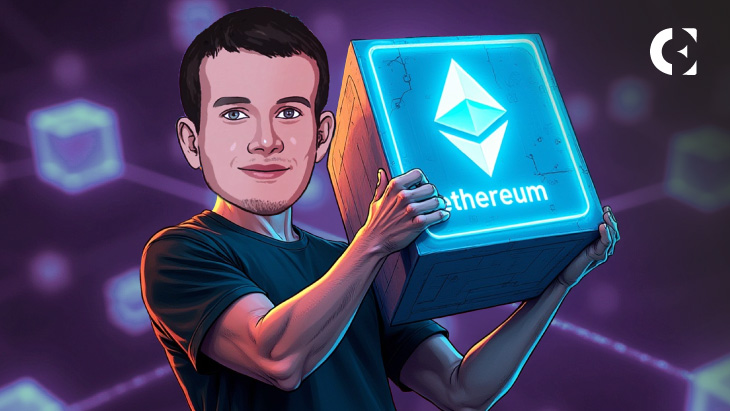
- Vitalik Buterin calls for a bold rethink of Ethereum’s application layer and developer mindset.
- He says privacy should become a core pillar of Ethereum’s future app ecosystem.
- Developers should break free from legacy wallet and app design choices, he argues.
Vitalik Buterin has called on Ethereum developers to adopt a more experimental mindset when designing applications, arguing that the ecosystem should rethink long-standing assumptions while preserving its core principles.
In a series of posts on X, Buterin said the Ethereum community must remain committed to key values such as censorship resistance, open-source development, privacy, and security. However, he says developers should be far more open to reimagining how applications are built on top of the blockchain.
“I think it’s healthy for us in the Ethereum world to have a more bold and open mindset,” Buterin wrote.
Breaking Away From Old Design Choices
Buterin argued that many Ethereum applications have evolved based on historical decisions rather than fresh thinking. He encouraged developers to imagine rebuilding the ecosystem from scratch and to temporarily ignore “path dependence,” or the influence of past design choices.
He said future payment systems might avoid the common “0x” address structure altogether and instead process transactions inside privacy-focused protocols such as Railgun or Aztec, while still allowing deposits and withdrawals to standard addresses.
Privacy Becomes a Core Focus
Buterin also said that privacy should now be treated as a fundamental security feature for Ethereum applications.
He said this shift could require a dramatically different application stack from what exists today, since many current decentralized applications were not originally designed with privacy as a core principle.
“For too long, our algorithm in Ethereum has been: we have this existing ecosystem, what’s the logical next step to make it one step better?” he said.
Integrating With Traditional Finance
The discussion also drew responses from other developers.
Crypto researcher DC agreed that parts of the Ethereum ecosystem, particularly wallets, could benefit from a fresh start. However, he argued that real-world financial adoption would still require integration with traditional financial systems.
He said crypto applications that reach millions of users will likely depend on connections to fiat payment rails and issuer-backed assets.
Buterin acknowledged that point, saying mainstream payment apps and wallet tools may need to integrate with traditional finance so users can easily deposit and withdraw funds.
AI and The Future of Crypto Interfaces
Buterin also said that artificial intelligence could reshape how users interact with blockchain technology.
He raised the possibility that AI agents could eventually replace traditional browser extensions and mobile wallets, transforming how decentralized applications are accessed and used.
Such a shift could push the ecosystem toward fewer standalone applications and more flexible systems where users interact through intelligent agents.
Related: Ethereum’s Biggest Overhaul Yet? Vitalik Targets Core Architecture
Disclaimer: The information presented in this article is for informational and educational purposes only. The article does not constitute financial advice or advice of any kind. Coin Edition is not responsible for any losses incurred as a result of the utilization of content, products, or services mentioned. Readers are advised to exercise caution before taking any action related to the company.