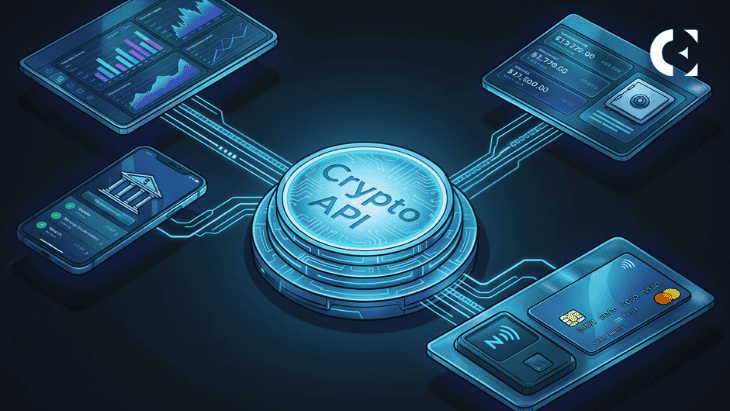

Crypto APIs are the connective tissue between blockchain data and the application developers who build on top of it. Whether you are assembling a portfolio tracker, feeding a trading bot with real-time prices, or pulling DeFi position data into a tax tool, the API you choose determines how much engineering overhead you take on and how reliable your data pipeline will be.
This guide breaks down the leading crypto API providers available in 2026, covering what each one does well, where it falls short, and which use cases it fits best. Every provider listed here offers something structurally different, so the right choice depends on what you are building and how you need the data delivered.
What to Look for in a Crypto API
Before evaluating individual providers, it helps to establish what separates a useful crypto API from one that creates more problems than it solves. Here are the criteria that matter most for production applications.
Data Coverage and Freshness: The number of blockchains, exchanges, and assets an API covers directly affects how many supplementary integrations you need. An API that returns wallet balances across 100+ chains from a single endpoint saves weeks of development compared to stitching together chain-specific RPCs. Equally important is how current the data is: stale pricing or delayed transaction histories undermine any downstream feature.
Response Structure and Consistency: Clean, well-structured JSON responses reduce parsing logic and edge-case handling. The best APIs return data in a consistent schema regardless of the underlying chain or exchange, so your frontend does not need chain-specific adapters.
Pricing Transparency: Ambiguous pricing models lead to surprise bills at scale. Look for providers that clearly document their rate limits, credit costs, tier thresholds, and offer a functional free tier for prototyping.
Documentation and Developer Experience: Comprehensive docs with endpoint references, code examples, and clear error descriptions are non-negotiable. APIs with sandbox environments or interactive explorers tend to have faster integration cycles.
Specialized Capabilities: Some APIs focus on raw node access, others on aggregated market data, and others on on-chain analytics. Matching the provider’s specialization to your use case avoids paying for features you do not need while missing the ones you do.
1. CoinStats API
Best for: Multi-chain data aggregation and portfolio integration
CoinStats started as a portfolio tracking application used by over 1 million monthly users and has since expanded its data infrastructure to developers through a public REST API. Rather than providing raw blockchain RPC access, the API delivers aggregated, pre-structured data: clean wallet balances, transaction histories, DeFi position data, and market feeds, all without requiring developers to parse low-level on-chain responses.
Core Capabilities
120+ Blockchain Networks: Unified wallet balances and transactions across Solana, Ethereum, Bitcoin, and a broad range of EVM-compatible chains (Polygon, Arbitrum, Hyperliquid, Tron), all returned through one endpoint with a consistent schema.
200+ Exchanges: Aggregated market data from centralized and decentralized exchanges, including Coinbase and Hyperliquid, with real-time pricing, volumes, and market caps for thousands of cryptocurrencies.
10,000+ DeFi Protocols: Staking positions, lending balances, LP holdings, and yield data are automatically detected and returned alongside standard wallet balances. No additional integrations are required per protocol.
100,000+ Coins: Real-time and historical pricing data, market caps, and volume metrics covering both on-chain tokens and exchange-listed assets.
Portfolio Data Access: Developers can pull portfolio data stored in CoinStats (total value, holdings breakdown, P/L, performance charts) through a ShareToken-based authentication flow, making it possible to embed portfolio views into custom applications.
MCP (Model Context Protocol) Support: CoinStats provides first-class MCP integration, exposing its API as callable tools for AI assistants and developer environments such as Claude Code, Cursor, and VS Code. This positions the API for AI-agent workflows where autonomous systems need structured crypto data through conversational interfaces.
News and Market Sentiment: Aggregated cryptocurrency news and trending topics from trusted sources, useful for building research dashboards or sentiment-aware trading tools.
Data Specifications
- Blockchains: 120+
- Exchanges: 200+
- DeFi Protocols: 10,000+
- Assets: 100,000+ coins
- Wallet Support: Solana, Ethereum, EVM chains, Bitcoin (including xpub/ypub/zpub)
- API Type: REST API + MCP Server
Pricing
CoinStats uses a credit-based pricing model. Developers receive a free plan at signup and upgrade only when they need more credits or higher rate limits. Credit usage scales with endpoint complexity and request parameters. For example, querying a single-chain wallet balance costs fewer credits than requesting balances across all supported networks in one call. Credit multipliers are documented transparently, and usage can be tracked in real time through the API dashboard at openapi.coinstats.app.
Ideal For
- Portfolio trackers that need clean, aggregated multi-chain data
- Trading bots that rely on cross-exchange market data
- Crypto tax and accounting tools requiring full transaction histories across chains
- AI assistant and chatbot developers leveraging MCP integration for conversational data access
- Fintech applications embedding live price tickers, portfolio summaries, or wallet explorers
Limitations
- Does not provide raw blockchain RPC or node-level access
- Not designed for ultra-low-latency or high-frequency trading at the microsecond scale
- Credit costs can increase when querying large numbers of networks simultaneously using the “all” parameter
2. Moralis
Best for: Cross-chain Web3 development with pre-built SDKs
Moralis provides a suite of Web3 APIs designed to reduce backend development time for dApp builders. Its primary value is abstracting away the complexity of multi-chain data retrieval through high-level endpoints that return parsed, enriched blockchain data rather than raw node responses.
Core Capabilities
EVM and Solana Coverage: Moralis supports major EVM chains (Ethereum, Polygon, BNB Chain, Arbitrum, Avalanche, Base, Optimism) along with Solana, covering both token and NFT data across these networks.
Wallet API: Returns token balances, transaction histories, NFT holdings, and net worth for any wallet address. Responses include resolved token metadata and USD-denominated values, reducing the amount of post-processing needed on the client side.
Token API: Price data, metadata, ownership information, and transfer histories for ERC-20 and SPL tokens. Includes endpoints for token discovery and pair analytics on decentralized exchanges.
NFT API: Collection metadata, ownership data, transfer history, and floor pricing for NFTs across supported chains.
Streams API: Real-time webhook-based notifications for on-chain events. Developers define filters (specific addresses, contract events, token transfers) and receive parsed payloads when matching transactions are confirmed.
Pricing
Moralis offers a free tier with daily compute unit limits, along with paid plans that provide higher usage capacity and additional features such as priority support. Enterprise plans are available for high-volume applications.
Ideal For
- dApp developers who want pre-parsed, enriched blockchain data without running their own indexers
- NFT marketplaces and portfolio tools that need cross-chain NFT data
- Teams building real-time notification systems using webhook-based event streams
Limitations
- Chain coverage is narrower than providers focused purely on data aggregation (no Bitcoin wallet support, for example)
- Compute unit pricing requires careful monitoring at scale, as complex queries consume more units
- Historical data depth varies by chain and endpoint
3. Kaiko
Best for: institutional-grade market data, compliance, and quantitative research
Kaiko provides institutional-grade crypto market data, analytics, indices, and monitoring tools tailored for financial institutions and regulators. It also offers detailed Level 1 and Level 2 market data with in-depth analysis. This makes it particularly suited for venue analysis, liquidity research, and market structure insights rather than general-purpose crypto applications.
Core Capabilities
Institutional Market Data Coverage: Kaiko gives access to tick-level trade data, OHLCV candles, and order book snapshots across L1, L2, and even L3 depth. Its coverage spans more than 100 exchanges and around 35,000 trading pairs. The data is well normalized, which helps when pulling from multiple venues.
Reference Rates and Indices: The platform includes benchmark indices and reference rates built using transparent methods. These are often used in valuation, NAV calculations, and other compliance-heavy workflows where auditability is required.
Historical and Aggregated Data: Historical data is one area where Kaiko stands out. The datasets go deep enough for backtesting or quant research and also include pre-computed metrics such as slippage, liquidity depth, and volatility.
Delivery and Access: Access is mainly through REST APIs, along with enterprise delivery options if needed. The focus here is on reliability and consistency rather than speed at the microsecond level.
Pricing
Kaiko runs on a subscription model. Pricing is determined by data usage and the kind of SLAs involved. There’s no free tier, and in most cases, onboarding involves going through their sales team to get started.
Ideal For
- Hedge funds and quantitative trading firms require high-quality historical and real-time market data
- Compliance and risk teams working with auditable pricing benchmarks
- Asset managers building valuation models and index-based products
Limitations
- Does not provide on-chain data, wallet tracking, or DeFi position analytics
- Not designed for ultra-low-latency, high-frequency trading systems
- Limited public support for protocols like FIX and fewer disclosures around latency SLAs
4. CoinDesk Data (formerly CCData)
Best for: Institutional-grade market data and historical pricing
CoinDesk Data, the rebranded version of CCData (formerly CryptoCompare), provides deep market data feeds used by institutional traders, fund managers, and research teams. Its strength lies in the depth and granularity of its pricing and volume data, including OHLCV, order book snapshots, and index pricing.
Core Capabilities
OHLCV Data: Minute-level, hourly, and daily OHLCV (open, high, low, close, volume) data across thousands of trading pairs. Historical data extends back to the earliest available records for each asset.
Real-Time WebSocket Feeds: Streaming trade and order book data for supported exchanges, suitable for applications that need continuous data updates without repeated REST polling.
Index and Benchmark Data: Proprietary pricing indices designed for institutional use, including volume-weighted and outlier-adjusted reference rates.
Social and On-Chain Metrics: Supplementary data, including social media engagement metrics and on-chain activity indicators, useful for quantitative research and sentiment analysis models.
Pricing
CoinDesk Data offers a free tier with limited API calls. Professional and enterprise plans provide higher rate limits, deeper historical data, and access to premium index products. Pricing is usage-based, and specific costs depend on the data products selected.
Ideal For
- Quantitative trading teams that need granular OHLCV and order book data
- Fund administrators and compliance teams that require auditable reference pricing
- Research platforms building historical analysis tools or backtesting engines
Limitations
- Not designed for wallet data, DeFi position tracking, or on-chain transaction histories
- Premium data products (indices, benchmarks) are priced separately and can be expensive
- The API surface area is large and can take longer to learn than simpler market-data-only providers
5. Bitquery
Best for: On-chain analytics and blockchain data querying via GraphQL
Bitquery provides a GraphQL-based interface for querying on-chain data across 40+ blockchains. Its architecture is built for analytical queries (aggregations, filters, historical lookups) rather than simple data retrieval, making it a strong fit for teams that need flexible querying capabilities over raw blockchain data.
Core Capabilities
GraphQL API: A single GraphQL endpoint that supports complex queries across supported blockchains. Developers can request exactly the fields they need, filter by time ranges, addresses, or token types, and aggregate results in a single request.
DEX and Trading Data: Detailed DEX trade data, including pair-level analytics, liquidity metrics, and historical trading volumes across Uniswap, PancakeSwap, and other decentralized exchanges.
40+ Blockchains: Coverage spans major chains, including Ethereum, Solana, BNB Chain, Polygon, Arbitrum, and others, with both real-time and historical data available.
Streaming API: Real-time data subscriptions via WebSocket for monitoring on-chain events as they occur.
Pricing
Bitquery offers a free tier with limited query points. Paid plans start with developer-tier pricing and scale based on query volume and complexity. Enterprise plans include dedicated support and higher throughput.
Ideal For
- Analytics platforms that need flexible, query-based access to on-chain data
- DEX aggregators and trading tools that need pair-level and liquidity data
- Research teams running complex blockchain data queries that would be difficult with REST APIs
Limitations
- GraphQL has a steeper learning curve than REST for developers unfamiliar with the query language
- Query performance can vary depending on complexity, particularly for historical data spanning long time ranges
- Wallet-level portfolio aggregation is not a primary focus
6. Alchemy
Best for: blockchain infrastructure, RPC access, and dApp development
Alchemy sits closer to the infrastructure side than most data providers. Its main role is keeping blockchain nodes available and handling the operational side, uptime, scaling, and load balancing. Support includes Ethereum, Solana, and several EVM chains such as Polygon, Arbitrum, Optimism, and Base. The platform doesn’t really try to aggregate or enrich data; most of what comes through is raw blockchain state, with a few higher-level APIs layered on top for common queries.
Core Capabilities
Node Infrastructure and RPC Access: At a basic level, Alchemy exposes JSON-RPC endpoints (along with Solana RPC) for interacting with blockchain networks. Contract state can be read, transactions can be submitted, and on-chain data can be retrieved without running independent nodes. The underlying infrastructure is managed within the platform, so the operational overhead stays relatively low.
Enhanced APIs: On top of standard RPC, there are additional APIs for tokens, NFTs, and transaction data. Some endpoints simplify tasks that would otherwise require multiple calls—for example, fetching transfer history or NFT ownership. It doesn’t eliminate complexity entirely, but it reduces the amount of manual parsing involved.
Real-Time Data and Webhooks: WebSockets handle real-time access, and the Notify service sends webhook-based alerts. This lets apps respond to things like address activity or confirmed transactions without having to keep polling, which can be costly and slow.
Pricing
Alchemy uses a compute unit (CU) model. There’s a free tier with a monthly allowance, and usage increases based on how heavy the requests are. Some methods consume noticeably more units than others, so costs don’t always stay predictable. Higher tiers are available with increased limits and SLA support.
Ideal For
- Teams building applications that work directly with on-chain data
- Does not provide on-chain data, wallet tracking, or DeFi position analytics
- Situations where managed infrastructure is preferred over running and maintaining nodes
Limitations
- Data comes mostly in raw form, so aggregation or enrichment has to be handled separately
- No native support for portfolio views, DeFi positions, or broader market data
- Costs can fluctuate depending on how different endpoints are used
7. Messari
Best for: Crypto asset research data and fundamental metrics
Messari provides structured research data for crypto assets, including fundamental metrics, governance information, and sector-level analytics. Its API is built for applications that go beyond price data and need contextual information about what a project does, how it is governed, and where it fits in the broader ecosystem.
Core Capabilities
Asset Profiles: Structured summaries of crypto projects, including descriptions, sector classifications, launch details, and key team members. Useful for building informational interfaces or research tools.
Fundamental Metrics: On-chain activity metrics, supply schedules, staking ratios, and other fundamental indicators for supported assets. These go beyond standard market data to provide a fuller picture of asset health.
Market Data: Real-time and historical pricing, volume, and market cap data for thousands of assets.
Governance Data: Information on governance structures, token distribution, and voting mechanisms for applicable protocols.
Pricing
Messari offers a free tier with basic market data access. Pro and enterprise plans unlock research data, fundamental metrics, and higher API rate limits.
Ideal For
- Research platforms and data terminals that need structured project-level information
- Fund managers conducting due diligence on crypto assets
- Applications that display fundamental metrics alongside price data
Limitations
- Not designed for wallet data, transaction histories, or DeFi position tracking
- Research-grade data (asset profiles, governance) requires paid access
- Coverage of smaller or newer tokens may lag behind pure market data providers
Choosing the Right API by Use Case
Rather than selecting a provider based on feature lists alone, it helps to start from the application you are building and work backward to the data requirements.
Portfolio Trackers and Wallet Explorers: If your application needs to display wallet balances, transaction histories, and DeFi positions across multiple chains, CoinStats is the most direct fit. Its aggregated data layer covers 120+ blockchains and 10,000+ DeFi protocols through a single API, which eliminates the need to integrate chain-by-chain. Covalent is an alternative if you need broader raw chain coverage with a unified schema but less DeFi-specific data.
Trading Bots and Market Data Tools: For applications that consume real-time pricing, OHLCV data, and exchange-level feeds, CoinDesk Data provides the deepest market data coverage, particularly for institutional use cases. CoinStats also serves this category well with market data across 200+ exchanges, especially if you need market data alongside wallet or portfolio data in the same integration.
On-Chain Analytics and Research: Bitquery’s GraphQL interface is purpose-built for complex on-chain queries, making it the strongest option for analytics dashboards and DEX data platforms. Messari complements this with fundamental metrics and structured project research data.
dApp Development: Moralis offers the most developer-friendly SDK experience for building decentralized applications, with pre-parsed data and real-time webhook streams. If your dApp is Ethereum-focused and needs contract verification or gas data, Etherscan remains the standard.
AI Agent and Chatbot Integration: CoinStats is currently one of the few providers offering MCP (Model Context Protocol) support, which allows AI assistants and developer tools to call crypto data endpoints natively through conversational interfaces. This is relevant for teams building AI-powered financial tools or autonomous trading agents.
Final Thoughts
The crypto API landscape in 2026 is more specialized than ever. No single provider covers every use case perfectly, but the fragmentation means developers can choose tools that closely match their actual data requirements rather than paying for monolithic platforms with features they will never use.
For most projects, the decision comes down to two questions: what data do you need, and how do you need it structured? Start there, prototype against a free tier, and scale into a paid plan once your usage patterns are clear.
Disclaimer: The information presented in this article is for informational and educational purposes only. The article does not constitute financial advice or advice of any kind. Coin Edition is not responsible for any losses incurred as a result of the utilization of content, products, or services mentioned. Readers are advised to exercise caution before taking any action related to the company.