
The crypto space is packed with options right now, and separating real value from noise has never been more important. NEAR Protocol is drawing attention for its Web3 infrastructure, Solana continues to hold its ground in high-speed performance, and Zcash remains a recognized name in the privacy coin category.
BlockDAG has entered the conversation with a live ecosystem, a Legacy Sale priced at $0.00000044, and a Buyback Program rate sitting at $0.05. With over one billion coins sold back, a live casino, $1 billion processed on-chain, and 10,000-plus TPS, BlockDAG is one of the most talked-about names this year. Here is a breakdown of all four projects and what each one actually brings to the table.
1. BlockDAG: The $0.00000044 Entry & $0.05 Buyback Gaining Attention
A live ecosystem, a defined buyback rate, and an entry price at a fraction of a cent. That combination is rare, and it is exactly what BlockDAG has put on the table through its Legacy Sale.
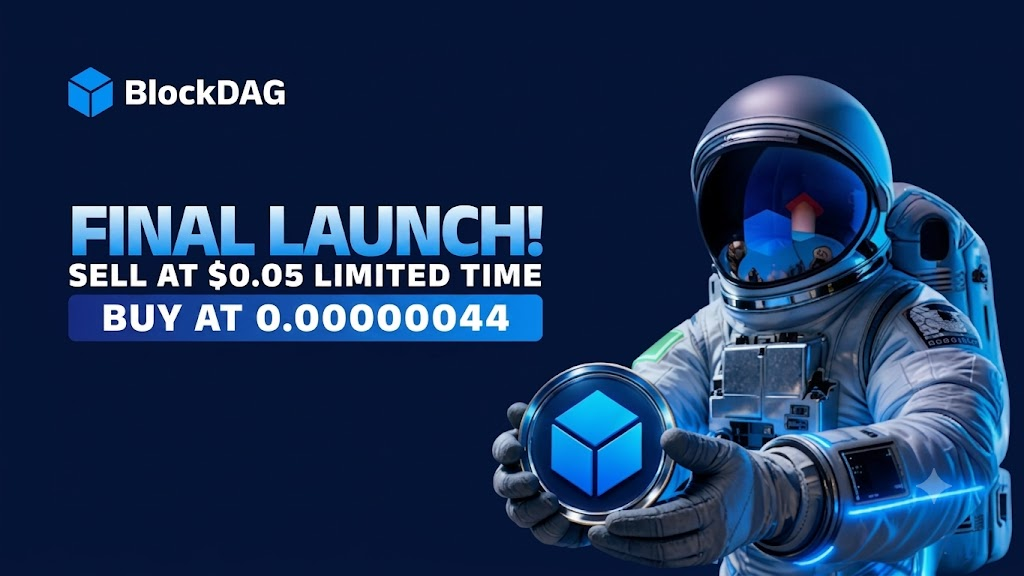
The math here is straightforward. BDAG is currently available at $0.00000044 per coin through the Legacy Sale. The Buyback Program rate is set at $0.05. That gap between purchase price and buyback rate is the arbitrage setup that experienced traders have been quick to notice.
Daily limits for Legacy Sale buyers remain uncapped, and selling through the Buyback Program is handled directly through the user dashboard under “Sell Coins.” Existing holders also have access to the Buyback Program at $0.00025 per BDAG, with daily submission limits.

What makes this more than just a numbers story is the activity happening across the platform right now. The BlockDAG Casino is fully live with 100-plus games running, deposits open, and a growing player base generating consistent, recurring transactions. That organic demand is real and present, not tied to future milestones.
The underlying technology is built to support all of it. BlockDAG’s DAG-based architecture delivers over 10,000 TPS, two-second consensus speeds, and a single platform covering both smart contracts and high-speed payments. The mainnet has already cleared more than $1 billion in on-chain value.
Supply conditions are tightening, too. Over 8 billion BDAG coins are currently staked, and the Buyback Program keeps pulling more coins away from open circulation. With 13 exchange listings already live, including BitMart, LBank, and XT.com, and Tier-1 listings in progress, broader market exposure is only growing. More visibility means more buyers, and the current Legacy Sale entry price reflects where things stand before that exposure fully arrives.
2. NEAR Protocol: Sharded Scalability for Web3 Apps
NEAR Protocol has earned a reputation as one of the more developer-accessible blockchains because of how it handles growth and usability. Its sharding design splits network activity across smaller segments, allowing the chain to process more without performance suffering as usage climbs.
Developers are drawn to NEAR partly because smart contracts can be written in common languages like JavaScript and Rust, removing the steep learning curve that comes with more specialized systems. The project has also positioned itself around emerging use cases, particularly AI-driven agents and automated applications that depend on fast, affordable transaction processing.
Near-instant finality and low fees support those goals well. Experiments with privacy tools and cross-chain intent-based swaps add further depth to what the protocol offers. NEAR is generally viewed as infrastructure built with the next generation of on-chain applications in mind rather than just the ones already running today.
3. Solana: Scalable Ecosystem for DeFi and NFTs
Solana’s main appeal has always been speed paired with low transaction costs, and that combination has helped it build one of the larger smart contract ecosystems in the market. Its architecture blends Proof-of-Stake with a timing mechanism called Proof-of-History, which allows the network to sequence transactions efficiently at high volume.
That performance has attracted trading platforms, gaming projects, NFT marketplaces, and payment-focused applications that need real-time responsiveness. Institutional interest has also grown, with companies exploring Solana for blockchain-based payment infrastructure and real-world financial use cases.
Past network outages have been a point of criticism, but development has remained active and infrastructure improvements have continued steadily. Low fees, strong developer participation, and broad brand recognition keep Solana positioned as one of the leading alternatives to Ethereum in the high-performance blockchain category, with a deep ecosystem that continues expanding.
4. Zcash: Privacy-First Digital Asset
Zcash occupies a specific and well-defined space in the crypto market, being the privacy coin with the most recognized cryptographic foundation. Unlike Bitcoin, where all transaction details are publicly visible on-chain, Zcash gives users the ability to shield sender, receiver, and amount information using zero-knowledge proofs.
That privacy optionality appeals to holders who want the benefits of a decentralized system without full transaction transparency. The structure of Zcash also mirrors Bitcoin in meaningful ways, including a fixed supply cap and mining-based coin issuance, which gives it a scarcity profile familiar to long-term crypto holders.
Ongoing research and protocol upgrades have continued improving usability and expanding privacy adoption over time. For those who prioritize confidentiality in financial activity, Zcash remains the most technically credentialed option in the privacy coin category, supported by a consistent development focus and a clear use-case identity.
The Bottom Line
NEAR Protocol brings solid infrastructure for Web3 builders, Solana delivers the throughput that performance-driven applications need, and Zcash holds a recognized position for privacy-focused holders. All three are established projects with clear identities and active development teams behind them.
Where BlockDAG separates itself is in the combination of a live ecosystem and a price structure that few projects can match right now. The Legacy Sale entry at $0.00000044 against a $0.05 Buyback Program rate is a concrete arbitrage gap, not a projection.

With 100-plus casino games already running, over 8 billion BDAG staked, $1 billion processed on-chain, and 13 exchange listings active, the fundamentals are already in motion. Over one billion coins repurchased means supply is shrinking, and the conditions supporting today’s Legacy Sale price will not stay in place as Tier-1 listings arrive and market exposure widens.
Disclaimer: The information presented in this article is part of a sponsored/press release/paid content, intended solely for promotional purposes. Readers are advised to exercise caution and conduct their own research before taking any action related to the content on this page or the company. Coin Edition is not responsible for any losses or damages incurred as a result of or in connection with the utilization of content, products, or services mentioned.