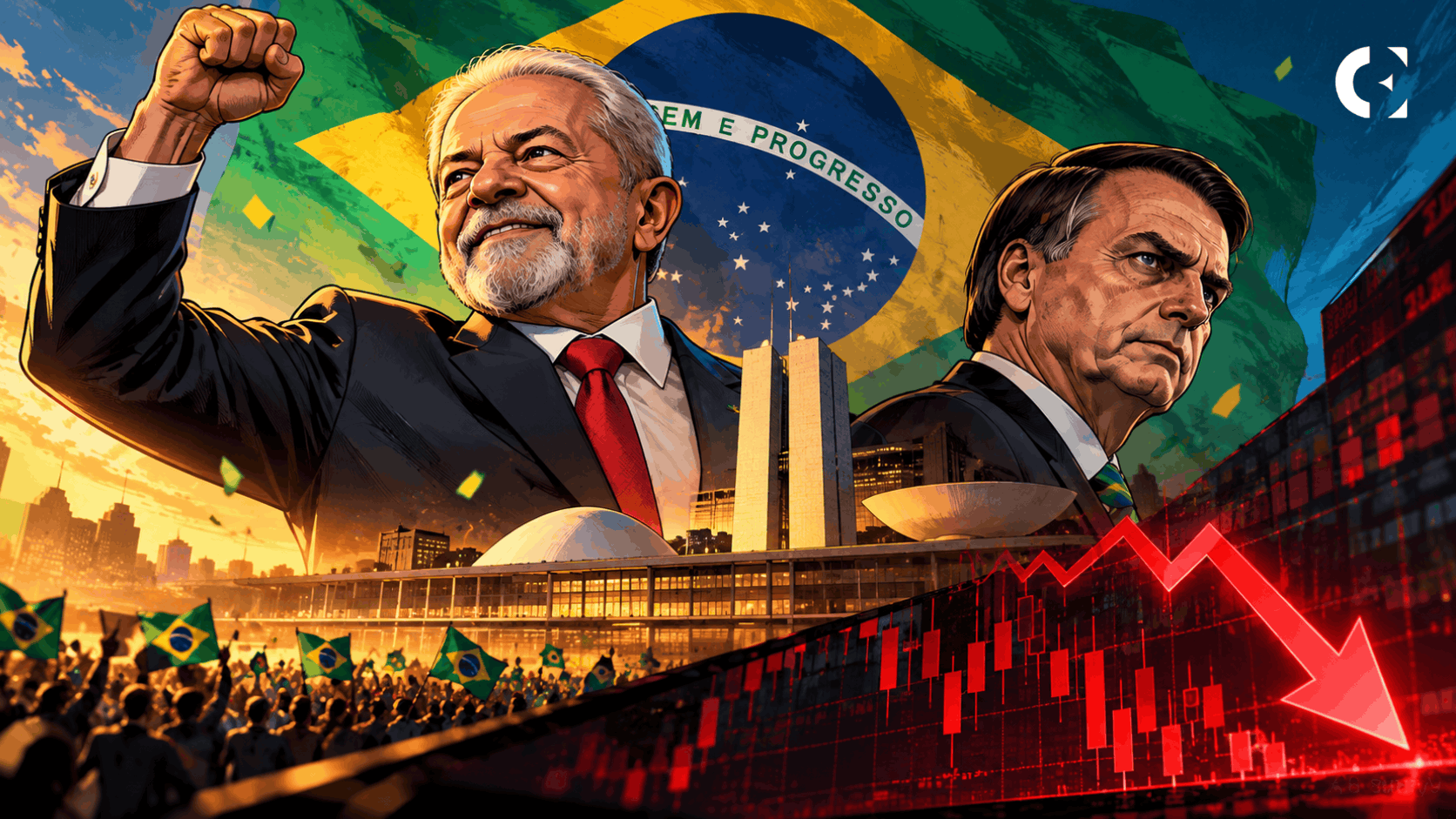

- iShares MSCI Brazil ETF plunged nearly 20% after Lula secured a fourth term with 51.8% of the vote.
- Brazil’s public debt topped 82% of GDP, raising concerns over Lula’s fiscal plans.
- Brazil interest rates stand at 13.75% as 84 million citizens struggle with overdue debt.
Brazilian assets fell in overseas trading after President Luiz Inácio Lula da Silva defeated Senator Flávio Bolsonaro in Sunday’s runoff, securing a fourth term.
The U.S.-listed iShares MSCI Brazil ETF dropped nearly 20% overnight, while currency derivatives signaled pressure on the real. The moves reflected investor concern about public spending and debt, though domestic stock trading had not confirmed comparable losses.
Brazil Election Result Reverses Market Expectations
Brazil’s electoral court reported that Lula received 51.8% of valid votes, finishing about 4.4 million votes ahead of Bolsonaro. The result reversed the first-round order, when Bolsonaro had led, and extended Lula’s electoral victories from 2002, 2006 and 2022.
Before the runoff, investors had anticipated that Bolsonaro might introduce stricter fiscal policies and lower corporate taxes. However, Lula’s victory appeared to unsettle markets, with an ETF tracking Brazilian equities falling as much as 16% in Japan, while CME currency derivatives indicated that the real could weaken by more than 10% against Friday’s close.
Government Debt Complicates Spending Commitments
The market reaction puts Brazil’s public finances under renewed scrutiny. Government debt has increased by more than 10% points during Lula’s current term, exceeding 82% of gross domestic product. Meanwhile, mandatory expenditure leaves less than 8% of the federal budget available for adjustment.
Lula has pledged to maintain fiscal rules that limit spending growth, raise the minimum wage faster than inflation, and protect social programs. However, conservative parties’ control of both congressional chambers could complicate legislation affecting taxes and government revenue.
Follow us on X for real-time crypto updates.
Households Face High Borrowing Costs
Economic pressures also extend to households and businesses. Brazil’s benchmark interest rate stands at 13.75%, while annual inflation of 4.6% exceeds the central bank’s upper tolerance limit of 4.5%.
According to credit bureau Serasa, nearly 84 million people and 9.3 million businesses are behind on debt payments. Lula has proposed debt-relief measures, including discounted purchases of distressed loans and tax forgiveness for some small businesses.
Trade Relations and Amazon Policy Remain in Focus
Beyond fiscal policy, Lula’s mandate puts relations with U.S. President Donald Trump under scrutiny, especially after Washington imposed additional 25% tariffs on Brazilian products.
Environmental policy also remains prominent. Government figures show Amazon deforestation fell by 41.8% to 3,335 square kilometers between August 2025 and July 2026, the lowest level recorded since 1988. Lula’s support for expanded oil development nevertheless remains part of the policy debate.
Subscribe to our YouTube channel for the latest crypto news.
Related: Brazil’s Digital Real Expands On-Chain with BBRL on Polygon
Disclaimer: The information presented in this article is for informational and educational purposes only. The article does not constitute financial advice or advice of any kind. Coin Edition is not responsible for any losses incurred as a result of the utilization of content, products, or services mentioned. Readers are advised to exercise caution before taking any action related to the company.