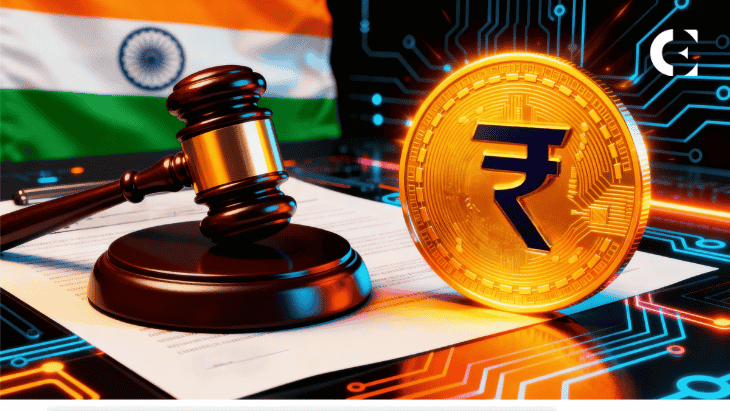

- Pushpendra Singh warns of 2.5 years of frustration for Indian stock investors, as the rupee faces pressure.
- He proposes three key tax reforms, including abolishing STT, removing LTCG tax, and reducing STCG tax.
- The key question is whether the proposed tax cuts could unlock liquidity across stocks, forex and crypto.
On September 24, 2026, crypto and finance educator Pushpendra Singh warned that Indian stock investors are increasingly frustrated by pressure on the rupee and significant tax burdens.
Singh proposed three tax reforms for public debate, including abolishing Securities Transaction Tax (STT), removing Long-Term Capital Gains Tax (LTCG), and reducing Short-Term Capital Gains Tax (STCG). However, these proposals raise a bigger question: could lower participation costs unlock liquidity across India’s stocks, forex, and crypto markets?
How Would the Changes Affect Trading Costs and Liquidity?
Pushpendra Singh ignited a new economic discussion in India, criticizing the country’s long-standing sluggish performance in the equity market. Singh highlighted growing investor frustration, pointing to a grueling 2-year, 3-month, and 18-day slump paired with ongoing pressure on the Indian rupee.
Abolishing STT would directly reduce the cost of trading Indian stocks. The current STT on equity delivery is 0.1% on purchase and 0.1% on redemption, making the total round-trip cost 0.2%. On a ₹1 lakh buy-and-sell transaction, STT alone amounts to ₹200.
Investors also pay 20% STCG on listed-equity gains held for 12 months or less, while LTCG is taxed at 12.5% above the annual ₹1.25 lakh exemption. Reducing the 20% STCG rate and removing the LTCG rate would further increase investors’ post-tax returns. Lower rates would boost post-tax returns and may promote higher volumes, tighter spreads, and deeper market liquidity.
Could Foreign Capital Boost India’s Forex Liquidity and the Rupee?
Any real inflow of foreign investors into Indian equities would involve the conversion of US dollars into rupees. That USD-to-INR flow boosts the availability of dollars in the onshore forex markets, which, in turn, helps the rupee and contributes overall to FX liquidity.
Continued inflows would also sustain two-way trading in the currency market as capital is repatriated or hedged over time, deepening the INR complex and increasing forex market liquidity.
In addition, improving equity-market liquidity, through lower transaction and capital-gains taxes, could help improve India’s relative attractiveness by reducing friction and increasing expected post-tax returns. That could make Indian stocks look more attractive to global allocators who are looking at emerging markets.
However, US interest rates, the dollar’s strength and global risk appetite remain bigger drivers of foreign capital flows and the rupee. Higher US yields, a firm dollar and elevated oil prices can sustain demand for dollars.
Could Stock-Market Liquidity Spill Over Into Crypto and Attract New Capital?
Greater equity-market liquidity could spill over into India’s crypto market, but the connection remains indirect. Reduced trading expenses can lead to a greater sense of risk appetite, prompting investors to invest more money in higher-beta assets, like crypto.
But India still has 30% VDA gains tax and 1% TDS on transfers, which continues to limit such transmission. Crypto markets are also more heavily influenced by global liquidity, Bitcoin cycles, US monetary policy and international regulatory developments than by domestic equity liquidity.
The reforms would likely encourage existing investors to trade more frequently before generating substantial new capital. Lower STT and reduced STCG/LTCG would reduce trading costs, potentially increasing volumes, turnover and market liquidity.
Genuinely new domestic or foreign capital, however, could enter if improved after-tax returns make Indian equities more attractive. Such inflows would still be subject to valuations and earnings growth, macroeconomic stability, global interest rates, and overall investor sentiment.
What This Means for Indian Stocks, the Rupee and Crypto
Lower equity taxes can initiate a liquidity cycle linking stocks, the rupee and, more loosely, crypto. Abolishing STT and reducing or removing STCG/LTCG lowers trading friction, encourages higher volumes and deepens liquidity.
A stronger risk appetite could spill over into crypto, and foreign inflows can support the rupee. However, global conditions are still the deciding factor, and the stock-to-crypto tie is still weak and secondary.
Related: India’s Finance Minister Calls for Investor-Friendly Tax Policy Amid New Levies
Disclaimer: The information presented in this article is for informational and educational purposes only. The article does not constitute financial advice or advice of any kind. Coin Edition is not responsible for any losses incurred as a result of the utilization of content, products, or services mentioned. Readers are advised to exercise caution before taking any action related to the company.