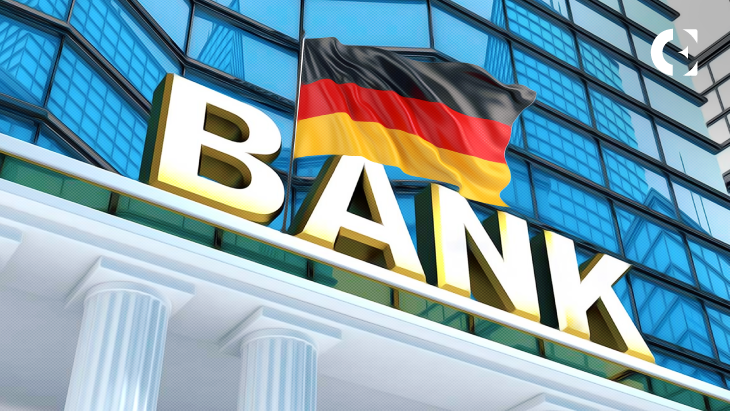

- German banks expand crypto trading as millions of retail customers gain direct access.
- DZ Bank and DekaBank roll out crypto platforms as customer demand continues to rise.
- German banks expand crypto access while maintaining warnings over investment risks.
Germany’s banking sector is preparing for a broader role in the crypto market as cooperative and savings banks move forward with plans to offer digital asset trading to retail customers. The expansion is a change for institutions that had previously avoided retail crypto services because of concerns about market volatility and investor protection.
As new platforms are introduced through regulated banking networks, millions of customers could soon gain access to cryptocurrency trading directly from the financial institutions they already use, reflecting a shift driven by growing customer demand while maintaining warnings about the risks involved.
Cooperative and Savings Banks Expand Digital Asset Access
Cooperative banks have already started introducing cryptocurrency trading through a platform developed by DZ Bank. The service allows customers to trade digital assets including Bitcoin, Ethereum, Litecoin, and Cardano from within their banking relationship.
A similar rollout is also underway for Germany’s savings banks. DekaBank is preparing to launch its cryptocurrency platform later this year, with implementation expected to take place in stages. Individual banks will determine whether to participate, although representatives from DZ Bank said interest among member institutions has been strong, with hundreds expected to adopt the service over time.
The expansion, as reported by Bloomberg, enables customers to trade cryptocurrencies without opening accounts with dedicated crypto exchanges. Bloomberg also cited survey data showing that German consumers place more than twice as much trust in their primary bank as they do in specialized cryptocurrency trading platforms.
Four years ago, Germany’s savings banks declined to introduce cryptocurrency trading for retail customers, describing the risks as too difficult to measure. Since then, increasing customer interest has led many institutions to revisit that decision.
Related: Germany’s Largest Bank Set to Provide Crypto Custody Solutions
Industry Continues to Highlight Investment Risks
Despite the expansion, warnings about cryptocurrency investing remain in place. Co-Pierre Georg, a professor at Frankfurt School of Finance & Management, said the broader access through trusted local banks could encourage some investors to underestimate the risks associated with highly volatile digital assets.
Germany’s savings banks association, DSGV, also stated that cryptocurrency trading is intended for self-directed investors and continues to be a highly speculative investment that carries the possibility of a total loss.
Reder said cryptocurrencies are likely to develop into an established asset class alongside stocks, bonds, and private market investments, while noting that they should complement rather than replace traditional holdings.
Disclaimer: The information presented in this article is for informational and educational purposes only. The article does not constitute financial advice or advice of any kind. Coin Edition is not responsible for any losses incurred as a result of the utilization of content, products, or services mentioned. Readers are advised to exercise caution before taking any action related to the company.