

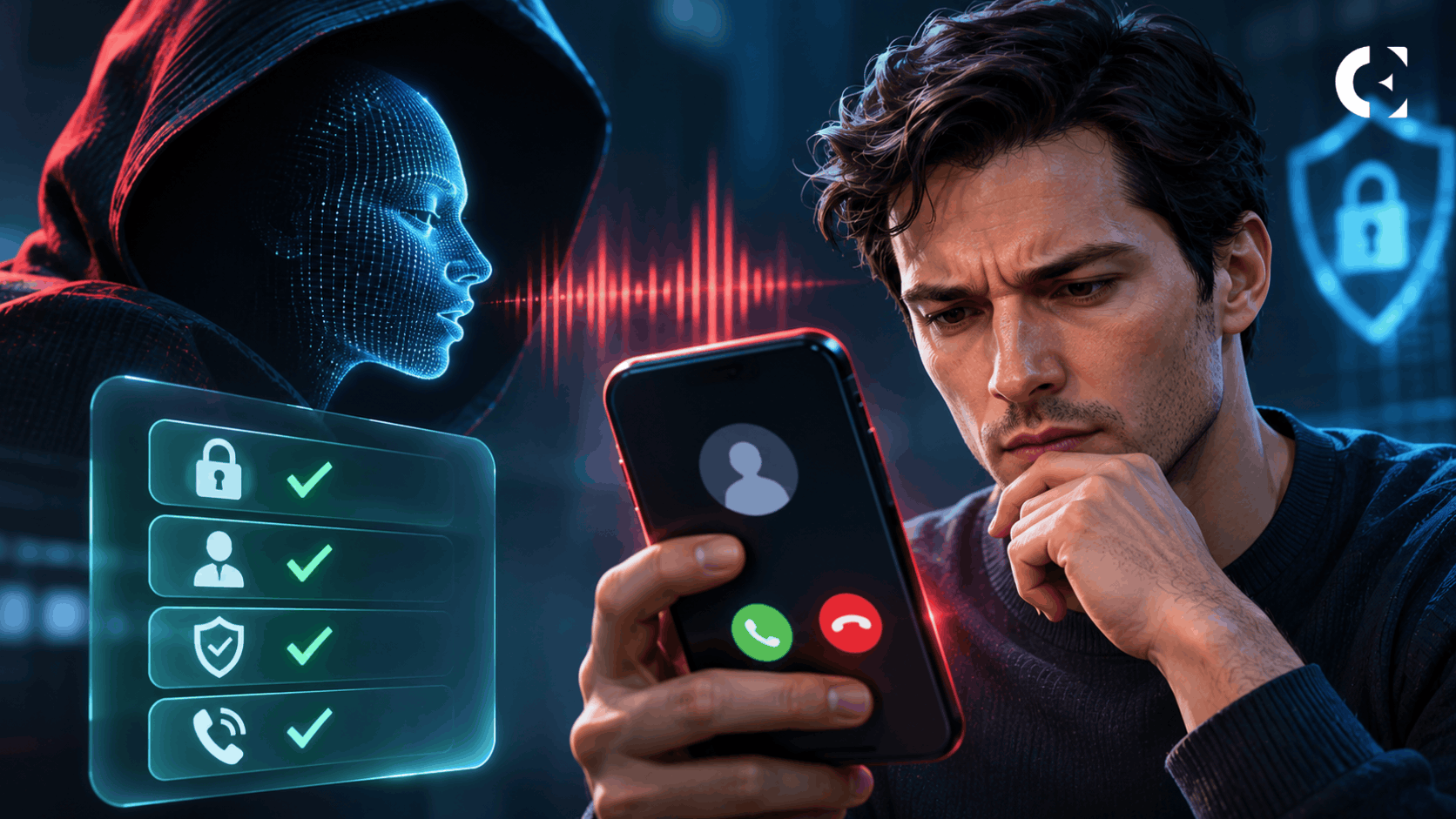

A phone call from a family member asking for emergency money, a boss requesting an urgent transfer, or a bank employee warning about an account closure may sound convincing. However, the voice on the other end may not belong to the person it claims to represent.
Scammers can use artificial intelligence (AI) to clone someone’s voice from a short audio recording and impersonate them during fraudulent calls or voice messages. These attacks, often associated with voice phishing (vishing), exploit trust and urgency to pressure victims into sending money or revealing sensitive information.
The US Federal Trade Commission (FTC) and Federal Bureau of Investigation (FBI) have warned about the use of AI-generated voices in impersonation scams. Understanding how these attacks work and independently verifying unexpected requests can help people avoid financial losses.
How Criminals Turn Public Audio Into Cloned Voices
Vishing, short for voice phishing, involves using phone calls, voicemail, or Voice over Internet Protocol (VoIP) communications to deceive victims. AI-enabled vishing adds voice synthesis to traditional impersonation tactics, allowing criminals to imitate people the target already knows or trusts.
Scammers may collect audio recordings from public videos, interviews, podcasts, or social media posts. They can then submit these recordings to AI voice-cloning tools that analyze a person’s speech patterns, tone, and vocal characteristics to generate similar-sounding speech.
The FBI’s warning on generative AI fraud explains how criminals exploit publicly available information and audio recordings to impersonate individuals. The FTC has also warned that scammers can use a short audio clip to create a convincing imitation of someone’s voice.
Once the voice clone is ready, the scammer creates a situation that encourages the victim to act quickly. A fake relative might claim to have been injured or arrested and need emergency money. An impersonated boss could request an urgent payment, while a fake bank representative might warn that an account will be closed unless the victim provides sensitive information.
Criminals may also manipulate caller ID to make the incoming call appear to come from a familiar person or legitimate organization. The FBI’s guidance on spoofing and phishing explains how fraudsters disguise their identities and make communications appear trustworthy.
Follow us on X for real-time crypto updates.
Inside the Tactics That Make AI Vishing Convincing
A cloned voice is only one part of the deception. Scammers use personal details, then create pressure before the target can check the story. Fear, secrecy, and urgency are deliberate tools. A caller may claim a relative cannot speak freely or that a payment must clear immediately.
Some attacks move between channels. A caller may send a text, direct the target to an unfamiliar app, or provide a fake login link. The FBI described impersonation campaigns that used messages and AI-generated voice notes to build trust before seeking account access or sensitive information.
Knowing someone’s name, workplace, or family connection does not prove identity. Neither does a convincing voice or video call. Caller ID can be manipulated, and images can be generated or altered.
Which Verification Habits Can Stop the Fraud?
The most reliable way to check an unexpected request is to verify it through a separate, trusted communication channel. If a caller claims to be a family member, employer, or bank representative, end the conversation and contact that person or organization using a number saved in advance or published on its official website.
Families can also establish a private emergency code word or phrase. If someone calls claiming to be a relative in trouble, asking for the agreed phrase can provide an additional identity check. The FBI recommends using verification phrases and independently confirming suspicious requests.
Businesses should apply similar safeguards to financial transactions. Unusual payment instructions, urgent fund transfers, and changes to supplier bank details should be independently confirmed with the relevant contact. Requiring a second authorized employee to approve significant or unusual payments can provide another layer of protection. The FBI’s business email compromise guidance also recommends verifying payment and account changes through a separate communication channel.
Never share passwords, one-time passcodes, or multifactor authentication codes during an unexpected call. Requests for gift cards, cryptocurrency, wire transfers, or remote access to a device should also raise suspicion. Legitimate support teams should not ask customers to disclose security codes to establish their identity.
Do not rely on hearing whether a voice is artificial. Odd pauses may raise questions, but a smooth voice proves nothing. The National Institute of Standards and Technology notes that synthetic-audio detection varies with the generator, test data, and background noise. Listening cannot replace identity checks.
Limit public audio where practical, review social media privacy settings, and avoid sharing unnecessary personal details. These steps cannot prevent every clone but can reduce material criminals use to personalize an attack.
What to Do When an AI-Generated Call Raises Suspicion
Anyone who suspects a voice-cloning scam should end the call without sharing information, following links, or making payments. They should then contact the supposed caller through a previously verified phone number or another trusted communication channel.
If the caller sent text messages, voice notes, links, or payment instructions, preserve them along with the phone number and other relevant details. These records may help financial institutions and law enforcement investigate the incident.
The incident can also be reported to the relevant authorities. In the United States, victims can submit complaints to the FTC or the FBI’s Internet Crime Complaint Center (IC3). Providing transaction records, messages, phone numbers, and other evidence can help investigators assess the incident.
FAQS
Yes. Using recorded speech, criminals can synthesize an audio clone that mimics someone’s voice.
No. Phone numbers and other identifying information can be faked.
End the call and verify using a recognizable number or another method.
Negative. But it can be hard to tell if audio is fake, so it’s better to get a second opinion.
Subscribe to our YouTube channel for the latest crypto news.
Related: Why Gen Z Is Becoming the Biggest Target for AI Deepfake Scams
Disclaimer: The information presented in this article is for informational and educational purposes only. The article does not constitute financial advice or advice of any kind. Coin Edition is not responsible for any losses incurred as a result of the utilization of content, products, or services mentioned. Readers are advised to exercise caution before taking any action related to the company.