



- Trump’s February 2025 tariff announcement sent Bitcoin below $100,000 to approximately $91,442.
- Trump’s January 2026 Greenland tariff threat coincided with declines in stocks and Bitcoin.
- Trump’s posts still trigger market volatility, but lasting price moves increasingly depend on what happens next.
Donald Trump’s Truth Social posts have repeatedly triggered sharp reactions across financial markets, from Bitcoin’s weekend sell-offs to rallies in cryptocurrencies and swings in stocks, oil, and Treasury yields. However, as traders become more familiar with his announcements, the question is whether his words still carry the same market-moving power they did in 2025.
A comparison of major posts from 2025 and 2026 reveals how markets initially respond, how long those movements last, and whether investors are increasingly waiting for concrete developments before making longer-term decisions.
2025 Tariff Threats Sent Bitcoin Lower Before Wall Street Reopened
On February 1, 2025, President Donald Trump announced on Truth Social that he was imposing 25% tariffs on imports from Canada and Mexico, along with an additional 10% levy on Chinese goods. The announcement came after US stock markets had closed, but cryptocurrency markets continued trading.
Bitcoin fell below $100,000 and touched approximately $91,442 on February 2 as investors reacted to the prospect of a wider trade conflict.
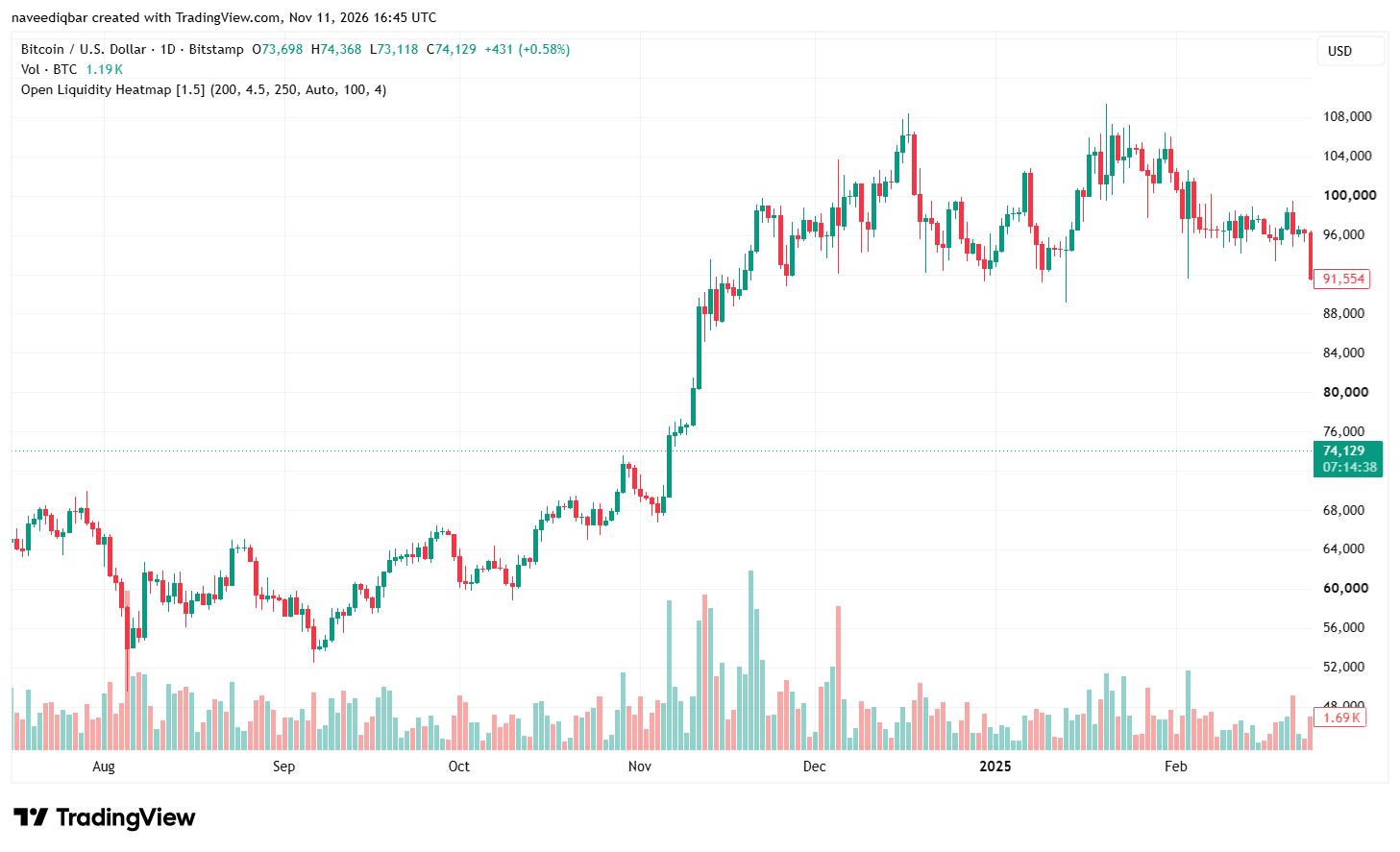
When Wall Street reopened on February 3, the S&P 500 ended 0.76% lower. The broad dollar index rose 0.49%, while the 10-year Treasury yield declined four basis points to 4.54%. WTI crude, meanwhile, closed 0.9% higher.
However, the market reaction also reflected developments after Trump’s initial announcement. On February 3, he agreed to delay the tariffs on Mexican imports for one month following discussions with Mexico. Bitcoin recovered from its weekend low as uncertainty around the immediate implementation of the tariffs eased.
Crypto Reserve Posts Produced a Concentrated Rally
On March 2, 2025, Trump said a proposed U.S. crypto reserve would include XRP, Solana, and Cardano. Later that day, at 12:11 p.m. ET, he followed up by adding Bitcoin and Ether to the list.
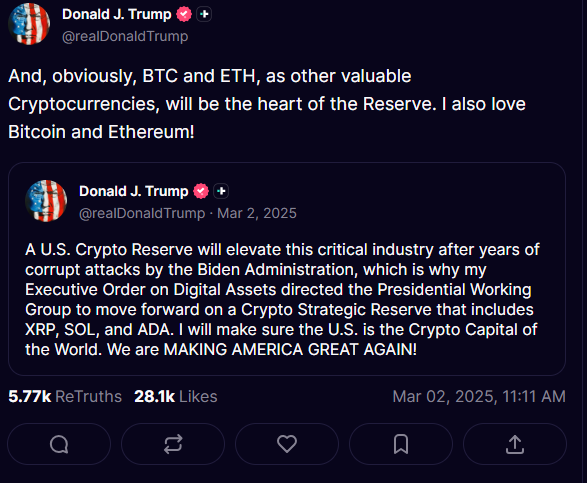
By late afternoon, Bitcoin had gained about 10% to $94,000, XRP had risen 32%, and Solana was up 26%.
The rally concentrated in assets named in the posts, showing how quickly presidential messaging could reprice exposed markets before a formal reserve framework existed.
Follow us on X for real-time crypto updates.
2026 Greenland and Iran Posts Moved Cross-Asset Prices
On January 17, 2026, Trump threatened to impose 10% tariffs on eight European countries over the dispute surrounding Greenland, with the proposed rate scheduled to rise to 25% in June. The post arrived on Saturday; January 20 was the first U.S. cash session after the Martin Luther King Jr. Day holiday.
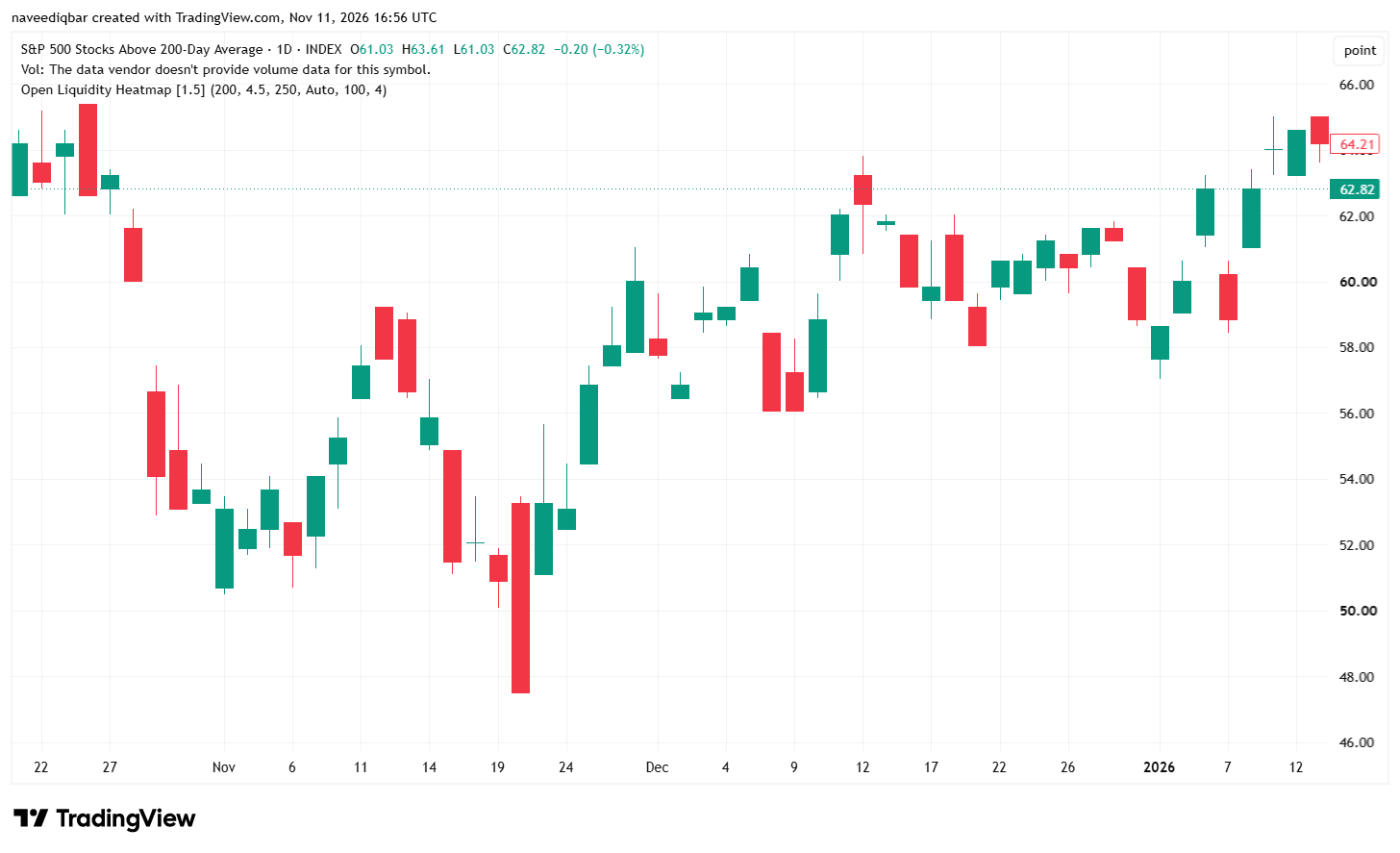
During that session, the S&P 500 fell 2.06%, Bitcoin lost more than 3%, and the broad dollar index declined 0.53%. The 10-year Treasury yield rose six basis points to 4.30%, while WTI crude gained 1.5%.
The market reaction changed the following day. At 2:37 p.m. ET on January 21, Trump posted that a framework agreement on Greenland had been reached and that the planned tariffs would not proceed. The S&P 500 subsequently extended its gains to 1.4%, while the 10-year Treasury yield fell 4.2 basis points.
On August 19, Trump threatened economic retaliation against countries supporting Iran. Brent crude rose 2.4% and WTI 2.3% in the following session.
The Initial Shock Remains, but Follow-Through Is Less Certain
The 2025 and 2026 examples show that Trump’s posts still move markets when they alter expectations for trade, conflict, or energy supply. Nevertheless, the response is not always durable. An Axios review of 269 Iran-related posts found average five-minute futures moves of 0.73% after posts, compared with a 0.2% average five-minute move overall.
The analysis also found the effect diminishing over time. Traders now appear more selective, distinguishing online announcements from signed orders, actual tariff implementation, and physical supply changes. Trump retains headline power; whether a post creates a lasting trend increasingly depends on what happens next.
Subscribe to our YouTube channel for the latest crypto news.
Related: Trump Still Wants US to Buy Bitcoin, Says Ex-Crypto Chief Patrick Witt
Disclaimer: The information presented in this article is for informational and educational purposes only. The article does not constitute financial advice or advice of any kind. Coin Edition is not responsible for any losses incurred as a result of the utilization of content, products, or services mentioned. Readers are advised to exercise caution before taking any action related to the company.