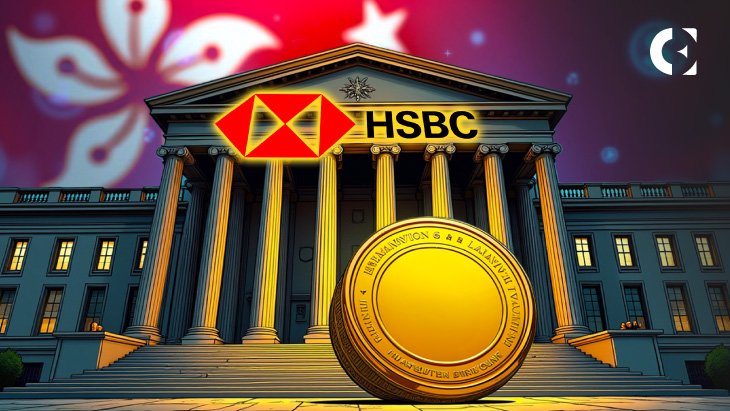

- HSBC launched RedCoin, a Hong Kong dollar-backed stablecoin, through PayMe.
- More than 3.3M PayMe users and 100,000 merchants represent potential reach, not confirmed adoption.
- RedCoin’s competition with USDT and USDC depends on wallet access, fees, and interoperability.
HSBC Holdings plc (HSBA) launched its Hong Kong dollar-backed stablecoin, RedCoin (RCHKD), opening stablecoin access to 3.3 million users and more than 100,000 merchants.
However, an analysis has highlighted that the users represent potential distribution, not activated wallets, raising questions about RedCoin’s actual adoption and competition with established stablecoins such as USDT and USDC.
HSBC Launched RedCoin to 3.3 Million PayMe Users, but Actual Adoption Remains Unclear
HSBC launched its first stablecoin, RedCoin, through the PayMe app on October 23, 2026. The Hong Kong dollar-backed token is licensed and regulated by the Hong Kong Monetary Authority (HKMA).
The bank said more than 3.3 million PayMe users would be able to activate stablecoin wallets in the app in the coming days. Once activated, users can send RedCoin through peer-to-peer transfers and make payments at more than 100,000 merchants that accept PayMe.
However, an analysis has highlighted that the app’s 3.3 million users represent potential distribution, not activated wallets or actual stablecoin holders. RedCoin is initially available through HSBC-controlled channels.
Although the bank has confirmed its launch through PayMe, it has not announced support for external-wallet transfers or listings on open cryptocurrency exchanges. These restrictions raise questions about the token’s interoperability and its ability to compete with established stablecoins.
Follow us on X for real-time crypto updates.
Is Bank-Led Stablecoin Adoption Expanding Digital Money or Upgrading Closed-Loop Banking?
The key question is whether a bank-issued stablecoin, which isn’t traded on any open exchanges and doesn’t support external-wallet transfers or broader blockchain interoperability, can offer the same economic returns as more popular stablecoins like USDT and USDC.
Bank-led models like RedCoin can modernize the legacy closed-loop payment system, which is highly regulated. But they don’t automatically offer the open access, programmability, and cross-border interoperability that larger stablecoins have.
In contrast, USDT and USDC are available on a network of public blockchains, have their own wallets and secondary-market liquidity, and can be used for cryptocurrency trading, remittances, and decentralised finance (DeFi).
That said, RedCoin’s first closed-loop retail model offers an alternative to digital asset adoption, focusing on integration with existing banking channels rather than open-market access and interoperability.
What RedCoin Could Mean for Stablecoins and Forex
RedCoin’s impact on stablecoin and forex markets will depend on adoption beyond its initial PayMe distribution. HSBC has identified more than 3.3 million eligible users and a network of over 100,000 merchants, but publicly available figures do not yet establish how many wallets are active, how much RedCoin is circulating, or how frequently it is being used for payments.
Its competitiveness with USDT and USDC will also depend on settlement fees, redemption terms, and whether HSBC eventually enables transfers to external wallets. Without comparable data on these factors, it is too early to determine whether RedCoin offers a cost or accessibility advantage over established stablecoins.
For now, RedCoin is positioned primarily as a bank-led Hong Kong dollar payment option. Its potential influence on HKD/USD stablecoin demand and cross-border forex flows will depend on whether adoption expands beyond HSBC’s existing payment network and into broader settlement activity.
Subscribe to our YouTube channel for the latest crypto news.
Related: JPMorgan and HSBC Partner with Hong Kong for Tokenized Bonds
Disclaimer: The information presented in this article is for informational and educational purposes only. The article does not constitute financial advice or advice of any kind. Coin Edition is not responsible for any losses incurred as a result of the utilization of content, products, or services mentioned. Readers are advised to exercise caution before taking any action related to the company.