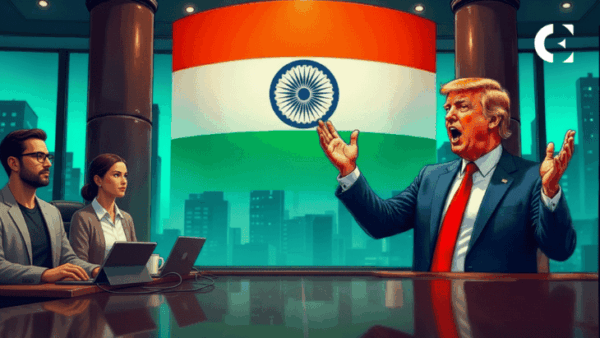

- India joins the US and eight other nations in signing the San Francisco Declaration.
- The agreement aims to protect critical technologies and strengthen global AI supply chains.
- The declaration promotes cooperation on AI security, infrastructure, and technology development.
India has taken another step towards strengthening its role in the global AI industry. The country, along with eight other nations, signed the San Francisco Declaration. It focuses on protecting critical technologies and infrastructure, including artificial intelligence. The move comes as part of countries’ increasing efforts to strengthen their AI capabilities and reduce supply chain risks.
India Signs US-Led San Francisco Declaration
According to the latest reports, India has signed the San Francisco Declaration alongside the United States and eight other nations. On November 15, 2026, the countries signed the declaration during the Pax Silica Founders Retreat in San Francisco.
In total, there are ten countries that signed the San Francisco Declaration. These include Japan, Australia, Israel, the United Kingdom, South Korea, Qatar, the United Arab Emirates, and Singapore. The countries intend to enhance cooperation on protecting important technologies and infrastructure that support AI development.
In addition, the declaration focuses on securing important supply chains and preventing sensitive technologies from falling into the wrong hands. It also highlights the importance of countries to cooperate on protecting the systems and resources needed to support the future of AI development.
Why Was the San Francisco Declaration Made?
Notably, the San Francisco Declaration has been formulated in response to increasing apprehensions regarding the security of the global AI supply chain. Complex AI requires a variety of resources such as semiconductors, critical minerals, energy, and advanced production equipment. As these resources are provided by different nations, this creates an interdependency of the industry on the global supply chain.
It is risky because nations are highly reliant on a limited number of suppliers for their essential resources and technologies. The availability of these resources can be hampered due to any disruption, trade restrictions, and tensions.
Therefore, the objective of the San Francisco Declaration is to minimize these risks and ensure that the supply chain remains reliable and diverse. Moreover, the declaration is concerned with the security of technologies against theft and any illegal control of technologies.
The growing competition between the US and China in advanced technologies is also another major reason behind the latest agreement. As China has a strong position in critical mineral processing and rare earth supply chains, there are rising concerns among the US and its partners about supply chain dependence and the risks of potential disruptions.
Why Is India’s Participation Important?
Significantly, India’s participation in the San Francisco Declaration comes as the country continues to expand its presence in the global AI and semiconductor industries. India has been working to enhance its domestic semiconductor manufacturing capabilities and build stronger AI infrastructure. As the country has now signed the declaration, it can strengthen cooperation with other countries. This could give opportunities for technology partnerships, investment, and better access to global supply chains.
The move could also help India reduce dependence on a limited number of suppliers for critical technologies and materials. It also aligns with the country’s broader goals of expanding domestic manufacturing and becoming a stronger player in the global technology industry.
(adsbygoogle = window.adsbygoogle || []).push({});What to Expect Next?
It is important to note that the signing of the declaration is the first step towards stronger cooperation among global leaders. These nations are expected to work together via dedicated working groups.
Their discussions are expected to include areas such as technology development, AI adoption, supply chain security, investment, and critical infrastructure protection. The countries also aim to improve coordination to protect sensitive technologies. They also aim to reduce risks across global supply chains.
However, it should also be considered that the declaration does not launch any legally binding rules. It also doesn’t include any new or specific investment deals. Thus, the impact of the move will depend on how the participating countries implement these commitments and work together.
Related: China Intensifies Crackdown on Crypto-Linked Corruption
Disclaimer: The information presented in this article is for informational and educational purposes only. The article does not constitute financial advice or advice of any kind. Coin Edition is not responsible for any losses incurred as a result of the utilization of content, products, or services mentioned. Readers are advised to exercise caution before taking any action related to the company.