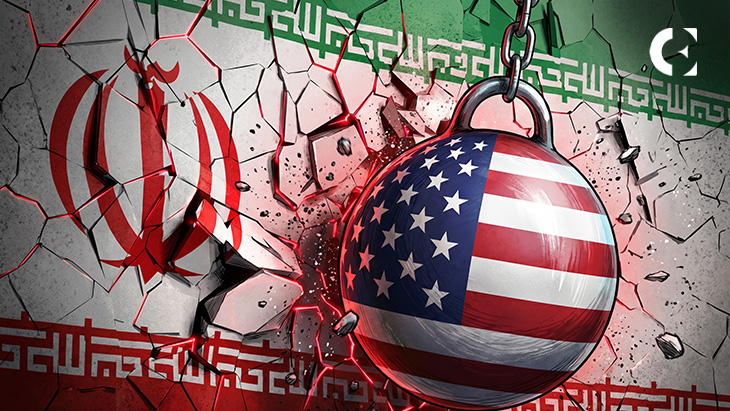

- Iranian rial hits record low of 1.8M per dollar after an ongoing depreciation from early 2025.
- U.S. campaign seizes $500M crypto as oil limits and blockade tighten pressure.
- Crypto market rises to $2.57T while sentiment stays neutral at Fear Index 42.
Iran’s currency has fallen to its weakest level on record, extending a prolonged depreciation trend that has developed alongside intensified U.S. economic measures. Data tracking the rial’s open market exchange rate shows a decline from early 2025 through April 2026, ending in a rise to 1,800,000 rials per U.S. dollar on April 29.
At the start of 2025, the exchange rate stood near 800,000 rials per dollar, moving within a relatively narrow range during the first half of the year. In March, the rate climbed above 1,000,000 before easing back toward the 800,000 to 900,000 range by May.
However, conditions shifted in the second half of the year. The rial began to weaken more consistently, crossing 1,100,000 by September and continuing upward to exceed 1,300,000 by December. This pattern carried into 2026, where intermittent volatility persisted but the overall direction remained downward. By late April, the rate surged, reaching 1,800,000 and marking the highest level recorded in the observed period.
U.S. Measures and Trade Constraints Add Pressure
At the same time, U.S. Treasury Secretary Scott Bessent stated that Washington’s campaign, known as Operation Economic Fury, has intensified efforts to restrict Iran’s financial channels. He noted that authorities are freezing overseas crypto assets, targeting financial networks, and seizing funds, including nearly $500 million in Iranian cryptocurrency holdings.
The campaign, launched in March 2025 under Donald Trump, has coincided with setbacks to Iran’s oil sector, which remains a primary source of government revenue and foreign currency. In addition, a blockade imposed on April 13 has further limited export capacity, making it harder for Tehran to access hard currency through international trade.
Meanwhile, tensions surrounding the Strait of Hormuz continue to impact the broader economic environment. Although a cease-fire was reached on April 8, Iran’s closure of the waterway has affected global energy flows. Efforts to reopen the route remain unresolved after the United States rejected a proposal linked to delaying nuclear negotiations.
Broader Crypto Market Context
While Iran’s currency faces ongoing pressure, the broader crypto market has recorded gains. The total market capitalization reached $2.57 trillion, reflecting an increase of 1.05%, while the CMC20 index rose by 1.35% to $156.39.

Source: CoinMarketCap
In addition, the market sentiment remained neutral, with the Fear and Greed Index at 42, indicating balanced conditions despite ongoing geopolitical developments.
Related: Iran’s Currency Collapse to “Zero”: Why It Matters for Bitcoin
Disclaimer: The information presented in this article is for informational and educational purposes only. The article does not constitute financial advice or advice of any kind. Coin Edition is not responsible for any losses incurred as a result of the utilization of content, products, or services mentioned. Readers are advised to exercise caution before taking any action related to the company.