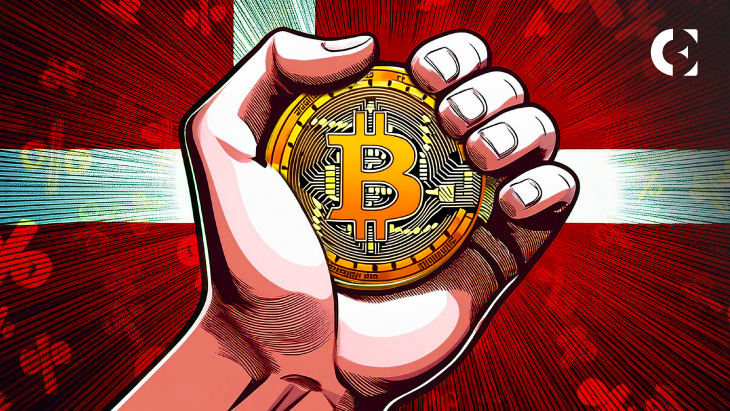

- Crypto adoption in Denmark remains low at 4%, showing minimal change since 2023.
- Danish investors hold small crypto positions, mainly Bitcoin, Ether, and XRP tokens.
- Indirect crypto exposure is rising via funds and firms, but still only 0.4% equities.
Denmark continues to show restrained engagement with crypto-assets, even as global interest expands. A recent 2025 survey reveals that only 4% of Danish citizens hold cryptocurrencies, signaling minimal change from 2023.
This steady figure suggests that rising global valuations and regulatory developments have not significantly altered domestic behavior. Consequently, crypto-assets still play a minor role in household finances and pose little systemic risk to Denmark’s financial stability.
Limited Adoption and Small Holdings
Most Danish crypto investors maintain relatively small positions. The majority hold less than DKK 10,000, while only a small fraction exceeds DKK 50,000. Overall, total citizen holdings range between DKK 3 billion and DKK 8 billion. These figures highlight a cautious approach among retail participants.
Additionally, crypto ownership skews toward younger individuals, particularly those under 40. Ownership declines sharply with age and remains rare among citizens over 60. Moreover, higher-income individuals dominate the crypto-owning group, indicating that financial capacity influences participation in this high-risk market.
Crypto portfolios also show a clear preference for major unbacked assets. Around 80% of holders own assets like Bitcoin, Ether, and XRP. Meanwhile, only 20% report holding stablecoins. This distribution reflects a focus on speculative assets rather than stability-focused instruments.
Indirect Exposure and Market Integration
Beyond direct ownership, Danish citizens have modest indirect exposure through securities. These include stocks and funds tied to crypto markets.
By December 2025, such investments reached approximately DKK 2 billion. This amount equals just 0.4% of total equity holdings, which stand near DKK 540 billion.
However, indirect exposure has increased since 2023. Investors have added about DKK 1.3 billion in net purchases, supported by rising market prices.
Significantly, U.S.-listed firms with large Bitcoin reserves account for much of this growth. Additionally, data-center firms involved in crypto mining and AI infrastructure have contributed to rising valuations.
Investment Mindset and Risk Appetite
Danish crypto users primarily treat digital assets as investments rather than payment tools. Very few report using crypto for transactions within the past year. Furthermore, most owners hesitate to recommend crypto investments to others.
Risk tolerance also differs sharply between owners and non-owners. Around 80% of crypto investors report moderate to high risk appetite levels. In contrast, only 40% of non-owners express a similar willingness to take risks.
Regulatory Influence and Future Outlook
Regulatory developments have improved access to crypto markets. The introduction of EU MiCA rules and U.S. stablecoin legislation has increased transparency. Additionally, exchange-traded products now offer easier entry through traditional financial platforms.
However, Danish institutions have historically discouraged crypto investments. Tax policies and risk concerns have also limited adoption. Hence, despite global integration, Denmark maintains a cautious stance.
Related: JPMorgan CFO Says Stablecoins Risk Becoming Regulatory Arbitrage Play
Disclaimer: The information presented in this article is for informational and educational purposes only. The article does not constitute financial advice or advice of any kind. Coin Edition is not responsible for any losses incurred as a result of the utilization of content, products, or services mentioned. Readers are advised to exercise caution before taking any action related to the company.