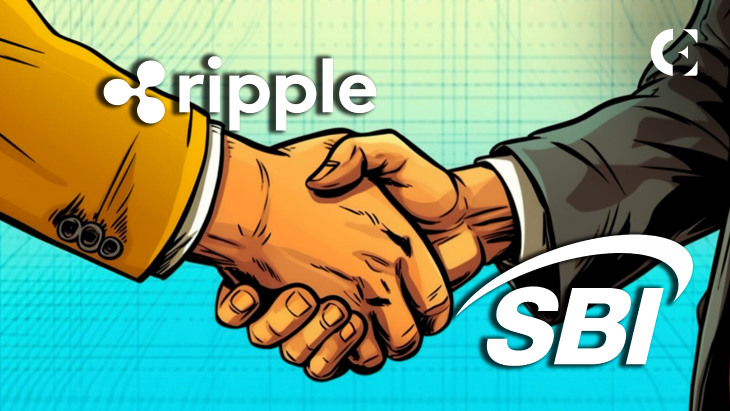
- SBI’s CEO Yoshitaka Kitao publicly clarified that SBI doesn’t own $10 billion worth of XRP.
- Kitao called Ripple a hidden asset that could be worth much more depending on how it grows.
- SBI is one of Ripple’s most important global partners, specifically in Asia.
There have been speculations spread online about SBI (a financial services company in Japan) owning about $10 billion worth of XRP. The story took off quickly in crypto circles, especially among XRP enthusiasts, because SBI has long been known as a huge backer of Ripple and the XRP ecosystem.
However, SBI’s CEO Yoshitaka Kitao publicly denied the claim, clarifying that SBI doesn’t own $10 billion worth of XRP. Instead, it owns about 9% of Ripple Labs, which is the company behind XRP.
Kitao called this a potential hidden asset that could be worth much more depending on how Ripple grows in the future.
This matters because Ripple’s value as a business can grow even if XRP’s price doesn’t, particularly if the company keeps expanding its payment network around the world.
The Ripple–SBI Partnership
SBI is one of Ripple’s most important partners, specifically in Asia. Their collaboration includes cross-border payments using XRP and Ripple tech, joint companies like SBI Ripple Asia, and building blockchain-based payment systems for banks.
By owning part of Ripple, SBI benefits from more banks adopting Ripple’s network and growth in the institutional payment infrastructure. Additionally, SBI’s investment gives it exposure to stablecoin and CBDC integrations using Ripple’s technology.
Because Ripple is a private company, SBI’s share of it isn’t fully visible in its stock price. If Ripple goes public (IPO) or lands notable new deals worldwide, SBI’s stake could jump in value. It’s similar to early investors in Coinbase before it went public, or people who bought into Visa when digital payments were just taking off.
Several big moves by Ripple lately have boosted its global presence, and that makes SBI’s investment even more important.
For instance, Ripple partnered with UAE-based Zand Bank to integrate RLUSD with AED-backed stablecoin AEDZ on the XRP Ledger.
Speaking of XRP Ledger, Ripple is continuously upgrading it with a focus on better tools for tokenizing real-world assets, smarter contract features using sidechains, built-in support for issuing stablecoins, and greater capacity to handle large-scale institutional use.
Related: SBI Holdings Moves to Acquire Coinhako in Strategic Asia Expansion
Disclaimer: The information presented in this article is for informational and educational purposes only. The article does not constitute financial advice or advice of any kind. Coin Edition is not responsible for any losses incurred as a result of the utilization of content, products, or services mentioned. Readers are advised to exercise caution before taking any action related to the company.