
- Amendments are expected to take effect in October 2026, after public feedback in August.
- Under new rules, crypto held on exchanges can’t be moved after a court seizure.
- If a case is still in progress, courts could temporarily freeze a debtor’s crypto wallet.
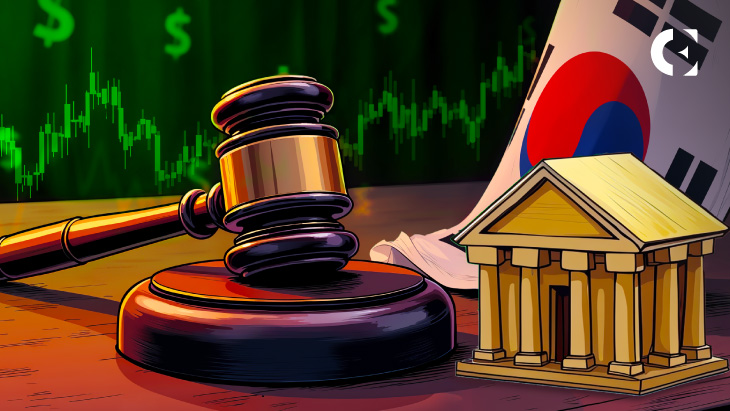
South Korea’s Supreme Court has proposed updating the country’s Civil Execution Rules to establish formal procedures for seizing crypto assets when courts need to enforce their decisions.
Until now, courts in South Korea could legally seize crypto, but there were no clear rules on how to freeze it, how exchanges should work with it, how to transfer the assets, or how to sell or distribute the seized crypto afterward.
The Supreme Court plans to gather public feedback through August 11, with the amendments expected to take effect in October 2026.
How Would Crypto Seizure Work?
Under the proposed new rules, once a court orders a seizure of crypto held on an exchange, those assets can’t be moved. The exchange and others involved have to hand the crypto over to a court enforcement officer, and the seizure becomes official as soon as the officer takes possession. Any transfers to third parties would be blocked too.
Additionally, regarding the liquidation and depending on the case, the court can either give the crypto straight to the creditor or order the enforcement officer to sell it. It can also let the exchange carry out the sale for the court.
Related: South Korea Expands Deposit Token Plans With Banks and Sandbox Reforms
In the case of illiquid cryptocurrencies (smaller cryptos that have limited trading activity), the proposal allows these assets to be converted into highly liquid cryptocurrencies (such as Bitcoin) before liquidation.
New Rules for Freezing Wallets
South Korea’s Supreme Court amendments to the Civil Execution Rules also introduce a provisional disposition system.
For instance, if a case is in progress, courts could freeze a debtor’s crypto wallet temporarily, even before a final ruling. With this, debtors won’t be able to shift funds to another wallet, exchange, or country while the case is still pending. Temporary freezes like this aren’t uncommon for traditional financial assets, and the proposal adapts that idea to crypto.
These amendments didn’t come out of the blue. Earlier this year, South Korea’s Supreme Court announced that Bitcoin on centralized exchanges can be seized in criminal cases, rejecting the idea that crypto is exempt from seizure just because it’s not physical.
It’s worth noting that for everyday crypto users, the amendments don’t change ownership rights. They just bring more clarity by setting up a clear and standardized process for courts to follow when enforcing legal rulings.
Related: South Korea Supreme Court Rules Crypto on Exchanges Can Be Seized
Disclaimer: The information presented in this article is for informational and educational purposes only. The article does not constitute financial advice or advice of any kind. Coin Edition is not responsible for any losses incurred as a result of the utilization of content, products, or services mentioned. Readers are advised to exercise caution before taking any action related to the company.