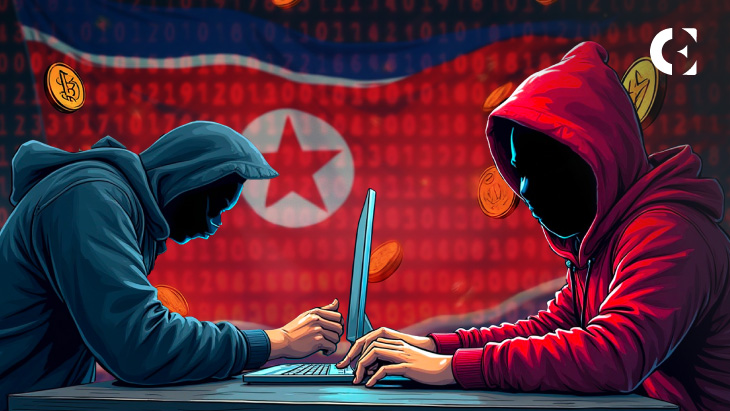

- US sanctions targeted 10 individuals and one entity aiding secret North Korean funding.
- The Treasury says North Korean networks use stolen IDs and fake resumes for illicit hires.
- US sanctions exposed ETH and TRON addresses used by Russian middlemen facilitating trades.
The US Treasury Department has implemented sanctions on ten individuals and one company for helping North Korea secretly raise funds. Officials say the group used fake online tech jobs and cryptocurrency deals to funnel money back to the regime.
Sanctions were imposed after financial middlemen and North Korean agents were accused of helping channel money into Pyongyang’s weapons programs.
US Treasury officials report that the North Korean criminal networks rely on stolen IDs, fake resumes, and false names to get hired by unsuspecting companies. The money earned from these tech jobs is then redirected directly back to the North Korean government, while giving remote workers access to company networks, putting businesses at risk of data theft, malware, and extortion.
Follow us on X for real-time crypto updates.
Russian Intermediaries Allegedly Moved Millions in Crypto
Two Russian nationals are at the heart of the financial side of the case. US Treasury claims Vitold Viktorovich Obertas handled close to $2 million in crypto conversions and at least $1.25 million in other currency transactions for North Korean officials since January 2025.
Another Russian citizen, Ilya Aleksandrovich Boykov, is accused of exchanging or converting about $3.5 million in crypto for Alis, a North Korean IT company, since 2024. The Treasury also named Kim Ki Hyok, a North Korean who heads an IT worker delegation in Russia, as having allegedly moved nearly $500,000 in crypto for the group.
As part of the sanctions, officials released the specific Ethereum and Tron crypto wallet addresses used by the two Russian middlemen. Sharing these wallet IDs allows banks and crypto exchanges to flag suspicious transactions and stop illegal funds from passing through their systems.
The sanctions also hit the Russia-based First Financial and Technical Development Center, which the US Treasury calls a North Korean-run outfit that uses IT workers and sophisticated crypto transfers to generate revenue. Six workers tied to the center supposedly earned over $750,000 for the organization since 2025.
The sanctions follow a US Justice Department announcement on October 13 detailing enforcement actions against North Korean remote IT worker schemes. The operations exposed schemes that affected more than 70 US companies and generated approximately $3 million in revenue. The FBI also searched more than 40 suspected laptop farms in Texas, seizing about 187 computer devices as part of Operation Lonestar Roundup.
Subscribe to our YouTube channel for the latest crypto news.
Related: North Korea-Linked Hackers Used Fake Jobs to Steal Crypto From IT Workers
Disclaimer: The information presented in this article is for informational and educational purposes only. The article does not constitute financial advice or advice of any kind. Coin Edition is not responsible for any losses incurred as a result of the utilization of content, products, or services mentioned. Readers are advised to exercise caution before taking any action related to the company.