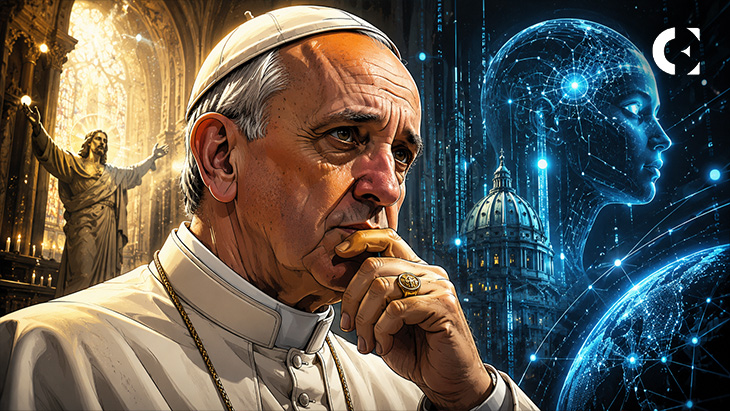

- Pope Leo says AI is not inherently harmful, but its design and control are never neutral.
- The Pope raises concerns about job losses, surveillance, disinformation, and autonomous weapons.
- He calls for public oversight, clear accountability, and internationally shared ethical standards.
Pope Leo XIV is not asking the world to reject artificial intelligence. His concern centers on what happens when powerful systems advance faster than the rules protecting human dignity, work, and freedom.
His first encyclical, Magnifica humanitas, places that question at the heart of the AI debate. The document argues that technology must support people and communities rather than reducing human life to productivity, data, or profit.
Power Could Become Concentrated
Pope Leo’s central concern involves control. He says technology reflects the choices of those who create, finance, regulate, and deploy it. Therefore, AI cannot be treated as a neutral force operating outside human responsibility.
The encyclical warns that advanced technology could become concentrated among a small number of companies, governments, or wealthy groups. Such control may widen the divide between people who benefit from AI and those excluded from its economic opportunities.
He also calls for an ethical framework built through shared standards. In his view, allowing a few technology owners to define acceptable AI behaviour would not provide enough protection.
Clear legal responsibility, independent supervision, and public education form part of his proposed response. Developers, operators, and institutions would remain accountable for decisions made throughout an AI system’s life cycle.
Related: Chainlink Leads AI Crypto Development as NEAR and ICP Stay Active
Jobs and Freedom Face Pressure
Work presents another major concern. AI can remove repetitive duties and improve productivity, but the Pope warns that companies could use it mainly to cut costs and eliminate jobs.
He argues that systems should adapt to workers rather than forcing people to match the speed and demands of machines. The wider economic test involves whether AI creates shared prosperity or directs most gains toward technology owners.
Digital platforms also hold a growing influence over personal freedom. Their systems can collect data, predict behaviour, and shape what users see. Pope Leo describes this ability to profile and direct people as a new form of power, particularly when automated decisions affect vulnerable communities.
Education carries similar risks. The Pope warns that constant reliance on machines could weaken curiosity and make human thinking appear unnecessary. He calls on schools to protect questioning, judgment, and the search for truth.
Related: S&P 500 Rebound Faces Test Amid Renewed AI Optimism
AI Could Lower the Threshold for War
Military use brings the strongest warning. Pope Leo says algorithms cannot make war morally acceptable and should never remove personal responsibility from decisions involving human life.
AI-supported weapons may accelerate attacks, turn victims into data, and make violence appear more efficient or easier to authorize. He calls for strict international limits that protect civilians and keep people responsible for life-and-death decisions.
Environmental costs also enter the debate. Large AI systems require substantial energy, water, and physical infrastructure. Moreover, technology supply chains depend on minerals often extracted under difficult labor conditions.
Pope Leo’s position draws a clear boundary: innovation can proceed, but human dignity must guide its direction. His concern comes from AI’s ability to influence employment, information, security, and political power at the same time.
Disclaimer: The information presented in this article is for informational and educational purposes only. The article does not constitute financial advice or advice of any kind. Coin Edition is not responsible for any losses incurred as a result of the utilization of content, products, or services mentioned. Readers are advised to exercise caution before taking any action related to the company.