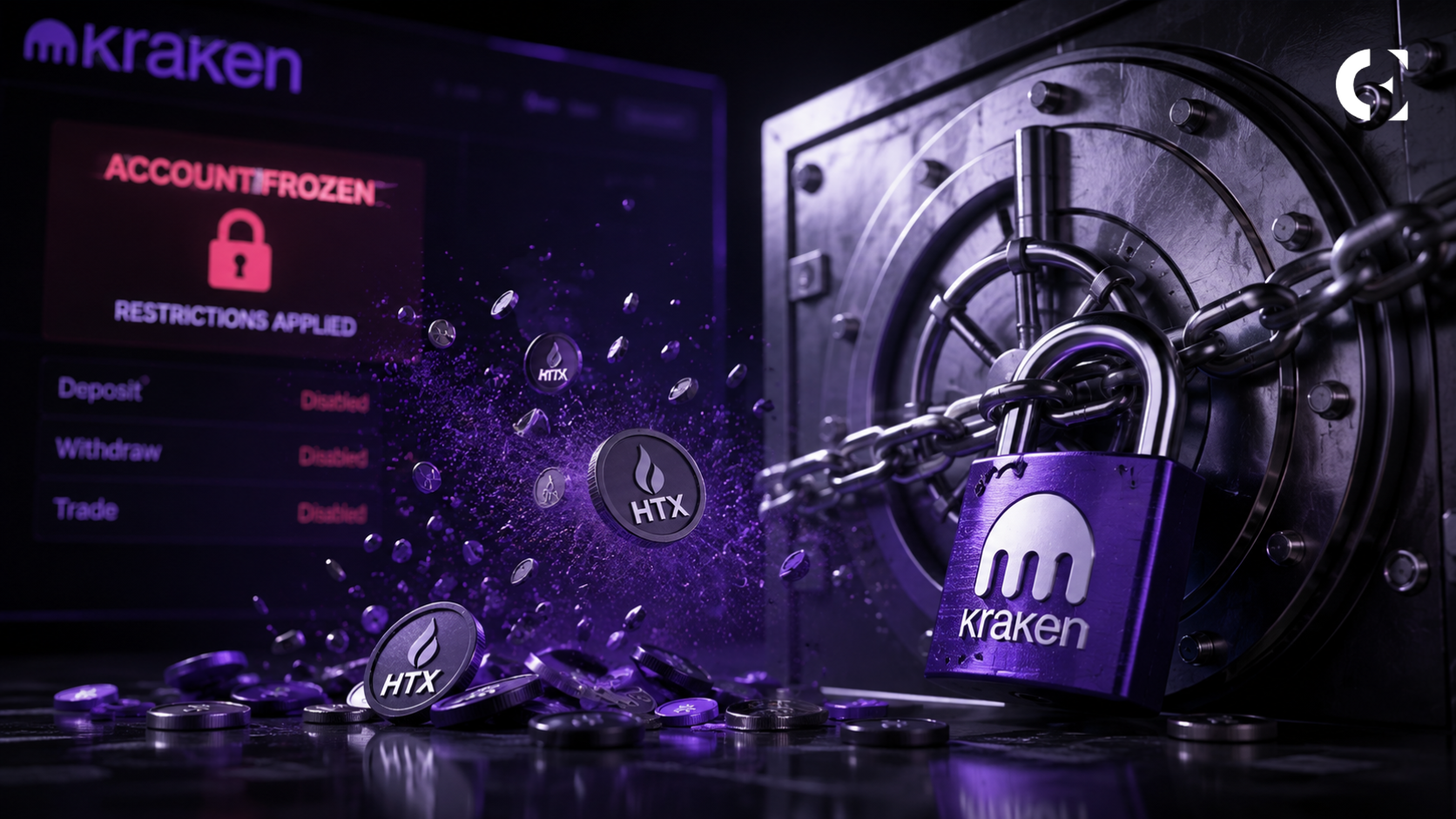

- Kraken restricted accounts after nearly 12,000 transfers from a wallet linked to sanctioned HTX.
- Kraken called it a “dust attack” to spread sanctioned funds and trigger checks.
- HTX denies sending the transfers and says it is investigating the incident.
A few cents of unwanted crypto may be enough to trigger a compliance review at a centralized exchange, exposing a new operational risk for traders.
Kraken temporarily restricted some customer accounts after nearly 12,000 small crypto transfers were sent between August 17 and 24 from a wallet identified by Arkham Intelligence as linked to the sanctioned exchange HTX. Most of the transfers were worth only a few cents or dollars, according to the information provided.
Kraken described the activity as a “dust attack”, saying the transfers appeared designed to spread sanctioned funds across other platforms and trigger compliance checks.
Tiny Transfers, Real Trading Disruption
The issue is not the value of the crypto involved. It is what happens when those funds arrive in an exchange-linked wallet. Kraken said some customers were briefly locked out after receiving the transfers. Its compliance team later restored access while continuing to hold the sanctioned funds as required.
For active traders, even a temporary restriction can create a serious problem. A locked account can prevent someone from entering a trade, closing a position, or responding to a sudden liquidation event during a volatile market.
HTX Denies Sending the Transfers
Arkham Intelligence linked the wallet to HTX based on addresses the exchange publicly disclosed as part of its proof-of-reserves information. HTX, however, denied initiating the transfers and said it was investigating whether the addresses had been misattributed or whether third parties were responsible.
Kraken said it did not know who was behind the activity but believed the objective could be to cause operational disruption by forcing exchanges to investigate accounts that receive sanctioned funds.
Why Traders Should Pay Attention
The incident shows a trade-off between using centralised exchanges and holding crypto directly.
Centralised exchanges offer deep liquidity, trading tools and customer support, but users also operate within their compliance systems. An unexpected deposit can therefore become an account-level issue even when the recipient did nothing to request it.
Self-custody removes an exchange’s ability to freeze an account, but it does not eliminate risk. Users become responsible for protecting their private keys, avoiding malicious transactions, and managing their own assets.
The Kraken incident also shows that on-chain transparency cuts both ways. Every transaction can be traced, but a wallet owner cannot prevent an unknown party from sending unwanted funds.
For traders, the concern now extends beyond hacks and liquidations. Unexpected inbound transfers, compliance alerts, and withdrawal restrictions could also factor into where traders keep trading capital.
Related: Kraken Parent Payward Eyes Full-Bank Expansion Beyond the US
Disclaimer: The information presented in this article is for informational and educational purposes only. The article does not constitute financial advice or advice of any kind. Coin Edition is not responsible for any losses incurred as a result of the utilization of content, products, or services mentioned. Readers are advised to exercise caution before taking any action related to the company.