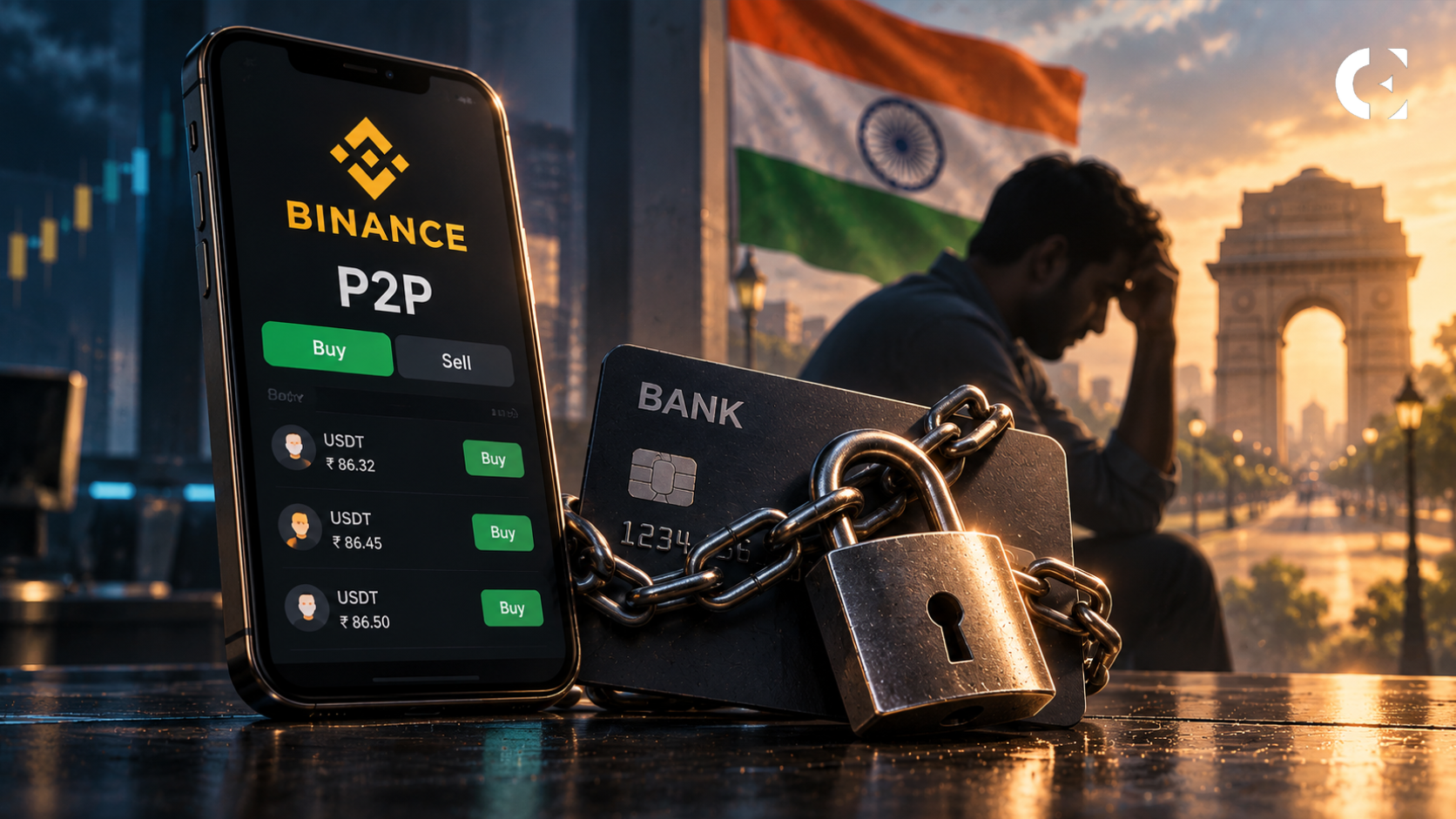

For an Indian crypto trader, selling USDT on Binance P2P can look like a routine transaction. When a seller matches with a buyer, they receive Indian rupees through UPI or a bank transfer. Once they confirm that the money has arrived, they release the USDT held in escrow.
But what happens if the rupees came from money connected to a cybercrime committed before the transaction?
That question has become a recurring concern on Reddit’s r/CryptoIndia community, where users have described bank liens, account freezes, and lengthy attempts to establish that they were simply counterparties in a legitimate crypto trade.
Community Complaints
In an August 2026 post, a verified Binance P2P merchant said their bank placed a lien on their account weeks after they sold USDT and received payment through UPI.
The user said the buyer was allegedly connected to a cybercrime complaint and that they had retained the Binance order details, bank statement, UPI proof, and other records.
Similar concerns have appeared repeatedly. In another 2025 discussion, a user said their bank account had been frozen after two or three Binance P2P transactions, while another December post asked how long it takes before funds received from a P2P buyer can be considered “safe.”
How a Normal USDT Sale Can Become a Banking Problem
The underlying problem is relatively straightforward. Imagine a fraud victim sends ₹50,000 to a scammer. The scammer, directly or through another person, uses those funds to buy USDT from a Binance P2P seller.
The seller sees ₹50,000 arrive in their bank account. The payment appears to match the Binance order, so the seller releases the USDT.
At that point, the seller may believe the transaction is finished. But if the original victim later reports the fraud, investigators can trace the movement of the money through the banking system. The P2P seller’s account may consequently become part of that transaction trail.
The seller does not necessarily have to have known about the original fraud to become involved in the investigation.
Importantly, Binance does not deny this risk. It has published guidance acknowledging that P2P sellers have had their bank accounts frozen after dealing with buyers whose funds were subsequently associated with scams.
The exchange advises sellers to preserve transaction records, contact their bank, and cooperate with local authorities if an account is frozen.
KYC and Escrow Do Not Guarantee Clean Fiat
Binance’s P2P marketplace does provide safeguards. The platform uses escrow, identity verification, and other monitoring mechanisms. Fundamentally, Binance says these measures are designed to reduce fraud risks.
But those safeguards do not give a seller control over the origin of the buyer’s fiat money.
That creates an important distinction between exchange-level compliance and banking-level exposure.
India has brought virtual digital asset activities, including exchanges between virtual assets and fiat currencies and transfers of virtual assets, within the country’s anti-money-laundering framework. VDA service providers conducting these activities are required to register with the Financial Intelligence Unit-India as reporting entities.
Registration and KYC therefore do not mean that every rupee reaching a user’s bank account has been independently cleared by India’s banking and cybercrime systems.
That is the blind spot troubling some P2P traders. A Binance order can show that a seller completed a transaction through the platform. It can show the buyer, amount, and transaction history. However, the transaction might point to an alleged cybercrime, and the seller may have to prove their role in the chain.
What Can an Affected Trader Do?
The first step is documentation. A P2P seller should preserve the Binance order ID, transaction history, in-platform chat, bank statement, UPI reference, payment confirmation, and evidence showing that the crypto was released only after the payment actually arrived.
Binance itself recommends verifying funds directly in the bank account before releasing crypto and retaining relevant transaction evidence. It also allows appeals for completed P2P orders in cases involving frozen bank accounts or chargebacks.
Secondly, the trader should also obtain, where possible, details of the freeze or lien, including the relevant police or cybercrime authority, complaint or case reference, and the amount in dispute.
There is also evidence that Indian courts are increasingly scrutinizing blanket account freezes.
In a June 2026 Kerala High Court case, the court reiterated that banks should, in appropriate circumstances, allow account holders to operate their accounts while limiting the lien to the amount identified in the cybercrime requisition. This works, provided there is no separate suspicion that the account is being used for financial cybercrime or money-mule activity.
A separate March 2026 ruling referenced India’s new CFCFRMS 2026 standard operating procedure, which establishes a grievance-redressal mechanism for account holders whose funds are put on hold or whose accounts are suspended.
The developing framework does not eliminate the risk for P2P traders. It does, however, reinforce that being connected to disputed funds is not automatically the same as being responsible for the underlying crime.
The Bigger Question Is Who Protects the Innocent Trader?
The Reddit debate is therefore bigger than whether Binance P2P is safe or unsafe. The platform can provide escrow, KYC, and transaction records, but it cannot fully control what happened to fiat money before it reaches the seller.
Until India’s crypto, banking and cybercrime systems provide clearer coordination for these cases, a trader can complete a transaction in good faith and still find themselves explaining the origin of someone else’s money.
The question is no longer simply whether crypto trading is regulated. It is whether the rules adequately protect an innocent trader when a legitimate crypto transaction intersects with tainted fiat.
Related: India’s Solar Surplus Hits a New Problem: Could Bitcoin Mining Help?
Disclaimer: The information presented in this article is for informational and educational purposes only. The article does not constitute financial advice or advice of any kind. Coin Edition is not responsible for any losses incurred as a result of the utilization of content, products, or services mentioned. Readers are advised to exercise caution before taking any action related to the company.