

- Bitcoin broke the $85,000 threshold, reclaiming its highest valuation since January 2026.
- A heavy short squeeze liquidated roughly $648M in bearish positions, alongside institutional spot demand.
- Crypto traders should watch ETF flows, spot volume, and derivatives data to assess whether the rally can hold.
Bitcoin (BTC) broke above $85,000, reaching a 24-hour high of $87,363.76 before pulling back toward $85,500. This powerful breakout marks a significant shift in market structure, fueled by a massive short squeeze that forced bearish traders to cover their positions, resulting in over $648 million in short liquidations.
Crypto traders are now assessing whether fresh capital is supporting the rally or whether forced short covering is amplifying the move.
Bitcoin Broke $85K as $648M in Shorts Were Liquidated
On September 21, 2026, Bitcoin peaked at nearly $87,300-$87,400, rising past $85,000, its highest price since January, before consolidating. A wave of forced liquidations in the derivatives market sharply increased the breakout.
According to CoinGlass data, roughly $648 million in short positions were liquidated over 24 hours as the price climbed. Total liquidations amounted to about $ 746.77 million, with shorts accounting for about 86%.
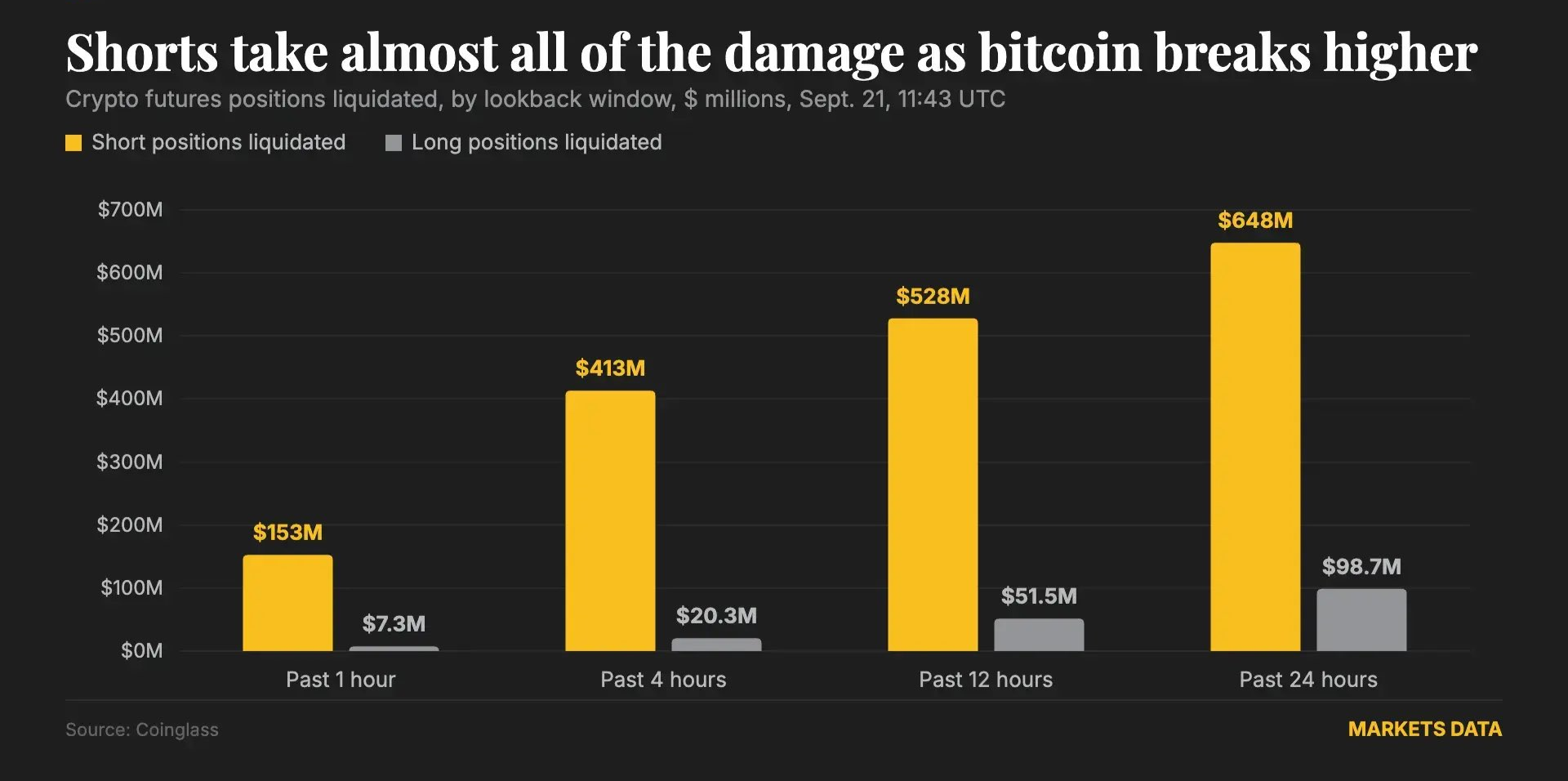
Meanwhile, the mechanics were more of a traditional short-squeeze type, with a heavy concentration of short interest concentrated in the $83,000-86,000 level. After breaking past major resistance at around $82,000- 84,000, liquidated short forced buying increased the upward momentum, triggering additional stop-outs.
In one intensive hour after the $84,000 breach, more than $260 million in short positions were wiped out. Despite heavy forced closures, total open interest in crypto derivatives soared 7.59% to around $156 billion, indicating that new leveraged positions were being opened even as existing shorts were being closed.
Was BTC’s Breakout Real Demand or a Short Squeeze?
BTC’s breakout was driven by a combination of genuine demand and derivatives-fueled amplification, rather than one factor alone. On the real demand side, U.S. spot Bitcoin ETFs saw around $999 million in net inflows on September 21, the highest net inflow of the year and the highest in about 11 months.
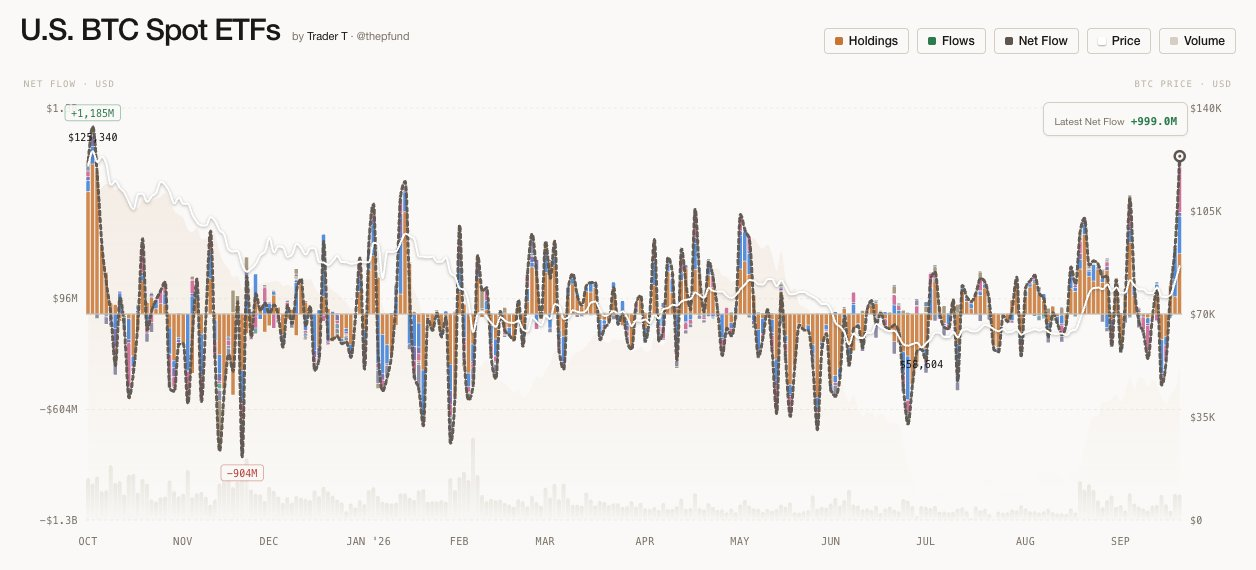
BlackRock’s IBIT raised $381 million, ARK 21Shares’ ARKB raised about $289 million, and Fidelity’s FBTC raised $239 million. These inflows signal fresh capital pouring into the market via regulated products, giving BTC meaningful spot buying pressure and helping it break significant resistance levels.
At the same time, a short squeeze significantly amplified the breakout. The forced closure of bearish positions also increased buying pressure and drove the upward move where a dense cluster of short interest had accumulated.
What’s Next for Bitcoin Price?
At press time, BTC was trading at $85,865.22, up 1.4% in the past 24 hours. The immediate upside target is the $87,000–$88,000 level, followed by the psychological $90,000 level. Several analysts and technical observations flag $90,000 as the key near-term test. A prolonged price action in this zone will clear the path for higher resistance zones.
Looking at the downside, the former resistance zone around $82,000-$83,000 and the wider support zone around $80,000-$82,000 are also now critical. If the breakout structure holds above these levels, the structure will remain intact; however, failure to defend them would lead to a deeper retracement. As BTC continues to test higher levels, crypto traders should closely monitor continued real demand, sustained ETF inflows, and leverage dynamics.
Related: Bitcoin Short Squeeze Sends BTC Toward $71,000 After $2.74B Liquidation Wave
Disclaimer: The information presented in this article is for informational and educational purposes only. The article does not constitute financial advice or advice of any kind. Coin Edition is not responsible for any losses incurred as a result of the utilization of content, products, or services mentioned. Readers are advised to exercise caution before taking any action related to the company.