

- Bitcoin retail investor deposits on Binance fell to all-time low levels this month.
- Retail BTC inflows remain far below the major peaks seen during past cycles globally.
- Analysts believe many investors now prefer spot Bitcoin ETF exposure instead.
The Bitcoin market is undergoing one of its biggest structural shifts yet, and this time the change is coming from retail investors.
On-chain data by Cryptoquant shows that Bitcoin holders with less than 1 BTC are becoming less active than ever before. According to Binance-linked market data, monthly BTC deposits from retail investors have now fallen to just 314 BTC on average, the lowest level ever recorded.
To put that into perspective, retail Bitcoin deposits once reached nearly 5,400 BTC during the 2018 cycle peak. Even during the 2021 bull market, the figure remained around 2,600 BTC. Now, that activity has almost disappeared.
Bitcoin’s Retail Crowd Is Quietly Leaving
During the recent crypto bear market, retail deposits on Binance still averaged roughly 1,800 BTC per month. At Bitcoin’s first major peak in March 2024, deposits remained near 1,200 BTC.
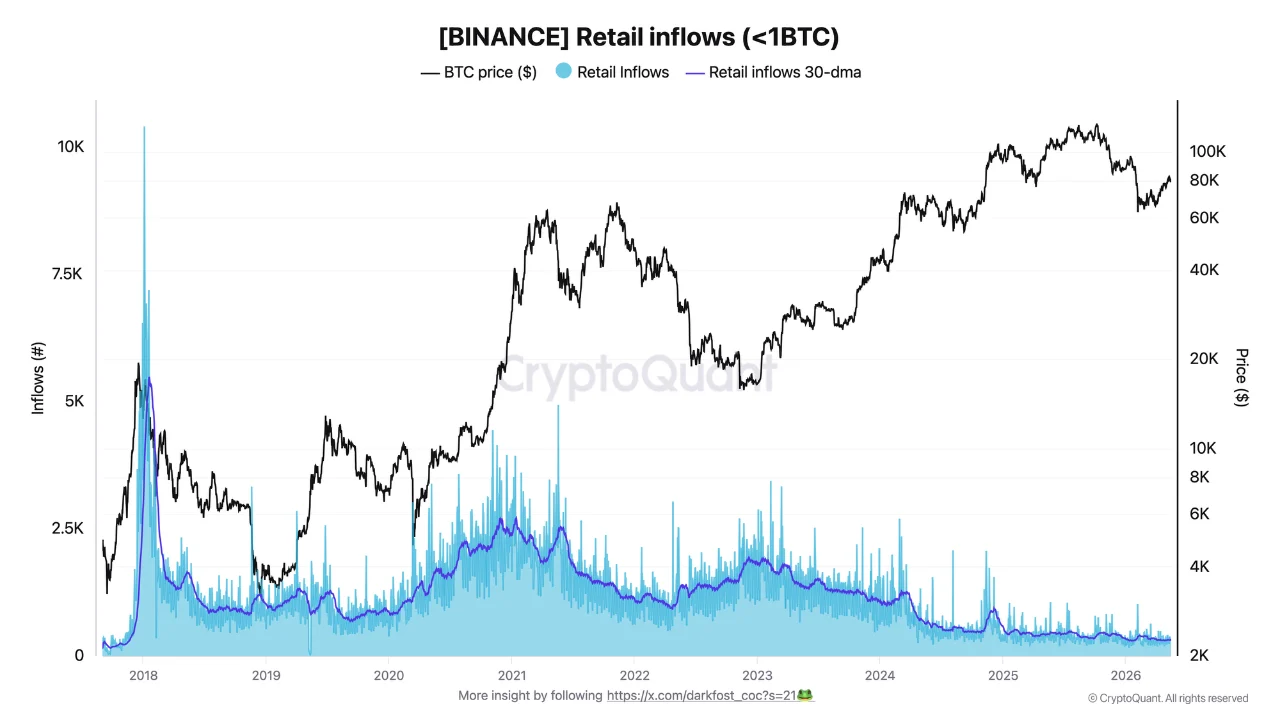
As recently as January 2024, retail investors were still depositing close to 1,000 BTC monthly. But in just two years, those inflows have collapsed by more than 70%. Smaller investors are either leaving crypto completely or shifting toward indirect Bitcoin exposure through financial products like spot Bitcoin ETFs instead of holding BTC themselves.
ETFs Could Be Reshaping Bitcoin Ownership
The rise of spot Bitcoin ETFs may be fundamentally changing how everyday investors interact with crypto markets. Instead of managing wallets, private keys, and exchange accounts, many retail investors now appear more comfortable buying Bitcoin exposure through traditional brokerage platforms.
That shift could explain why direct on-chain retail activity continues shrinking even while institutional demand for Bitcoin remains strong.
For years, retail investors played a major role in driving Bitcoin rallies, especially during the explosive bull runs of 2017 and 2021. Today, however, the market looks increasingly dominated by institutions, long-term holders, and ETF-driven capital flows.
Related: Bitcoin vs. AI Computing: Who Leaves the Bigger Carbon Footprint?
Disclaimer: The information presented in this article is for informational and educational purposes only. The article does not constitute financial advice or advice of any kind. Coin Edition is not responsible for any losses incurred as a result of the utilization of content, products, or services mentioned. Readers are advised to exercise caution before taking any action related to the company.