

- Bitcoin fell below $60,000 as macro risks and Fed fears pressured sentiment.
- Grayscale views the latest Bitcoin decline as a normal market cycle correction.
- The CLARITY Act and Fed policy could determine Bitcoin’s next major direction.
Bitcoin has slipped below the $60,000 mark, extending its latest correction as investors grapple with a tougher interest-rate outlook, regulatory uncertainty in the US and continued caution across crypto markets despite easing geopolitical tensions.
The world’s largest cryptocurrency traded near $59,845 on Monday, down about 6% over the past week. The decline came even as US equity futures moved higher following reports that Washington and Tehran had agreed to halt strikes and resume talks in Qatar, highlighting the divergence between traditional financial markets and digital assets.
Why Bitcoin Is Under Pressure
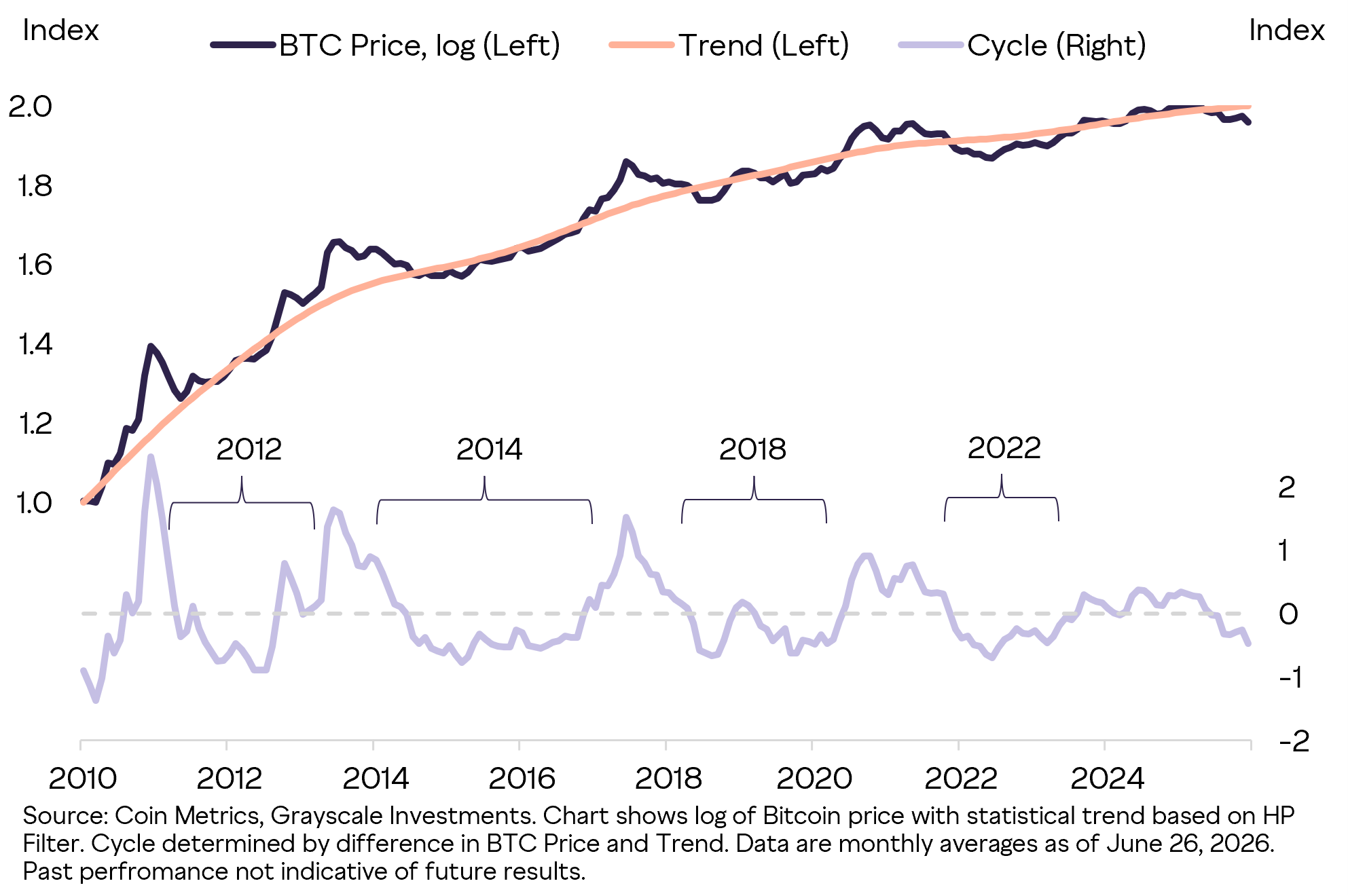
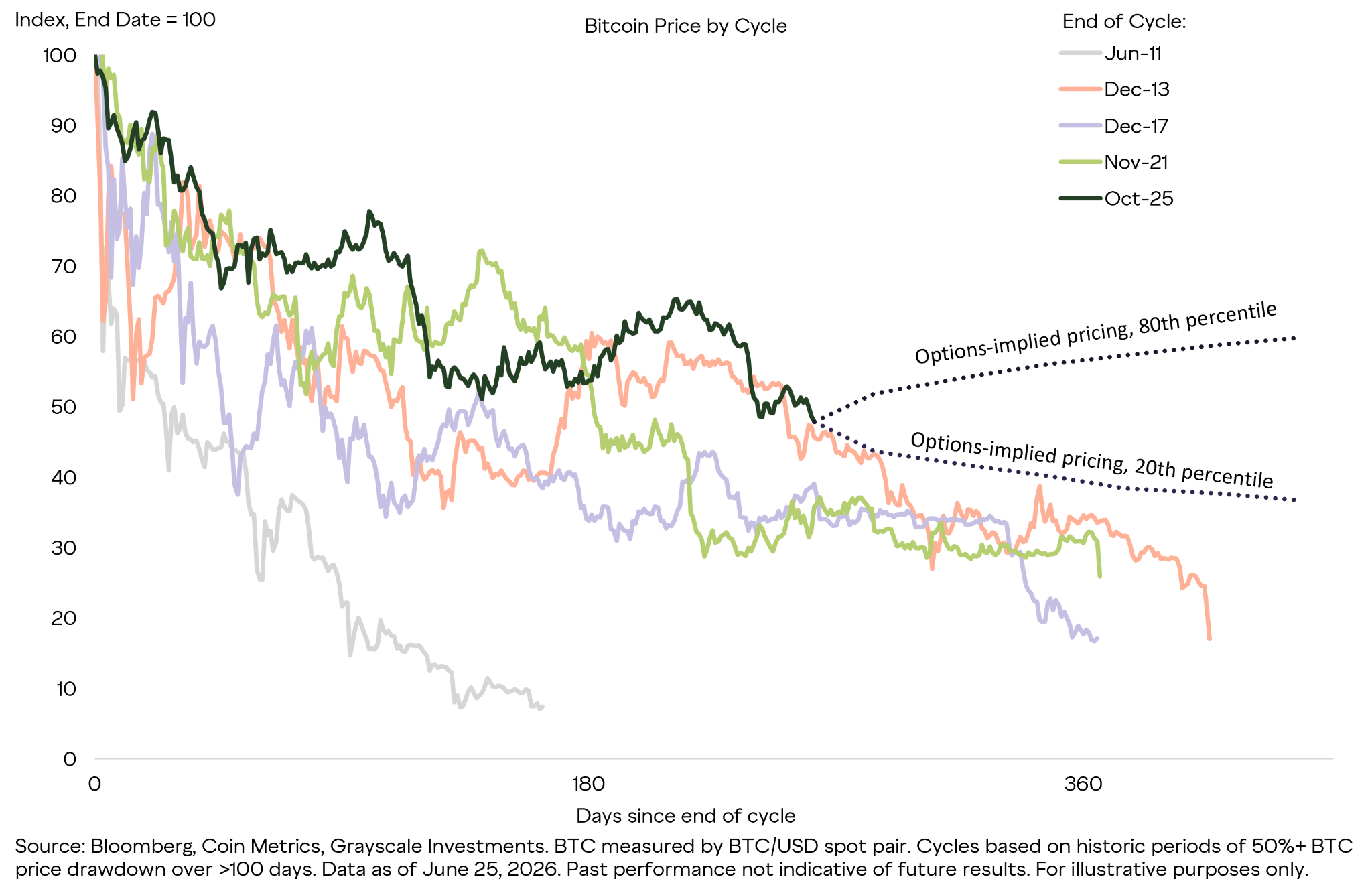
Grayscale Research believes the current sell-off is another cyclical correction rather than the end of Bitcoin’s long-term uptrend. The asset has fallen more than 50% from its October peak of around $125,000, but the firm argues the decline resembles previous market cycles rather than a structural breakdown.
Source: Grayscale
One of the biggest headwinds has been a shift in expectations for US monetary policy. Markets had earlier anticipated interest-rate cuts, but sticky inflation and the appointment of a more hawkish Federal Reserve chair have changed that outlook. Investors now see a higher probability of rate hikes, weakening the appeal of assets viewed as hedges against currency debasement.
Gold, another asset often positioned as an alternative to fiat currencies, has also corrected sharply from recent highs, reflecting the broader impact of changing rate expectations.
Regulation And Corporate Risks Add
Beyond macroeconomic factors, crypto markets are also contending with uncertainty surrounding the proposed CLARITY Act, which is expected to define the regulatory framework for digital assets in the US.
Investors are also monitoring concerns over the leveraged balance sheet of Strategy, formerly MicroStrategy, as well as growing debate around the potential impact of quantum computing on digital asset security.
Despite these concerns, Grayscale says the broader investment case for crypto remains intact. The firm points to rising institutional adoption, continued growth in stablecoins and tokenised assets, and recent regulatory developments such as the approval of perpetual crypto futures in the US as signs that blockchain adoption continues to expand.
Related: 24 Hour Crypto Recap: Here’s What Happened in the Market
What Could Drive The Next Move?
According to Grayscale, Bitcoin’s next major move will depend on a handful of catalysts. In its base case, the CLARITY Act advances through the US Senate, Strategy strengthens its balance sheet and the Federal Reserve refrains from raising rates. That combination could allow Bitcoin to establish a market bottom.
A less favourable scenario would see the legislation delayed, further deleveraging across crypto-linked companies and additional Fed tightening, potentially pushing prices lower before the next recovery begins.
Source: Grayscale
This week’s US Personal Consumption Expenditures inflation data and developments from US-Iran talks in Qatar is also on the watch, both of which could influence market sentiment across risk assets.
While short-term volatility is expected to persist, Grayscale maintains that the current correction could offer an attractive entry point for long-term investors betting on continued growth in public blockchain technology.
Related: Jeremy Grantham Renews Bitcoin Criticism, Lark Davis Pushes Back
Disclaimer: The information presented in this article is for informational and educational purposes only. The article does not constitute financial advice or advice of any kind. Coin Edition is not responsible for any losses incurred as a result of the utilization of content, products, or services mentioned. Readers are advised to exercise caution before taking any action related to the company.