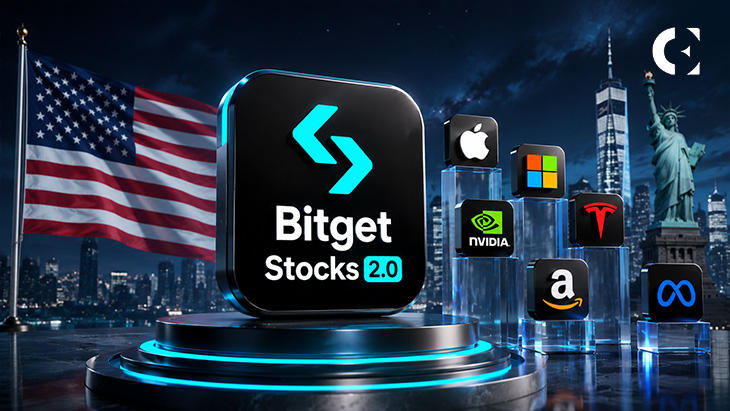

For years, cryptocurrency exchanges and traditional brokerages have existed in separate ecosystems. Investors who wanted exposure to both crypto assets and U.S. equities often needed multiple accounts, different funding methods, and separate portfolio management tools.
Crypto users typically had to convert digital assets into fiat before buying stocks, while traditional brokerage platforms offered little integration with blockchain-based assets.
Bitget’s latest upgrade, Stocks 2.0, aims to close that gap.
Rather than offering only tokenized stocks or only traditional equities, Stocks 2.0 combines multiple ways to access U.S. markets within a single ecosystem. Eligible users can buy supported U.S. stocks through Stock+, trade U.S. stock options, or gain blockchain-based equity exposure through rTokens, depending on their investment objectives.
More importantly, the platform isn’t asking users to choose one model over the other. Instead, Stocks 2.0 gives investors the flexibility to decide—position by position—whether they want direct ownership, crypto-native functionality, or both. That approach also supports Bitget’s broader Universal Exchange (UEX) vision of bringing multiple asset classes together under one account.
Table of contents
- What Is Bitget Stocks 2.0?
- First Impressions
- Stock+: Real U.S. Shares for Traditional Ownership
- rTokens: Tokenized Equity Exposure for Crypto-Native Investors
- Why Tokenized Stocks Matter
- How rTokens Compare With Ondo Stock and Binance bStock
- Stocks 2.0 vs. Traditional Brokerages
- Part of Bitget’s Universal Exchange Vision
- Incentives and Promotions
- Strengths of Stocks 2.0
- Areas for Improvement
- Who Is It Best For?
- Final Verdict
What Is Bitget Stocks 2.0?
Stocks 2.0 is Bitget’s upgraded equity trading ecosystem that combines three complementary ways to access U.S. equity markets:
- Stock+ allows eligible users to purchase real U.S. stocks through licensed brokerage partners.
- rTokens, issued through Reality, are tokenized versions of U.S. stocks and ETFs designed for blockchain-based investing.
- U.S. stock options allow eligible users to trade options contracts on leading U.S.-listed companies.
Rather than competing with one another, these products serve different portfolio functions. Investors can choose direct ownership through Stock+, use options to express directional views or manage portfolio risk, or use rTokens for blockchain-native exposure and ecosystem integration.
This flexibility is one of Stocks 2.0’s defining features. Instead of forcing users into a single investment model, Bitget allows them to choose the type of exposure that best suits each investment.
First Impressions
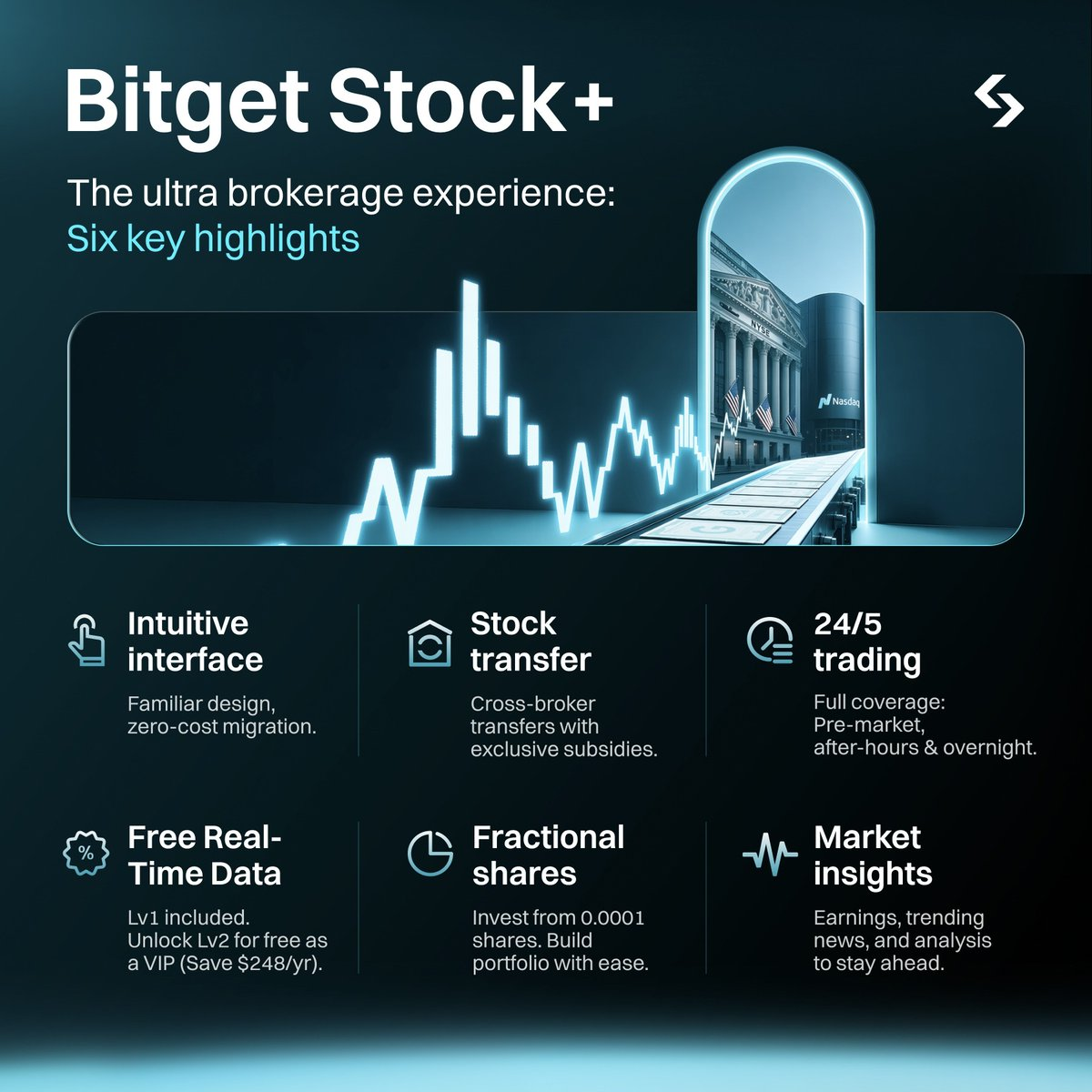
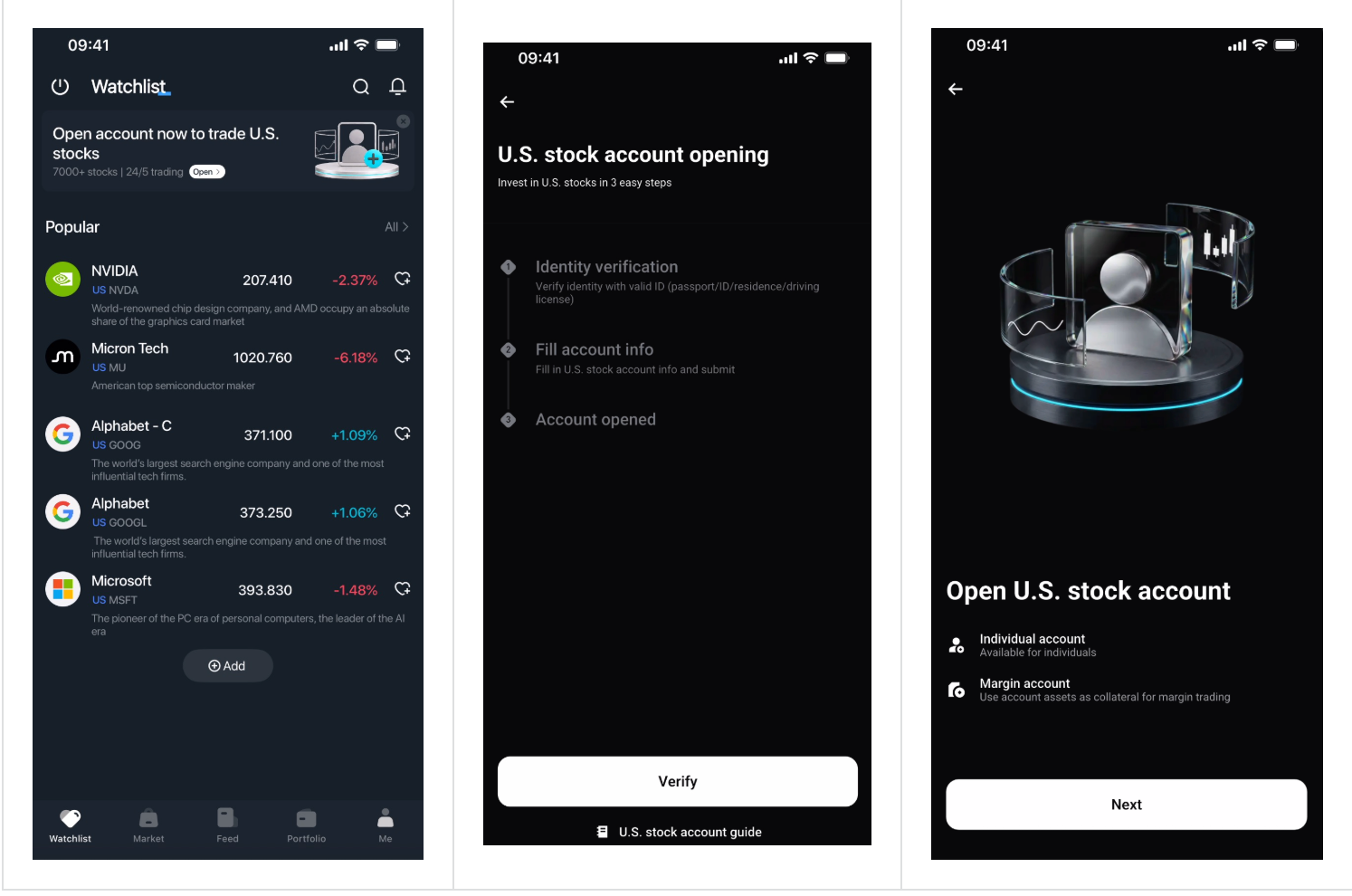
Stocks 2.0 feels closer to a modern brokerage than a simple crypto exchange feature. The interface includes familiar tools such as watchlists, market charts, portfolio tracking, and real-time market data while maintaining the streamlined experience Bitget users already know.
Unlike many crypto exchanges where stocks feel like secondary products, equities appear to be a central part of the overall platform.
Stock+: Real U.S. Shares for Traditional Ownership
Stock+ is designed for investors who want genuine ownership of U.S.-listed companies rather than synthetic or price-tracking products.
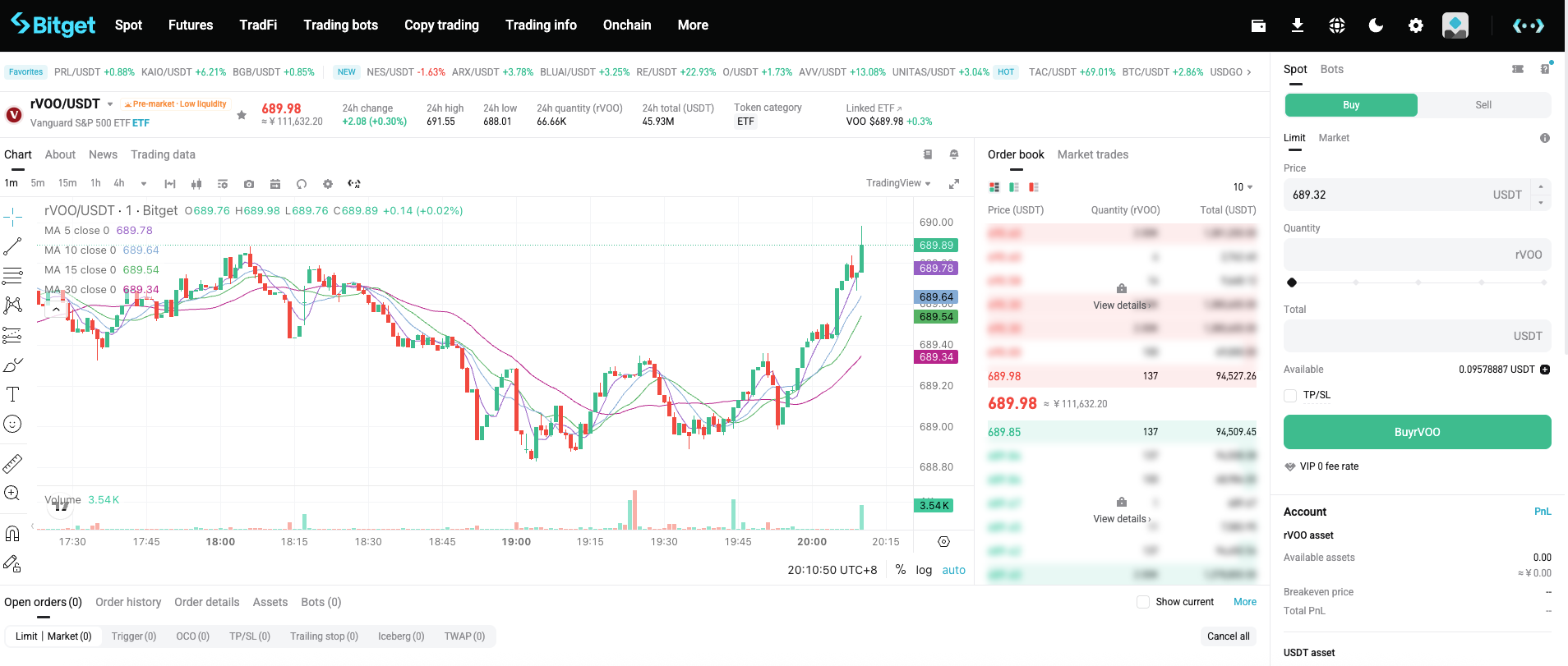
Orders are executed through licensed brokerage partners, allowing eligible users to purchase actual U.S. shares with features commonly found on traditional brokerage platforms, including:
- Ownership of real U.S. stocks
- Cash dividends
- Stock split adjustments
- Voting rights (subject to custody arrangements)
- Extended trading hours
- Real-time market data
- Portfolio management tools
- Stock transfer support
The platform currently supports more than 10,000 U.S. stocks and ETFs, putting its product coverage in line with many established brokerage platforms.
Stock+ has also expanded to include U.S. stock options, giving eligible users access to options contracts on leading U.S.-listed companies. While Stock+ is designed for investors seeking direct ownership, options provide an additional tool for active traders looking to express bullish or bearish market views, manage earnings-related volatility, or hedge existing equity positions.
One of Stock+’s distinguishing features is funding. Instead of relying solely on bank transfers, eligible users can fund stock purchases using supported digital assets such as USDC and USDT. For existing crypto investors, this removes several steps typically required when moving between crypto exchanges and brokerage accounts.
Stock+ also supports fractional investing from as little as 0.0001 shares, making higher-priced companies such as Apple, Amazon, NVIDIA, Microsoft, Tesla, Alphabet, Meta, and selected other stocks more accessible without requiring investors to purchase a full share.
Overall, Stock+ is best suited for users who prioritize direct ownership, shareholder rights, and a familiar brokerage-style investing experience, while the addition of stock options makes it a more versatile offering for traders who want greater flexibility in managing market exposure and portfolio risk.
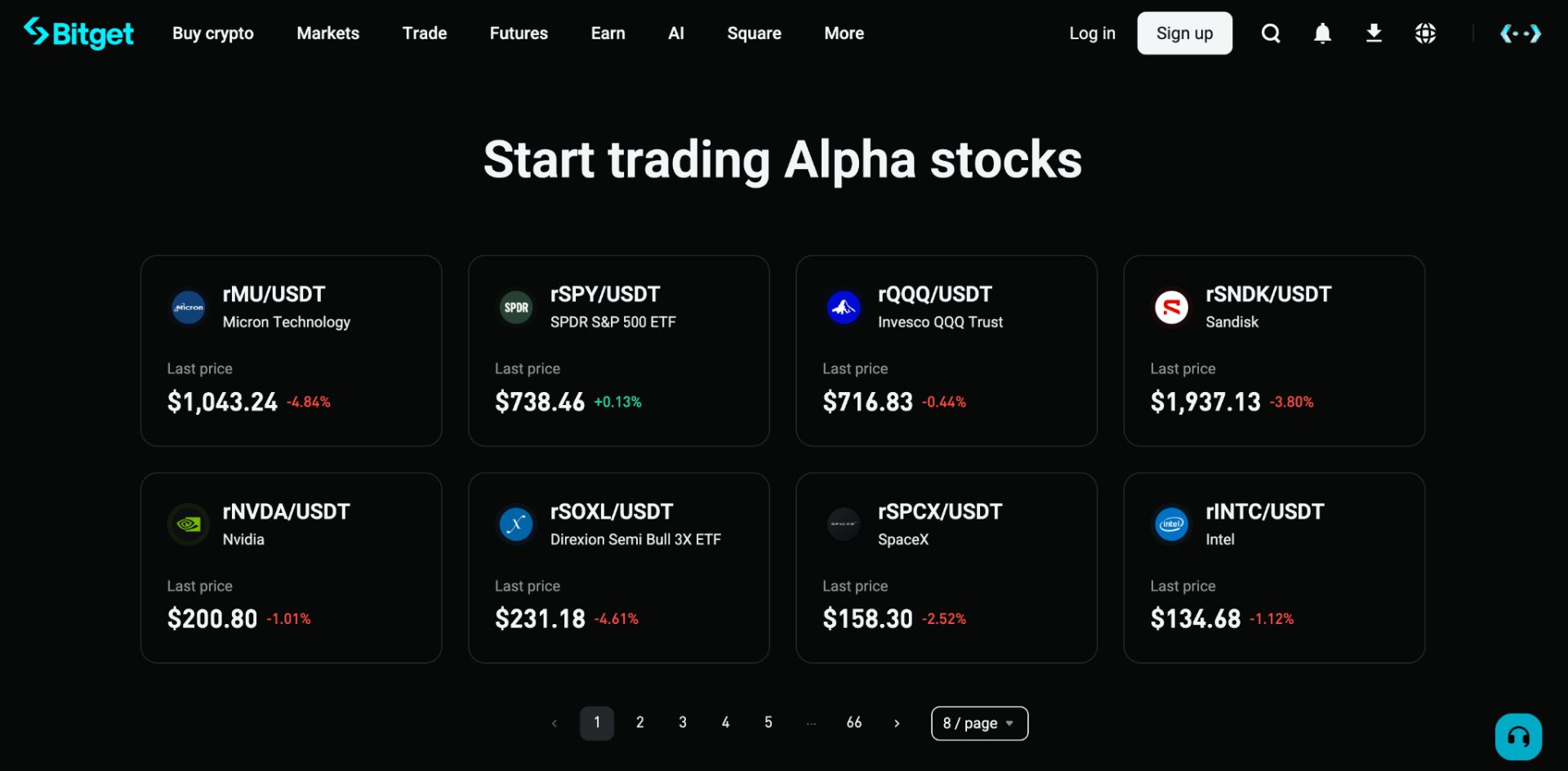
rTokens: Tokenized Equity Exposure for Crypto-Native Investors
While Stock+ focuses on traditional ownership, rTokens are designed for investors who prefer blockchain-based equity exposure.
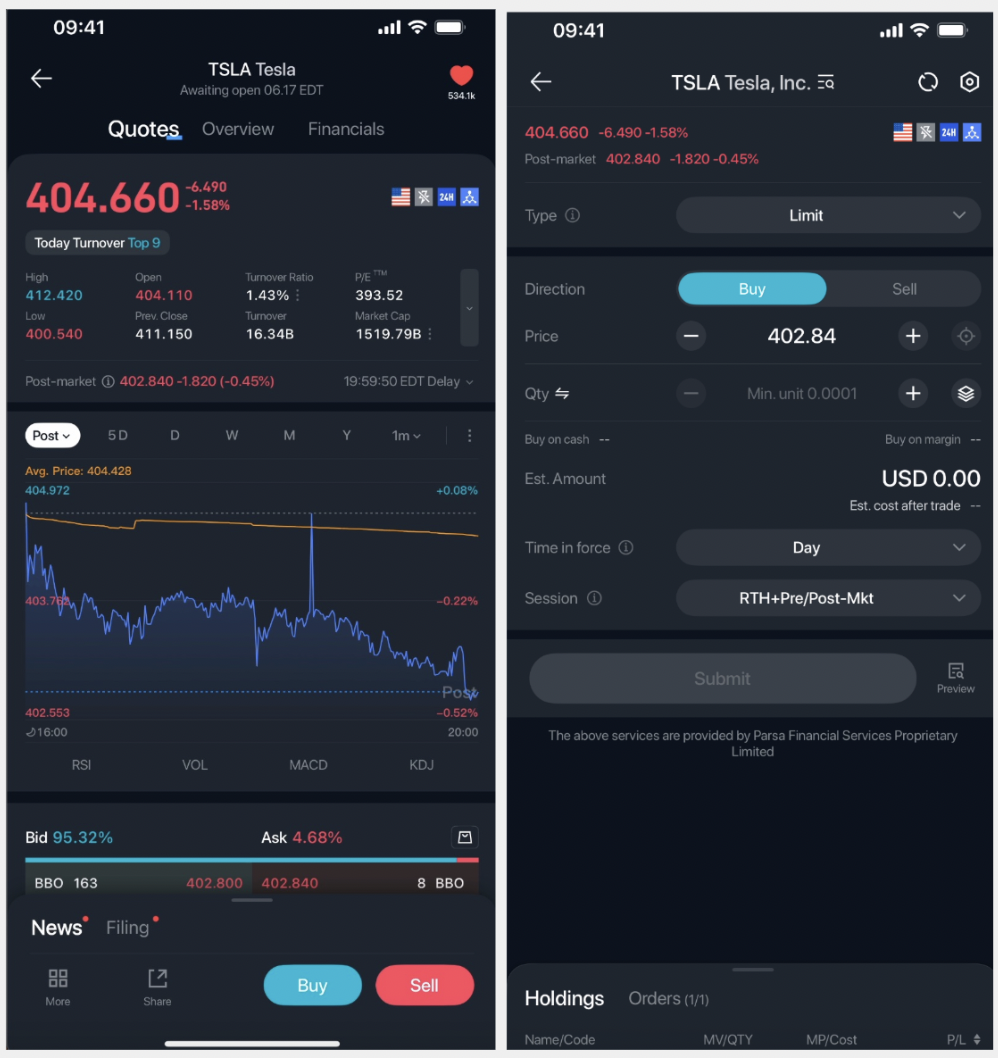
Issued through Reality, a regulated real-world asset (RWA) platform backed by Bitget, rTokens represent tokenized versions of U.S. stocks and ETFs that can be bought, held, and traded within the Bitget ecosystem.
During U.S. market hours, rToken prices are designed to closely track the value of their underlying stocks, with liquidity linked to U.S. markets.
Unlike conventional brokerage holdings, eligible rTokens can also integrate with several crypto-native platform features, including:
- Margin trading
- Strategy trading
- Copy trading
- Selected yield products
- Unified account management
This makes rTokens more than simple representations of stocks. They can become part of a broader digital asset portfolio, allowing users to maintain equity exposure while participating in other supported trading strategies.
Reality currently supports more than 500 tokenized U.S. stocks and ETFs, providing crypto-native investors with another route into U.S. equity markets without leaving the Bitget ecosystem.
For users who value capital efficiency and blockchain-native investing, rTokens offer a different set of advantages than traditional stock ownership. Eligible rTokens can also function within Bitget’s unified account infrastructure, allowing investors to maintain equity exposure while using supported margin, strategy, and portfolio management tools.
Why Tokenized Stocks Matter
Tokenized equities are part of the broader movement to bring real-world assets onto blockchain networks.
Supporters argue that tokenization can improve accessibility, simplify settlement, and allow traditional financial assets to interact more naturally with blockchain-based infrastructure.
Bitget believes this trend will continue to accelerate. The company has projected that as much as 10% of major global asset classes could become tokenized by 2030, compared with an estimated 0.5% to 1% today.
Whether that prediction ultimately proves accurate remains uncertain, but the launch of Stocks 2.0 illustrates how exchanges are beginning to build products around this emerging market.
Reality, the platform behind rTokens, surpassed $50 million in assets under management shortly after launch, suggesting there is already growing interest in regulated tokenized equity products.
As tokenized equities gain traction, competition in this segment is also increasing, with several crypto platforms introducing their own blockchain-based stock products.
How rTokens Compare With Ondo Stock and Binance bStock
As tokenized equities become more popular, several crypto platforms are developing their own approaches to bringing traditional stocks onchain. Alongside Reality’s rTokens, products such as Ondo Stock and Binance’s bStock are also targeting investors who want blockchain-based exposure to U.S. equities.
While all three products aim to bridge traditional finance and digital assets, they differ in liquidity, regulatory structure, and the degree to which their tokenized stocks can be integrated into broader trading ecosystems. These differences help determine whether users are simply gaining price exposure or accessing a more versatile portfolio tool.
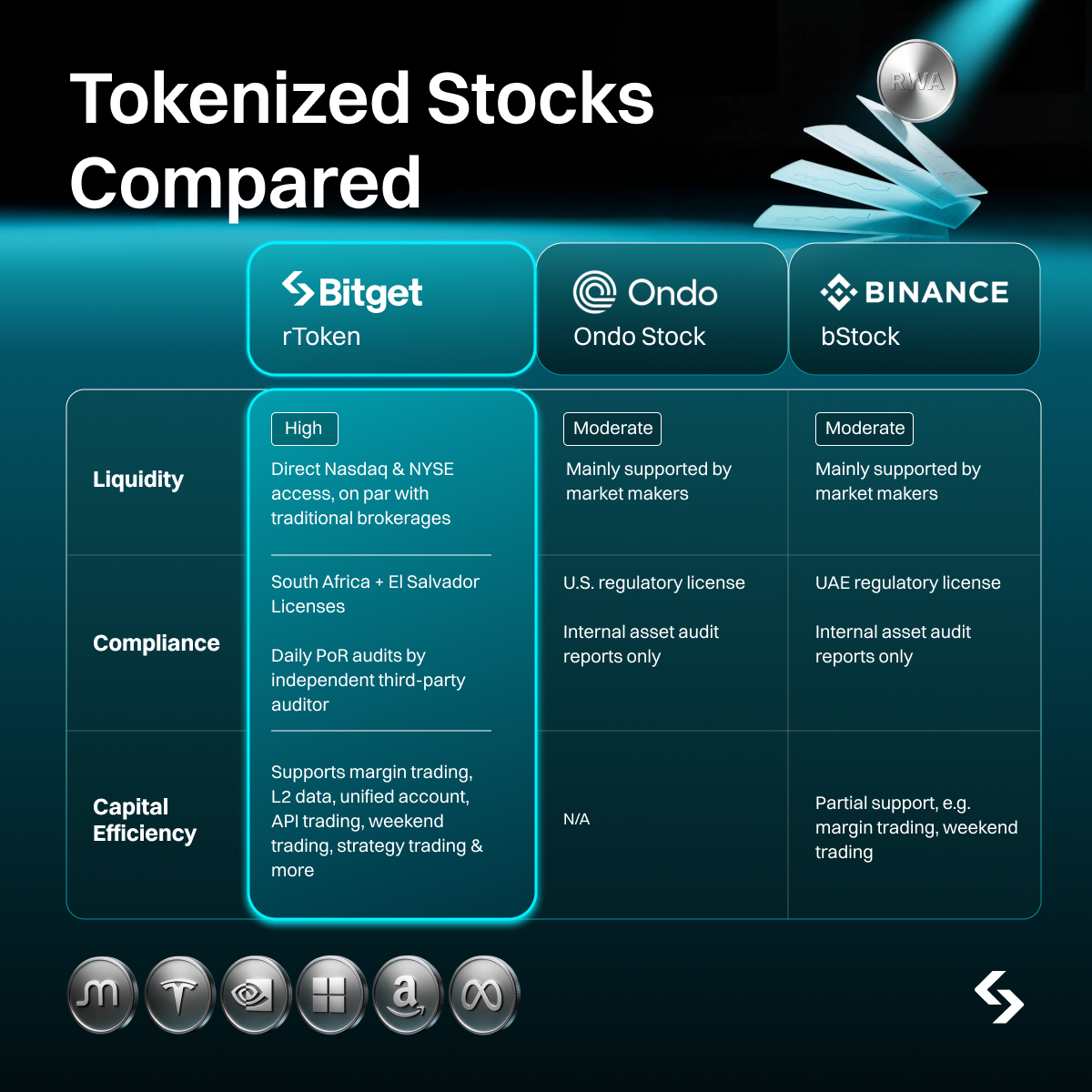
The comparison shows that Bitget is positioning rTokens as more than tokenized representations of stocks. Beyond tracking equity prices, the product is designed to integrate with the broader Bitget ecosystem, allowing eligible users to use stock-linked assets alongside margin trading, strategy trading, copy trading, and selected yield products.
For investors who want blockchain-native functionality in addition to U.S. equity exposure, this broader ecosystem integration becomes one of the key differentiators.
Stocks 2.0 vs. Traditional Brokerages
Traditional brokerages remain the standard choice for investors whose primary goal is buying and holding stocks. However, they generally operate separately from crypto platforms, requiring different accounts, funding methods, and portfolio management systems.
Stocks 2.0 takes a different approach by integrating both traditional equities and tokenized assets into a single platform.
Instead of funding a brokerage account through bank transfers alone, eligible users can use supported digital assets such as USDC and USDT to purchase real U.S. stocks through Stock+. This creates a more seamless experience for investors who already manage capital within the crypto ecosystem.
The platform gives users three complementary ways to access U.S. equity markets, each designed for a different investment objective. Those seeking long-term ownership can choose Stock+, which provides real shares, shareholder rights, dividends, and corporate action support.
Active traders can use U.S. stock options to express bullish or bearish views, hedge existing positions, or trade around earnings and volatility without relying solely on buying or selling shares.
Meanwhile, investors who prioritize blockchain integration and greater capital efficiency can choose rTokens, which can interact with selected Bitget products such as margin trading, strategy tools, copy trading, and yield features.
Rather than replacing traditional brokerages, Stocks 2.0 offers an alternative workflow for investors who want U.S. equities to become part of the same environment where they already manage crypto assets.
Comparison of rTokens and Stock+
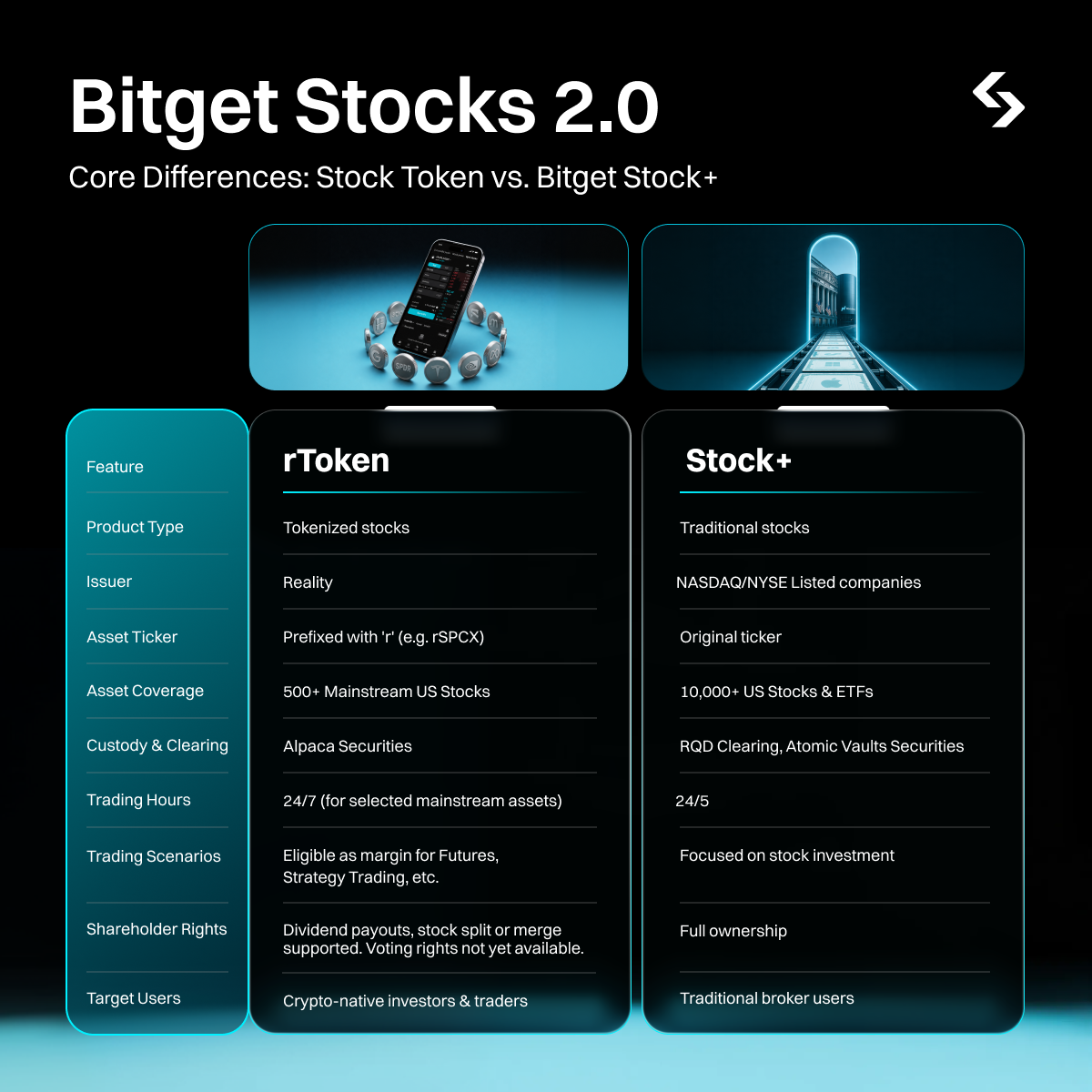
The comparison highlights the core philosophy behind Stocks 2.0. Rather than offering a single way to access U.S. equities, Bitget provides complementary tools for different investment objectives.
Investors can choose direct ownership through Stock+, use stock options for tactical or hedging strategies, or gain blockchain-native exposure through rTokens. The emphasis is on giving users the flexibility to choose the most appropriate structure for each position, rather than forcing them into a single investment model.
Part of Bitget’s Universal Exchange Vision
Stocks 2.0 also supports Bitget’s broader Universal Exchange (UEX) strategy.
The idea behind UEX is that users should not need separate platforms for cryptocurrencies, tokenized assets, equities, and other financial products. Instead, they should be able to manage multiple asset classes within one account.
Stocks 2.0 represents one practical example of that vision by bringing both traditional and tokenized U.S. equities into the existing Bitget ecosystem.
Incentives and Promotions
To encourage adoption, Bitget has introduced several promotional campaigns. The Stock Transfer Fast-Track Plan allows eligible users to transfer holdings from supported brokerages, including Futu, Tiger Brokers, Moomoo, Webull, and Interactive Brokers. Qualified users may receive transfer fee reimbursements of up to 10,000 USDT.
The platform is also running promotional trading campaigns, including 100,000 USDT reward pools tied to SpaceX and Micron stock promotions.
In addition, Stock+ trading fees have been reduced by 50% until August 31, 2026.
Strengths of Stocks 2.0
The biggest strength of Stocks 2.0 is flexibility. Rather than offering only one type of stock product, Bitget allows users to choose the form of equity exposure that best matches each investment objective.
Investors seeking long-term ownership can use Stock+, active traders can use stock options for tactical or hedging strategies, while crypto-native users who value capital efficiency can choose rTokens.
Compared with many competing tokenized stock products, rTokens place greater emphasis on ecosystem utility, allowing eligible users to incorporate tokenized equities into a broader suite of trading and portfolio management tools rather than simply holding them for price exposure.
The unified account structure also reduces the friction of managing crypto and equities separately. Features such as crypto funding, fractional investing, and brokerage-style tools further improve accessibility for users already active in digital assets.
Areas for Improvement
There are still limitations.
Stock+ availability depends on user eligibility and regional regulations, meaning not everyone can access the service. Likewise, new users may need additional education to understand the practical differences between tokenized stocks and direct share ownership.
Clarifying when each product is most appropriate will likely become increasingly important as tokenized assets become more widely adopted.
Who Is It Best For?
Stocks 2.0 is particularly well suited to crypto-native investors who want to expand into U.S. equities without managing separate brokerage accounts.
Long-term investors may gravitate toward Stock+ for direct ownership and shareholder rights. Active traders can use stock options to implement directional or hedging strategies. Crypto-native investors who want their equity exposure to integrate with other digital asset products may find rTokens the most useful.
For users who actively manage both digital assets and stocks, the ability to combine both approaches within a single account is likely to be the platform’s biggest advantage.
Final Verdict
Stocks 2.0 is more than an expansion into U.S. equities. It represents Bitget’s attempt to bring traditional investing and blockchain-based finance together within a single platform.
Its defining feature is position-by-position flexibility. Rather than forcing investors into a single model, Stocks 2.0 lets users choose direct ownership through Stock+, options for directional trading or hedging strategies, or blockchain-native exposure through rTokens—depending on the role each position plays within their portfolio.
Regulatory limitations and user education remain challenges, particularly as tokenized assets continue to evolve. Even so, Stocks 2.0 demonstrates how exchanges are moving beyond pure cryptocurrency trading toward broader multi-asset investing ecosystems, giving users more choice in how they access U.S. equity markets.
As competition in tokenized equities grows, Bitget is differentiating its approach by combining direct stock ownership, tokenized stocks, and stock options within a single ecosystem rather than offering only one form of market access.
Disclaimer: The information presented in this article is for informational and educational purposes only. The article does not constitute financial advice or advice of any kind. Coin Edition is not responsible for any losses incurred as a result of the utilization of content, products, or services mentioned. Readers are advised to exercise caution before taking any action related to the company.