
- Markets expect the Bank of Japan to raise its policy rate by 25 basis points to 1%.
- The move would take Japanese rates to their highest level since 1995.
- Higher borrowing costs could reduce the appeal of yen-funded carry trades.
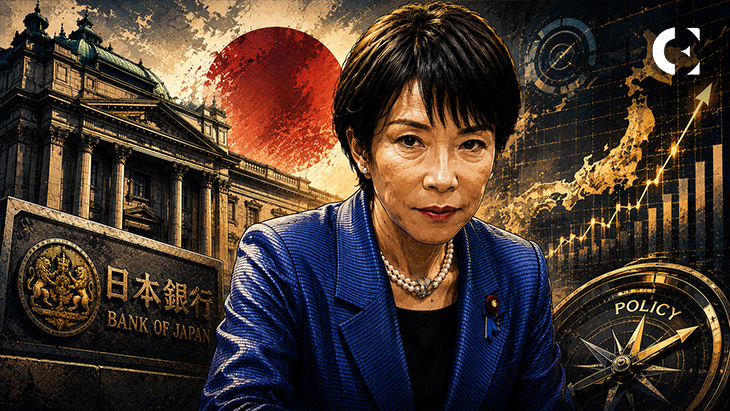
The Bank of Japan is approaching a rate decision that could reach far beyond domestic borrowing costs. Markets expect the central bank to raise its benchmark rate by 25 basis points to 1%, extending the gradual withdrawal from Japan’s long period of ultra-low rates.
A chart shared by market commentator Batman shows the policy rate rising in clear steps since 2024. Reaching 1% would place borrowing costs at their highest level in roughly three decades, marking a major shift for an economy long associated with cheap money.
Japan Moves Further From Zero Rates
Japan spent years maintaining rates near or below zero while other major central banks tightened policy. That gap made the yen an important source of inexpensive global funding.
Investors could borrow in yen at low cost, convert the money into another currency, and then place it in higher-yielding bonds, equities, or other assets. This strategy became known as the carry trade.
The expected June increase does not make Japanese rates high by global standards. However, it raises the cost of maintaining leveraged positions funded through the yen. Domestic bonds may also become more attractive as Japanese yields rise.
Notably, the BOJ’s tightening cycle began after it ended its negative-rate policy in 2024. A move to 1% would represent its fourth increase since that policy shift.
Related: World Cup Prediction Boom Could Lift Robinhood Revenue, Bernstein Says
Inflation and Yen Weakness Support Hike Case
Several domestic factors are supporting expectations for tighter policy. Producer prices have increased, raising concerns that higher business costs may eventually be passed on to consumers.
Strong wage settlements have also added to the case for a rate increase. The BOJ has repeatedly watched wage growth alongside underlying inflation when deciding whether the economy can withstand higher borrowing costs.
Meanwhile, the yen has traded near levels that previously prompted government intervention. A weak currency raises the cost of imported fuel, food, and industrial materials, placing additional pressure on inflation.
Markets have largely priced in the 25-basis-point move. Therefore, attention may shift toward the BOJ’s language on future increases rather than the June decision alone.
Related: India Issues 44,000 Crypto Tax Notices, Uncovers $104M in Hidden Income
Carry Trade Unwind Draws Market Attention
Batman argued that higher Japanese rates could encourage investors to reduce positions financed with cheap yen. Such adjustments may involve selling overseas bonds, equities,, or other risk assets before repaying Japanese funding.
Japan also holds a major position in the U.S. Treasury market. A rise in domestic yields could influence how Japanese institutions divide capital between local government bonds and foreign debt.
However, a carry-trade unwind is not automatic. Currency movements, hedging expenses, relative yields, and the BOJ’s future guidance will shape whether investors shift funds quickly or gradually.
Japanese equities enter the meeting near record levels. A more hawkish policy signal could pressure technology and rate-sensitive companies, while banks and insurers may benefit from wider lending margins.
The immediate decision centers on a quarter-point increase. Its broader significance hinges on whether Japan’s shift away from ultra-cheap funding begins to alter capital flows built over several decades.
Disclaimer: The information presented in this article is for informational and educational purposes only. The article does not constitute financial advice or advice of any kind. Coin Edition is not responsible for any losses incurred as a result of the utilization of content, products, or services mentioned. Readers are advised to exercise caution before taking any action related to the company.