


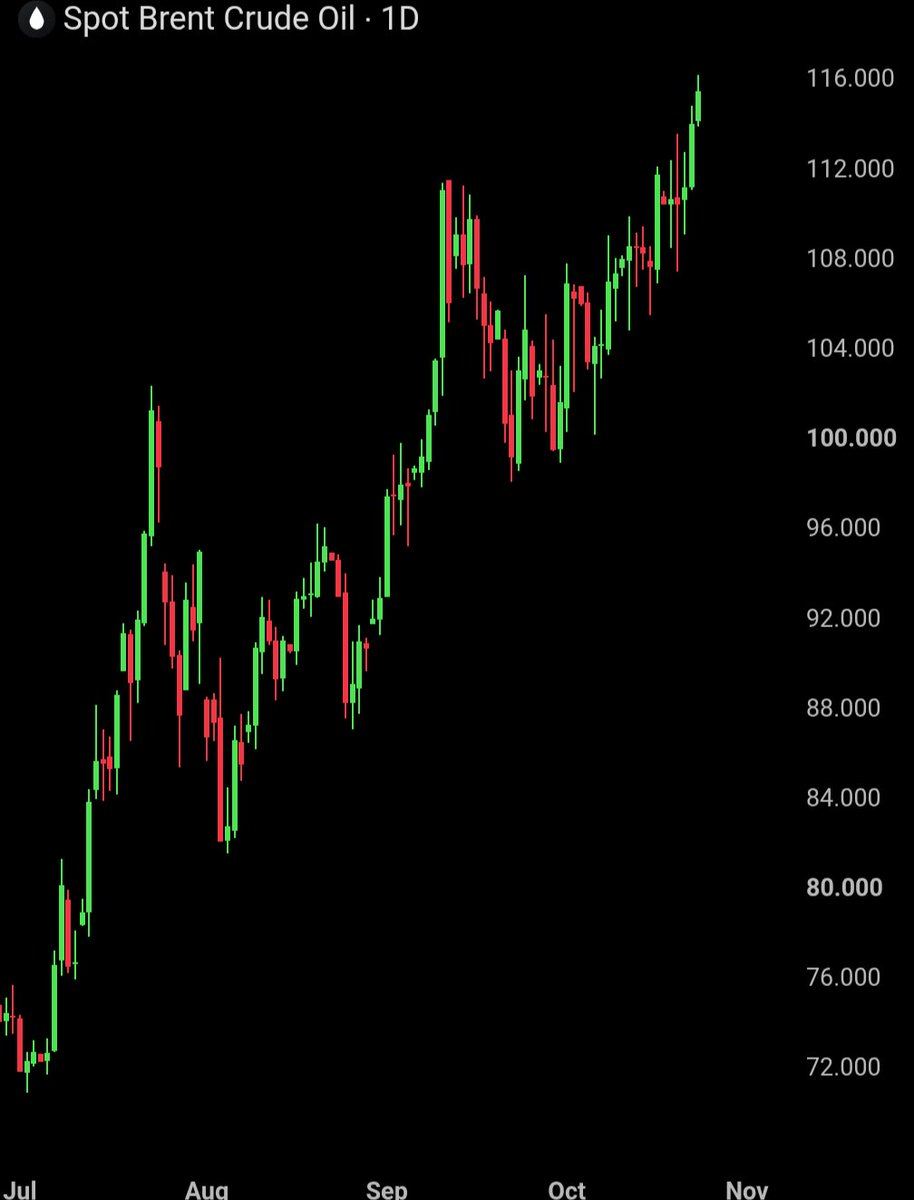
- Brent hit $116 a barrel, up 63% from its July low and its highest level in nearly six months.
- Higher energy costs threaten household budgets and complicate central bank policy.
- A stronger dollar could weigh on gold, while tighter financial conditions threaten Bitcoin.
Brent crude oil reached $116 a barrel, renewing concerns that higher energy costs could raise transportation and manufacturing expenses, push up consumer prices, and complicate interest-rate decisions. The surge adds pressure on households and businesses already facing expensive fuel, leaving global markets wary of another inflation shock.
Analyst Bull Theory described the price as Brent’s highest in almost six months and estimated a 63% gain from its July low.
Brent’s Rally Raises Costs Beyond the Oil Market
The rise comes due to escalating Middle East tensions, Houthi attacks on Saudi Arabian energy facilities and risks to regional shipping routes. Saudi Aramco reportedly ordered employees to evacuate its headquarters.
Shipping expenses are adding to the strain. The U.S. Energy Information Administration linked higher tanker rates and insurance costs to rising delivered crude prices, as well as continued constraints on regional supplies.
Brent cleared $108 on the daily chart before pushing above $112, extending a recovery from September’s retreat below $100.
For consumers, long-term increases could mean more expensive gasoline and goods. Businesses that pay more to transport or manufacture products may pass some of these costs along, further pressuring household purchasing power.
Follow us on X for real-time crypto updates.
Higher Energy Prices Complicate Rate Decisions
Whether high oil prices trigger another inflation shock depends on how long they persist and whether businesses pass higher energy costs on to consumers. Vanguard’s analysis highlights the dilemma for central banks: rising inflation could delay interest-rate cuts, while weaker consumer spending and slower economic growth could justify rate cuts instead.
The Federal Reserve and other central banks therefore face questions over whether energy costs will keep inflation persistent enough to delay cuts or require further tightening.
Dollar, Gold and Bitcoin Face Different Pressures
Currency markets have already reflected some of these concerns. An October 21 report from Mitrade put the U.S. Dollar Index near 101.80, citing oil-driven inflation risks and demand for safe-haven assets.
A stronger dollar and rising bond yields could weigh on gold by making it more expensive for foreign buyers and increasing the opportunity cost of holding a non-yielding asset. Bitcoin could also face pressure if tighter financial conditions and technology-sector losses prompt investors to reduce exposure to riskier assets.
Subscribe to our YouTube channel for the latest crypto news.
Related: Rising Oil Prices Threaten Rupee Recovery: What Indian Investors Should Watch
Disclaimer: The information presented in this article is for informational and educational purposes only. The article does not constitute financial advice or advice of any kind. Coin Edition is not responsible for any losses incurred as a result of the utilization of content, products, or services mentioned. Readers are advised to exercise caution before taking any action related to the company.