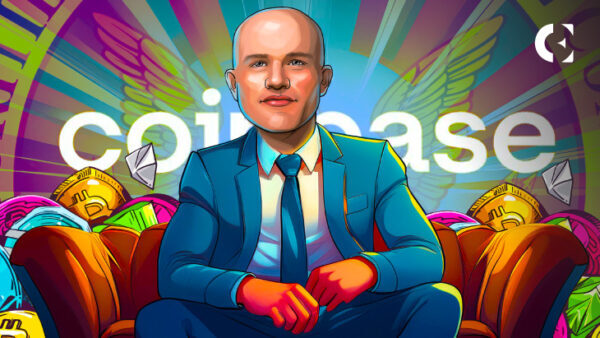

- Brian Armstrong said the financial system still needs eight major upgrades.
- The tokenized real-world asset market crossed $37.5 billion in May 2026.
- Armstrong called for 24/7 global trading, self-custody wallets, and favorable regulation.
Brian Armstrong said the global financial system still runs on outdated infrastructure and needs eight major upgrades before it can operate efficiently at internet scale.
The Coinbase CEO outlined the areas in a post on X, pointing to tokenized assets, stablecoin payments, AI-driven finance tools, self-custody wallets, and regulation built for digital markets.
Armstrong said the next version of finance will become more global, more automated, and increasingly built on blockchain networks.
Tokenized Assets Move Into Focus
Armstrong placed tokenization of real-world assets at the top of the list. He said assets such as real estate, stocks, bonds, and investment funds should move on-chain to allow instant settlement, broader distribution, and fractional ownership.
The market around tokenized assets has already started expanding. The tokenized real-world asset sector crossed $37.5 billion in May 2026 as large financial firms continued testing blockchain-based settlement systems.
Traditional institutions are also increasing activity in the sector. Companies including BlackRock and JPMorgan have explored tokenized funds, blockchain settlement rails, and digital asset infrastructure over the past year.
The push toward tokenization comes from one clear problem inside traditional markets. Settlement still takes time, trading hours remain limited, and access to many financial products depends heavily on location and account size.
Armstrong argued that blockchain networks can remove many of those barriers.
24/7 Trading and Stablecoin Payments
Another major issue Armstrong highlighted is the lack of continuous global trading. Traditional stock and bond markets still operate within fixed regional hours, while crypto markets already run nonstop.
Armstrong said that future financial markets should provide pooled global liquidity, allowing anyone to access any asset at any time. He also pointed to stablecoins as the next stage of global payments.
According to Armstrong, stablecoin transfers can deliver near-instant settlement at a lower cost compared to traditional banking rails, especially for cross-border payments.
He added that stablecoins could also support “agentic payments,” where AI systems handle transactions automatically.
Stablecoins have become one of the fastest-growing segments of the crypto industry over the last two years as institutions and payment companies seek faster settlement systems tied to fiat currencies.
Coinbase itself has expanded deeper into the sector. Coinbase Asset Management launched a tokenized stablecoin credit strategy for qualified investors in April 2026.
AI and Regulation Become Core Themes
Armstrong also pushed for wider use of artificial intelligence across financial services. He said AI can improve risk analysis, fraud detection, compliance systems, credit scoring, and financial advice while lowering operating costs.
The Coinbase CEO argued AI-driven systems could eventually give every user access to financial guidance that would normally only be available to high-net-worth clients.
At the same time, Armstrong repeated calls for regulation that supports innovation instead of slowing it down. Coinbase has spent years battling the US SEC over crypto regulation. Armstrong said financial rules should move away from broad one-size-fits-all restrictions toward systems based on actual risk levels.
Expanded Access, Self-Custody and Sound Money
Armstrong also said financial access still depends too heavily on intermediaries. He pointed to open blockchain protocols and self-custody wallets as tools that can expand access to anyone with a smartphone while reducing reliance on banks and centralized platforms.
Another area he highlighted was capital formation. Armstrong said fundraising should become cheaper and easier for startups and builders with strong ideas. “Low cost and turnkey for anyone to raise money for a good idea,” he shared his take.
The final point focused on what he called “sound money.” He described it as protection against inflation during periods when governments and central banks lose monetary discipline.
Related: Brian Armstrong Says AI Agents Could Drive Massive Digital Dollar Demand
Disclaimer: The information presented in this article is for informational and educational purposes only. The article does not constitute financial advice or advice of any kind. Coin Edition is not responsible for any losses incurred as a result of the utilization of content, products, or services mentioned. Readers are advised to exercise caution before taking any action related to the company.