

- Foreign inflows hit $72B as investors chase cheaper Chinese stocks amid global market highs.
- China rallies gain but fears remain due to past regulatory crackdowns and policy shocks.
- Retail traders dominate China markets, causing sharp swings instead of stable long-term growth.
Foreign investors returned strongly to Chinese stocks in April as global funds looked for cheaper markets with steady economic growth. Bull Theory said overseas investors poured nearly $29 billion into Chinese equities during the month, making it the fifth-largest foreign buying surge in the market’s history.
The inflows pushed total foreign investment into Chinese stocks to about $72 billion so far in 2026, even as concerns around China’s property sector and weak consumer spending continue. Bull Theory wrote on X, “Foreign investors just made their 5th largest bet on Chinese stocks in history.”
The analyst said many investors now see China as one of the few major markets still trading far below past highs despite posting economic growth near 5%. The CSI 300 index climbed 8% in April and added another 1% in May. Still, investors remain careful because previous rallies in China often lost momentum after regulatory action from Beijing.
Foreign Investors Return Despite Structural Risks
Bull Theory’s chart showed foreign money returning strongly to Chinese stocks during April 2026. The data tracked northbound flows, which measure overseas investment entering mainland Chinese shares through Hong Kong trading links.
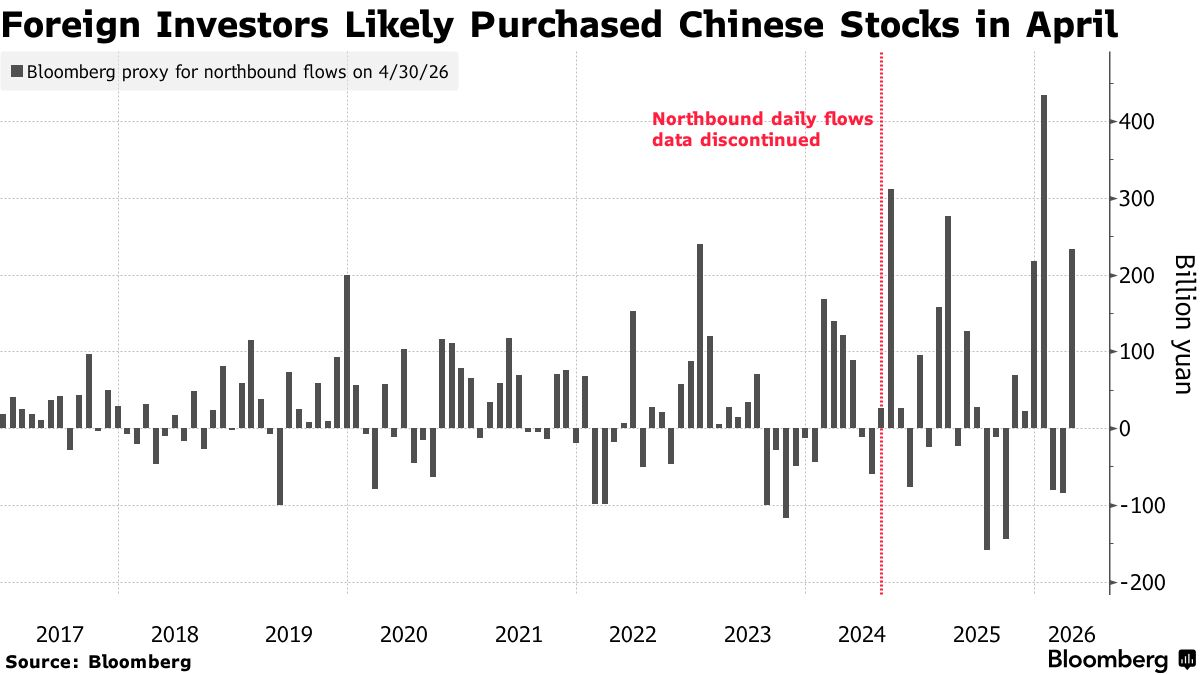
Several major financial firms also turned more positive on Chinese equities in recent months. Goldman Sachs, Morgan Stanley, and Franklin Templeton reportedly increased exposure to Chinese stocks ahead of late 2026. Many investors now see China as one of the few large markets still trading at relatively low valuations while most Western markets remain near record highs.
Still, concerns around China’s market structure continue limiting investor confidence. The Shanghai Composite remains 33% below its 2007 peak despite years of economic growth. Bull Theory said retail traders still dominate nearly 90% of daily trading activity in China. As a result, markets often swing sharply on sentiment and policy signals instead of long-term investment trends.
Related: China Broker Crackdown May Push Offshore Investors Toward Crypto Rails
Beijing’s Regulatory Pattern Worries Markets Again
Bull Theory also highlighted Beijing’s long history of tightening regulations during strong market rallies. The analyst pointed to the 2021 crackdown on Chinese technology firms and the regulatory scrutiny surrounding AI companies like DeepSeek in 2025. According to the post, investor confidence weakened each time authorities stepped in, causing several market rallies to lose momentum.
At the same time, China’s property downturn continues weighing on household wealth and consumer spending. Most Chinese families still keep a large share of their wealth in real estate. However, many developers remain under heavy debt pressure while unsold housing inventory stays high across several cities.
Crypto markets also faced fresh pressure after the U.S. SEC delayed its exemption framework for tokenized stock trading. Bull said that Bitcoin fell by about $2,600 within 24 hours, wiping nearly $55 billion from its market value. Ethereum also dropped 3.4%, erasing roughly $8.5 billion during the broader market decline.
Related: US Preparing for New Military Action Against Iran: Report
Disclaimer: The information presented in this article is for informational and educational purposes only. The article does not constitute financial advice or advice of any kind. Coin Edition is not responsible for any losses incurred as a result of the utilization of content, products, or services mentioned. Readers are advised to exercise caution before taking any action related to the company.