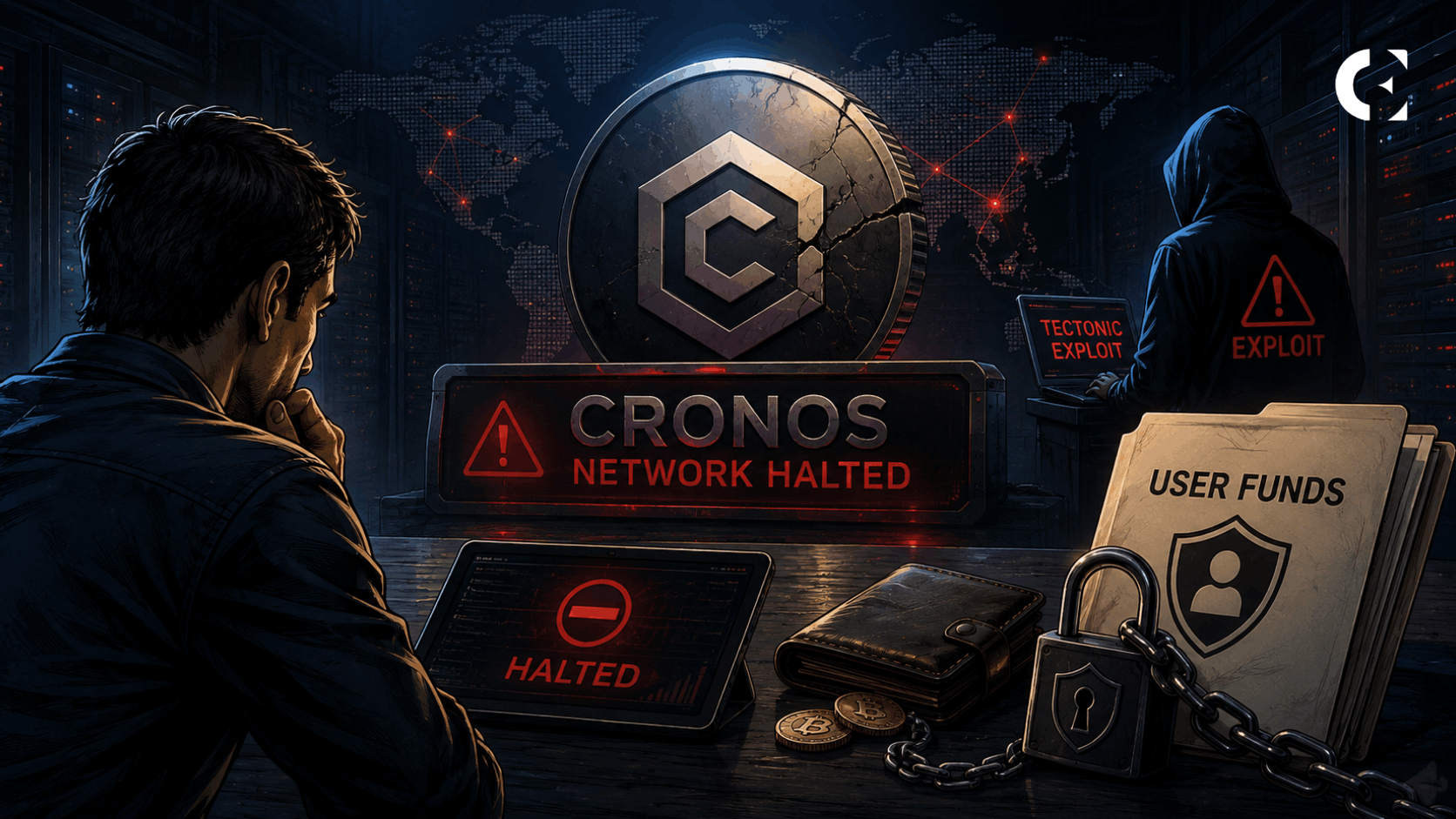

- Cronos halted the network after identifying an exploit on lending protocol Tectonic.
- Roughly $69 million remains trapped onchain, with $6 million bridged out.
- Crypto.com says its app and exchange were not affected by the exploit at all.
Cronos Network, a blockchain associated with Crypto.com, halted its entire chain on August 30 after identifying an exploit targeting Tectonic, a lending protocol built on the network. The halt froze all activity, prompting immediate questions from users about whether their funds and open positions remain safe.
As of the latest update, Cronos said, “We’re still halted while we investigate the Tectonic exploit, with support from security teams across the industry.” At press time, the CRO token is down 2%, trading at $0.056.
How the Exploit Happened
According to a preliminary analysis from researcher Weilin Li, the attacker manipulated the price of TONIC, Tectonic’s own governance token, which reportedly carried a 20% collateral factor despite thin trading liquidity.
The attacker allegedly pumped TONIC’s price roughly 100x within 20 minutes, then used the inflated token as collateral to borrow large amounts of other assets, a pattern researchers compared to prior exploits elsewhere. Tectonic and Cronos have not independently confirmed this account.
Loss estimates vary and remain unconfirmed, ranging from roughly $66 million to $75 million. About $6 million was reportedly bridged to Ethereum and swapped for ETH before the halt, while an estimated $69 million remains trapped on Cronos. Tectonic reportedly held around $122 million in total value locked and $83 million in active loans before the exploit.
What This Means for User Funds
Crypto.com founder Kris said its main app and exchange were not affected and continue operating normally, stating “all funds are safe” on those platforms. This matters because Cronos is a separate blockchain from the Crypto.com exchange, so the halt doesn’t necessarily put exchange funds at risk.
For funds directly on Cronos, freezing the network stops new transactions from processing, meaning transfers, withdrawals, and deposits cannot complete during the halt. Transactions broadcast right before the freeze may be stuck or fail. Wallets not deposited into Tectonic were not directly targeted, though the broader freeze still limits moving funds until service resumes. Users with active Tectonic positions face the most direct risk, since the protocol’s lending pools were the exploit’s target.
What to Check Once Cronos Resumes
- Loan and collateral positions: Check loan-to-value ratios on Tectonic or other Cronos lending protocols, since volatility after resumption could trigger unexpected liquidations
- Pool and vault balances: Verify whether deposits were among those drained
- Pending transactions: Check wallet addresses on a Cronos block explorer to confirm whether transactions submitted before the halt succeeded, failed, or remain pending
Cronos and Tectonic said updates will follow as investigations continue, with a fuller postmortem expected once the issue is resolved. The final loss figure, the attacker’s identity, and any recovery plan remain unconfirmed.
Related: Fogo Halts Mainnet After 400 Million FOGO Tokens Moved in Wallet Breach
Disclaimer: The information presented in this article is for informational and educational purposes only. The article does not constitute financial advice or advice of any kind. Coin Edition is not responsible for any losses incurred as a result of the utilization of content, products, or services mentioned. Readers are advised to exercise caution before taking any action related to the company.