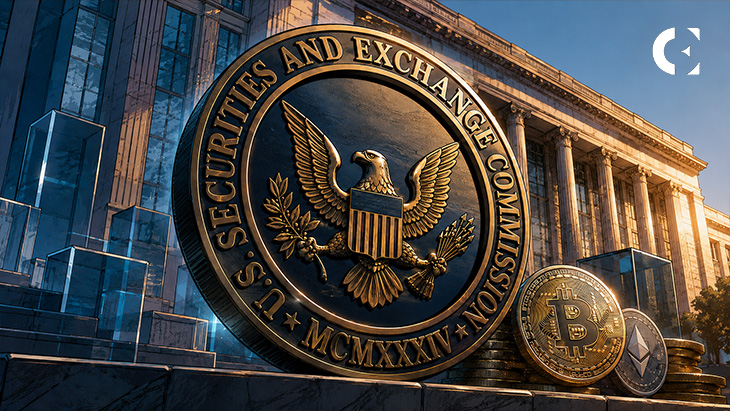

The Securities and Exchange Commission has introduced temporary relief allowing eligible venues to trade tokenized U.S. stocks onchain. The move creates a regulatory pathway for Tokenized Securities Venues, or TSVs, using permissioned automated market makers. Consequently, market participants can test blockchain-based stock trading while the SEC considers permanent rules.
New Framework for Tokenized Markets
TSVs can connect approved participants through liquidity pools designed for tokenized National Market System stocks. Additionally, the SEC created conditional relief for certain liquidity providers using their own capital.
The framework limits both eligible stock symbols and trading volumes. It also requires tokenized stocks to preserve shareholders’ traditional rights.
Moreover, issuers can object when an unaffiliated party tokenizes their stock for TSV trading. Smart contracts must remain public, auditable, and operate on permissionless blockchains.
TSVs must also halt tokenized trading whenever the underlying stock stops trading. Hence, the framework links onchain markets closely with established equity-market safeguards.
Five-Year Testing Period
The SEC will allow the exemptions for five years after publication. During that period, regulators can observe trading activity and gather data for future policymaking. Significantly, the agency has requested public feedback on potential modifications and longer-term rules.
However, the exemption does not establish permanent rules for tokenized securities. Instead, it gives market participants a controlled environment to develop blockchain-based trading infrastructure. Additionally, the SEC says anti-fraud and anti-manipulation laws continue applying fully to these activities.
Related: World Money Expands to 150+ Countries With Payments and Investing
Disclaimer: The information presented in this article is for informational and educational purposes only. The article does not constitute financial advice or advice of any kind. Coin Edition is not responsible for any losses incurred as a result of the utilization of content, products, or services mentioned. Readers are advised to exercise caution before taking any action related to the company.