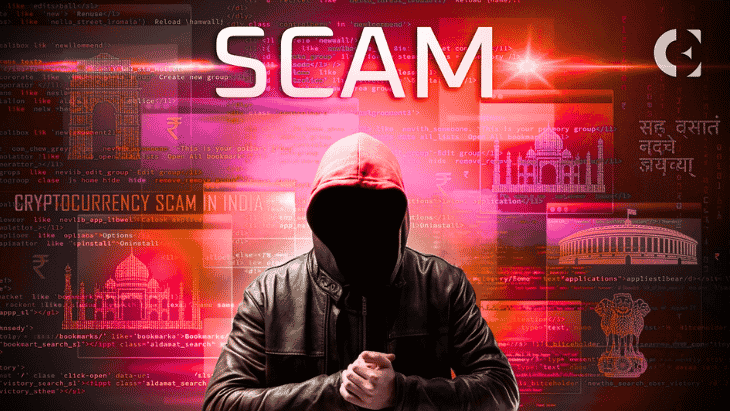

- Three crypto scams in India in 24 hours: a NPR37.64 crore probe, a ₹90.2 lakh loss and a ₹3.93 crore cyber fraud.
- The scammers exploited human vulnerabilities and traditional banking layers to steal fiat money.
- The key concern is how scams move from social engineering and bank transfers to mule accounts, cash, & USDT.
Indian law enforcement agencies have uncovered three major financial fraud networks, including a probe into a crypto racket worth NPR37.64 crore, a ₹90.2 lakh Facebook scam, and a ₹3.93 crore cyber fraud.
These cases raise questions about how illicit funds move from banks and social engineering into mule accounts, cash, hawala, and USDT. The focus isn’t on blaming crypto itself, but on how scams exploit financial systems to move stolen funds.
Crypto Scams in India: 3 Cases Reported in the Last 24 Hours
On October 28-29, 2026, three major India-related crypto fraud or money-trail cases were uncovered. Immigration officials at Lucknow’s Chaudhary Charan Singh International Airport apprehended Dinesh Khadka, a Nepali national attempting to flee to Sharjah using a forged Indian passport.
Khadka is linked to a 2022 investigation by Nepal’s Department of Revenue Investigation into an illegal crypto and foreign-exchange racket involving transactions worth 37.64 crore Nepali rupees. The case also named family members.
Meanwhile, a 45-year-old land broker from Ahmedabad was swindled out of ₹90.2 lakh after being targeted by a fraudulent Facebook profile named “Madhuri Mehta”. The 45-year-old was invited to a fake trading platform that showed him fake profits and coerced him to pay fake “income tax” and wallet reactivation fees.
Furthermore, in Delhi, the Intelligence Fusion and Strategic Operations (IFSO) unit of the Special Cell has arrested seven men from Rajasthan in connection with the unauthorised draining of ₹3.93 crore from a businessman’s ICICI Bank account through 149 transactions on 5th October. The main suspect used an international currency exchange app to communicate with an international syndicate.
Follow us on X for real-time crypto updates.
How Crypto Scams Move Money: From Bank Transfers to Hawala and USDT
In these three cases, money moves through a multi-stage path, starting in traditional banking systems and ending in stablecoins. Fraud typically starts with social-engineering contact that persuades the victim to make bank or UPI transfers to accounts controlled by the operators or their associates.
This money is then transferred via mule accounts to make it hard to trace and is subsequently withdrawn as cash. In some instances, hawala operators funnel cash and convert it to USDT for cross-border transfers.
For instance, in the Delhi case, police traced the ₹3.93 crore to mule accounts, cash withdrawals, and one hawala-linked USDT conversion involving a foreign contact. In the Ahmedabad case, the extraction process included USDT payments from victims. The Lucknow arrest shows the international reach available to larger crypto-linked networks.
Common Warning Signs of Crypto Scams in India
Users should watch for unsolicited Facebook or WhatsApp contacts promising high, quick crypto returns, and platforms that display large paper profits but block withdrawals with new “fees,” taxes, or risk categories. Users should also watch for requests to send more money, use third-party accounts, or transfer USDT to “unlock” funds, along with pressure tactics.
These signs underscore the importance of being cautious with social-media investment strategies and third-party fund flows. Legitimate crypto operations do not involve secretive mule accounts, cash transfers, or unofficial hawala. Users are also encouraged to report any suspicious activity as soon as possible through the National Cybercrime Reporting Portal.
Subscribe to our YouTube channel for the latest crypto news.
Related: Myanmar Scam Networks: How Indian Victims’ Funds Move Through Mule Accounts and Crypto
Disclaimer: The information presented in this article is for informational and educational purposes only. The article does not constitute financial advice or advice of any kind. Coin Edition is not responsible for any losses incurred as a result of the utilization of content, products, or services mentioned. Readers are advised to exercise caution before taking any action related to the company.