

- Top centralized exchanges processed $1.95 trillion in Q2 spot volume, down 27.9% from $2.70 trillion.
- May recorded the year’s lowest monthly spot volume at $619 billion before June recovered to $695 billion.
- Binance led Q2 with a 38.7% market share, while Bybit held the only other double-digit share.
Centralized crypto exchanges recorded a sharp slowdown in spot activity during the second quarter. Trading volume across the ten largest platforms fell 27.9% from $2.70 trillion to $1.95 trillion.
May marked the weakest month of 2026, with spot turnover falling to $619 billion. Activity recovered to $695 billion in June, but the increase did not reverse the quarter’s broader contraction.
May Marks the Lowest Spot Trading Month
April began the quarter with stronger activity before volumes weakened during May. CoinGecko’s chart shows monthly turnover staying near $600 billion across Q2, well below January and February levels near $900 billion.
May’s $619 billion reading formed the lowest monthly total reported during the first half of 2026. June added about $76 billion in activity, although quarterly turnover remained substantially below Q1.
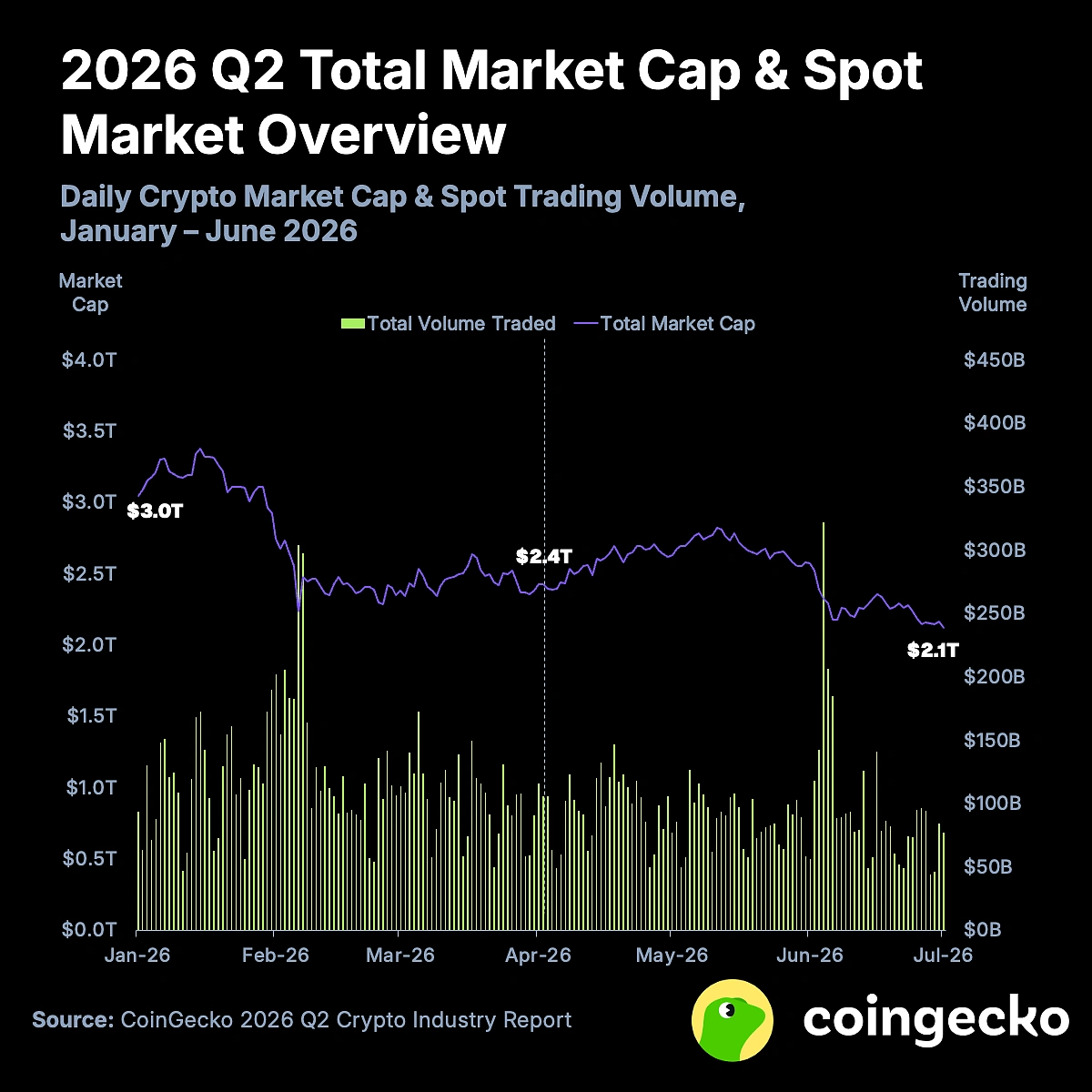
Average daily crypto trading volume also fell 20.9% quarter over quarter to $93.1 billion. That decline accompanied weaker prices and reduced participation across major centralized spot markets.
Binance Retains Its Spot Market Lead
Binance maintained the largest share among the top ten centralized exchanges, accounting for 38.7% of Q2 spot volume. Bybit followed with 10%, becoming the only other platform holding a double-digit quarterly share.
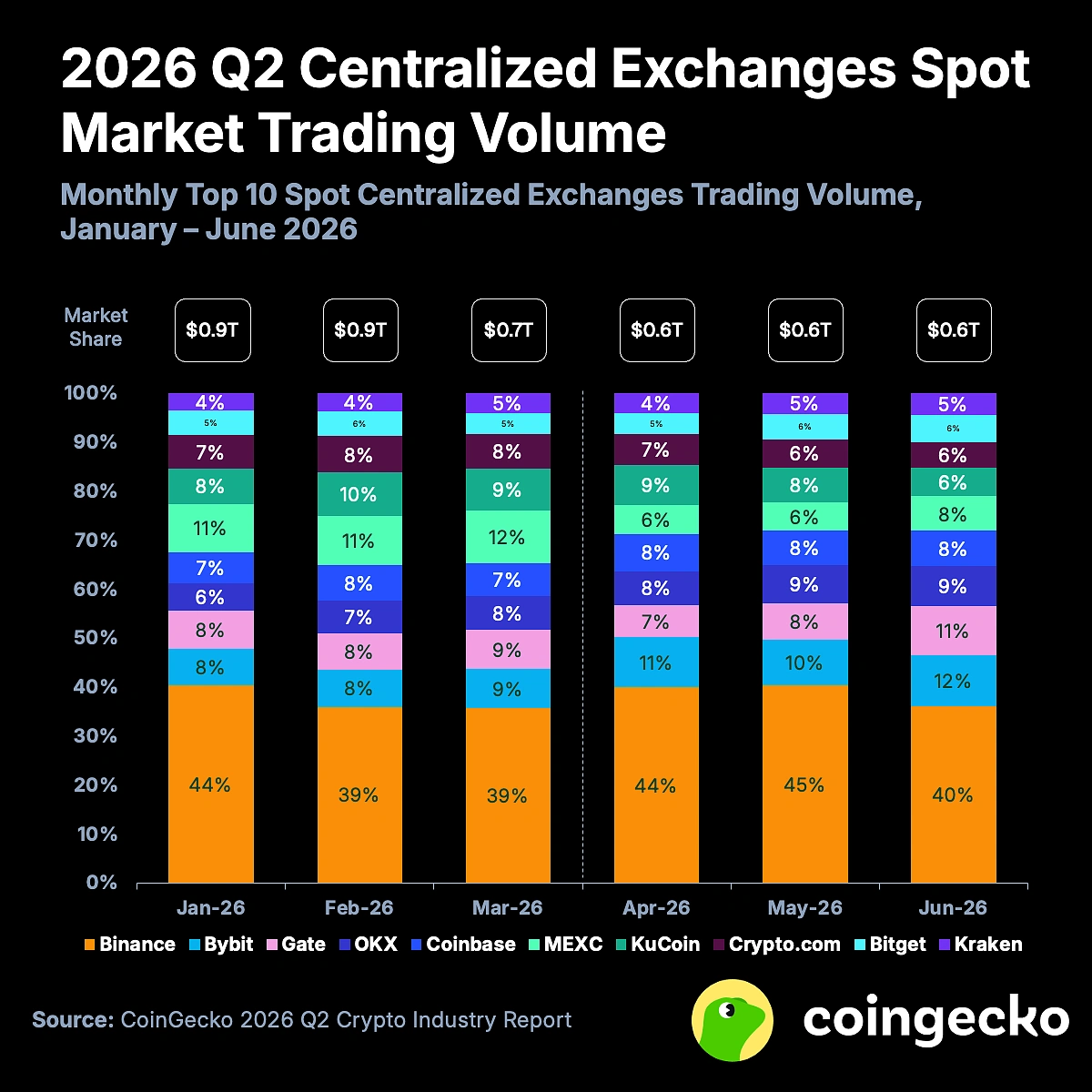
CoinGecko’s monthly chart shows Binance leading throughout April, May, and June. Its share remained well above every competing exchange, despite the wider decline in trading activity.
MEXC recorded the steepest contraction among the leading platforms. Its volume fell from $275.2 billion in Q1 to $121.2 billion in Q2, moving its ranking from second to seventh.
Crypto.com volume dropped 40.9%, while KuCoin recorded a 38.5% decline. Exchange-level contractions ranged from about 5% to 56%, showing uneven losses across the sector.
Related: Can XRP Flip Bitcoin? Bullish Fundamentals Clash With Bearish Technicals
Wider Market Weakness Limits Spot Demand
Total crypto market capitalization fell 12.6% during Q2, declining from $2.4 trillion to $2.1 trillion. June produced the quarter’s largest breakdown and left the market roughly 52% below its October 2025 peak.
Stablecoin capitalization also declined for the first time since the third quarter of 2023. Combined supply fell $4.8 billion to $305.1 billion, while USDC lost $3.7 billion.
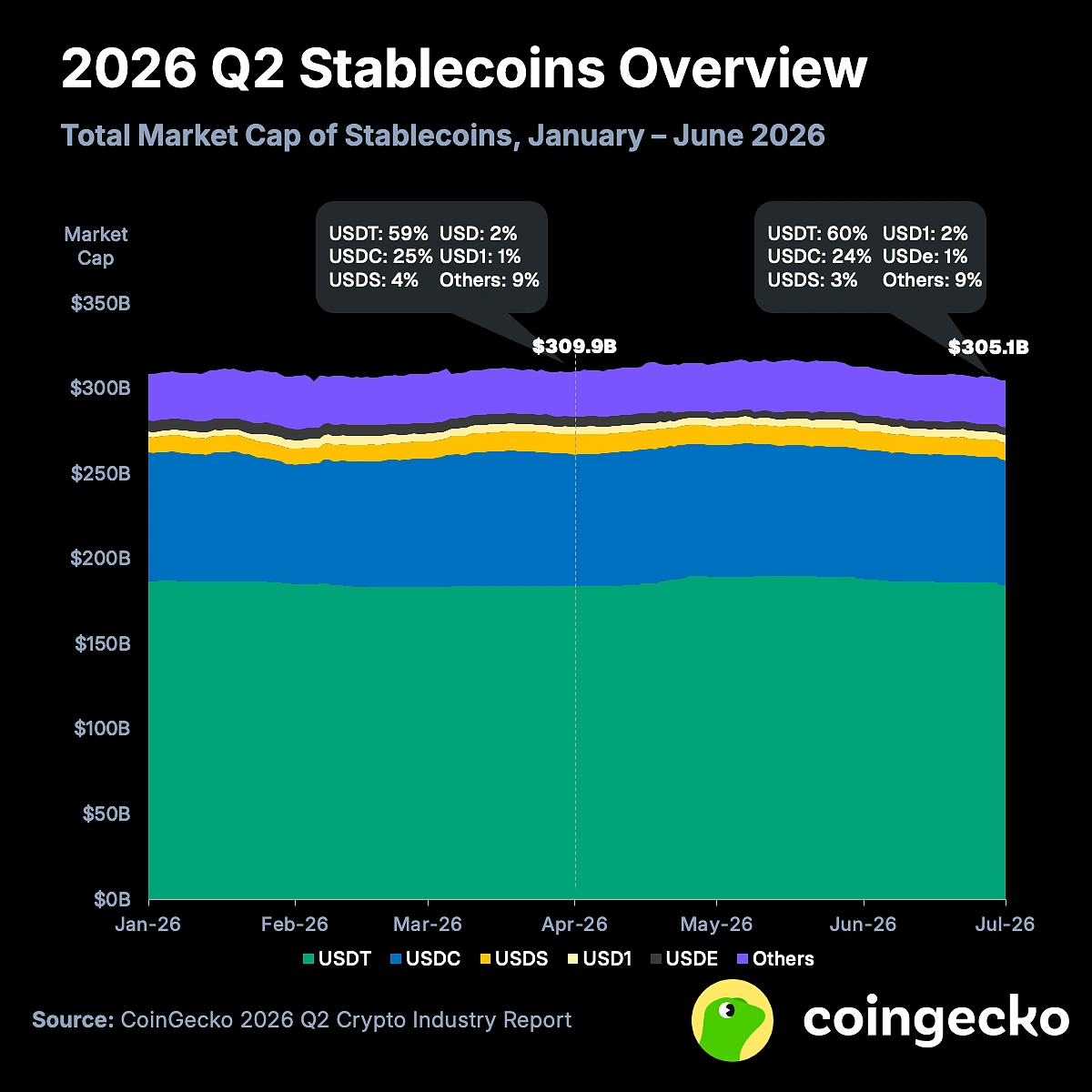
USDT moved in the opposite direction, adding $300 million and ending the quarter at $184.4 billion. Its stablecoin market share increased to 60%.
Perpetual exchange activity showed a smaller decline than spot trading. Top platforms processed $12.7 trillion, down 10% from Q1, while monthly volume stayed above $4 trillion.
Prediction markets also expanded during the same period. Notional volume rose 48.7% to $113.8 billion, with June reaching a record $52.8 billion.
Disclaimer: The information presented in this article is for informational and educational purposes only. The article does not constitute financial advice or advice of any kind. Coin Edition is not responsible for any losses incurred as a result of the utilization of content, products, or services mentioned. Readers are advised to exercise caution before taking any action related to the company.