

- A consortium of 12 EU banks has partnered with Fireblocks to develop a MiCA-compliant euro stablecoin.
- To create a regulated euro-backed stablecoin alternative, reducing reliance on dominant USD stablecoins.
- Targeting launch in the second half of 2026, it could accelerate regulated institutional crypto adoption.
A consortium of 12 European (EU) banks, led by Qivalis, has partnered with Fireblocks to develop a fully compliant Markets in Crypto Assets Regulation (MiCA)-compliant euro stablecoin for institutional settlement, treasury, and tokenized assets.
The initiative targets a launch in the second half of 2026, aiming to reduce reliance on dominant USD-backed stablecoins, which account for nearly 99% of the $320B global supply, while advancing EU-regulated euro-native digital finance infrastructure.
EU Banks Partner With Fireblocks to Launch Euro Stablecoin
According to sources, a consortium of 12 major European banks, operating through Amsterdam-based Qivalis, has partnered with digital asset custody provider Fireblocks to develop a MiCA-compliant euro stablecoin. Michael Shaulov, Co-Founder and CEO of Fireblocks, said, “Qivalis demonstrates how major financial institutions can work together to plan a compliant euro-backed stablecoin at scale.”
Meanwhile, the participating banks include Banca Sella, BBVA, BNP Paribas, CaixaBank, Danske Bank, DekaBank, DZ BANK, ING, KBC, Raiffeisen Bank International, SEB, and UniCredit. The stablecoin will be issued as an electronic money institution and fully backed 1:1 by the euro under the supervision of De Nederlandsche Bank (the Dutch central bank).
Regulated Euro Stablecoin Aims to Reduce Reliance on USD Stablecoins
The Qivalis-led euro stablecoin initiative directly addresses Europe’s heavy dependence on USD-denominated stablecoins, which currently dominate the global market. According to DefiLlama data, the total stablecoin market capitalization is $320.858B, with roughly 99% tied to US dollar- and euro-denominated stablecoins, accounting for only a marginal share of about $650 million.
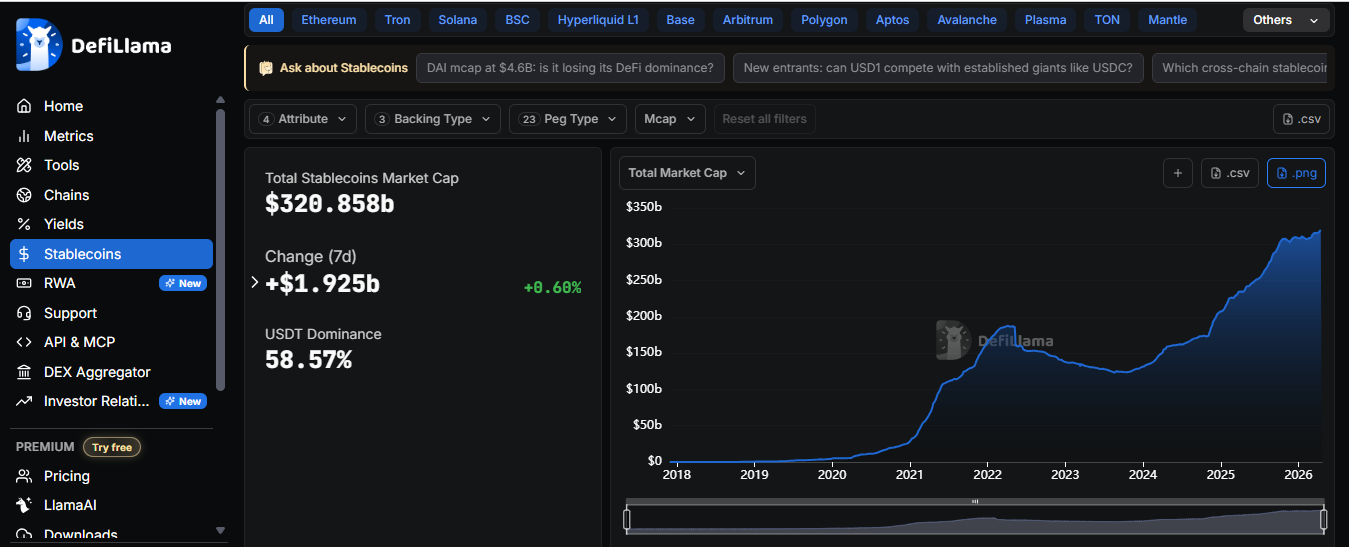
Source: DefiLlama
By launching a MiCA-compliant, 1:1 euro-backed stablecoin, EU banks seek to provide institutions with a trusted, regulated alternative for digital euro liquidity. Jan Sell, CEO of Qivalis, emphasized the need for a European option, stating that “Europe needs a regulated euro-backed stablecoin option backed by trusted financial institutions.” Key motivations include:
- Reducing exposure to dollar-based liquidity risks and correspondent banking delays
- Enabling efficient 24/7 cross-border settlement, programmable payments, treasury management, tokenized assets, trade finance, and securities settlement
- Promoting monetary sovereignty in digital assets while maintaining full regulatory compliance, auditability, and reserve transparency
What’s Next?
The Qivalis euro stablecoin project remains in the pre-launch preparation phase, with a targeted commercial rollout in the second half of 2026, subject to final regulatory authorization from De Nederlandsche Bank as an Electronic Money Institution (EMI) under the EU’s MiCA framework.
Qivalis has stated it will issue an official public announcement, including verified smart contract addresses, only once the stablecoin is available for use. As of today, no tokens have been issued, and the project emphasizes caution about unofficial sources.
The broader implication is that stablecoins are moving closer to regulated financial infrastructure. In 2025, total stablecoin volume reached $33 trillion, surpassing Visa’s $16.7 trillion annual throughput and approaching the scale of the US ACH network.
Rather than operating on the margins, Stablecoins are increasingly being integrated into bank-controlled, regulator-supervised systems, reshaping perception and usage, especially among institutional participants. Therefore, if approved, the initiative could become one of the first large-scale, bank-backed euro stablecoins under MiCA, bridging traditional finance with regulated digital asset infrastructure.
Related: ECB Sets Conditions for Tokenization in Europe’s Capital Markets
Disclaimer: The information presented in this article is for informational and educational purposes only. The article does not constitute financial advice or advice of any kind. Coin Edition is not responsible for any losses incurred as a result of the utilization of content, products, or services mentioned. Readers are advised to exercise caution before taking any action related to the company.