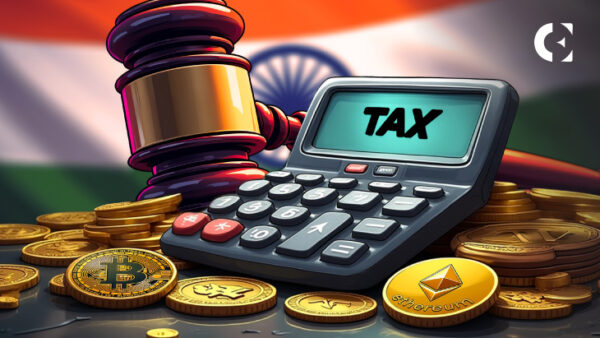

- Equity investors in India seek lower taxes amid market pressure.
- Crypto gains continue to attract a flat 30% tax and a 1% TDS.
- Crypto investors cannot offset VDA losses against gains, unlike equity investors.
Cryptocurrencies and stocks face different tax rules in India. While equity investors pay lower tax for long-term holdings, crypto investors face a flat 30% tax on their gains on each trade. Now, stock market investors are seeking tax relief, while the crypto market continues to face the same strict rules. This difference has raised concerns among Indian investors.
Equity Investors Seek Tax Relief in India
According to a Reuters report, India’s equity market is seeking lower taxes and transaction costs after facing significant pressure in 2026. As the stock market continues to remain weak, with foreign money flowing out of the country, investors remain concerned.
Notably, the Securities and Exchange Board of India (SEBI) has proposed tax concessions for domestic mutual fund investors and foreign investors. This is to enhance post-tax returns and encourage more equity investments in India.
Foreign investors have also raised concerns about the impact of India’s tax rules. They remain cautious about capital gains taxes, STT, and the weakening rupee. These factors have made Indian equities less attractive compared with other markets.
Crypto and Equity Tax Rules Differ in India
The Indian government has imposed different tax rules for crypto and equities. For the stock market, the tax rate depends on how long an investor holds the shares. While an investor is taxed 20% on short-term gains, long-term gains are taxed at 12.5% for profits above ₹1.25 lakh in a financial year. They can adjust eligible capital losses against profits. Equity traders can also carry forward unadjusted losses for up to eight years.
At the same time, crypto investors will face a flat 30% tax under Section 115BBH of the Income Tax Act. It remains the same regardless of how long the investor holds the asset. Also, crypto investors cannot adjust losses against gains from other crypto trades.
This means that equity investors have more flexibility. While crypto investors are required to follow stricter rules, stock investors are freer when calculating their taxable profits.
How Are Equity Investors Taxed?
It is worth noting that in the Indian stock market, whether domestic or foreign investors, there will be taxation under capital gains. When it comes to long-term capital gains (LTCG), it will cost an investor 12.5% tax based on the gain when shares have been held for more than 12 months. This is applied if the gain is over ₹1.25 lakh in a fiscal year. For short-term capital gains (STCG), there is 4% tax on gains from shares up to 12 months.
In addition, they must also pay a 4% health and education cess. The tax rate can further increase depending on the applicable surcharge. Also, investors pay Securities Transaction Tax (STT) on eligible trades, which varies depending on the involvement of cash equities or equity derivatives.
(adsbygoogle = window.adsbygoogle || []).push({});How Crypto Tax Rules Affect Investors
Significantly, the crypto tax rules in India are stricter than the equity taxation system. The high tax rate on crypto gains makes the market less attractive for frequent traders. Also, traders face a 1% TDS on eligible trades under Section 194S of the Income Tax Act. While this amount could be adjusted against their final tax liability, it can affect their available trading funds. Thus, the current crypto tax rules are a major barrier for Indian traders.
Unlike equity investors, crypto traders cannot use losses from one crypto trade to offset gains from another. This also makes crypto trading less compelling in the country.
Related: 95% of India’s Crypto Trading Is Offshore: Can Tax Reforms Bring It Back?
Disclaimer: The information presented in this article is for informational and educational purposes only. The article does not constitute financial advice or advice of any kind. Coin Edition is not responsible for any losses incurred as a result of the utilization of content, products, or services mentioned. Readers are advised to exercise caution before taking any action related to the company.